It’s to Die For: Caring for the Poor in an Age of Consumerism


All across the country, people stand in lines three-deep for hours to be the first to plop down a few thousand dollars for the latest iPhone. As usual, the media, the gatekeeper of American values, gleefully stands watch over the frenzy.

Nearby, and unnoticed, other people stand in lines. They are the invisible poor in our midst. Statistics show that on any given day, some portion of the 14.3 million families in this country are standing in food lines (Bread for the World 2022).

 And it’s getting worse. Those numbers will increase as programs like the Child Tax Credit, the Supplemental Nutrition Assistance Program (SNAP), and the Special Supplemental Nutrition Program for Women, Infants, and Children (WIC) are all being cut by our current administration.

To the “haves”, the expression ‘It’s to die for” refers to our obsession with “things”. To the “have-nots”, that expression resonates from the pit of their empty stomachs. In both cases, consumerism defines who we are.

For those obsessed with self-gratification, and there are many “Christians” in their ranks, what they “have” defines who they are. For the poor, what they don’t have determines their value. The former well fed, the latter hungry, both dying spiritually. But this is nothing new. God has grieved over this fact of our humanity since the beginning of time.

He has been sending us Prophets, starting with Amos and Isaiah, to speak to this travesty. And they did not hold back! They continually called out those who believed all their riches and privilege were due to being favored by God. So, the admonishments and “woe to you” warnings of the prophets were simply laughable and annoying to them. Perhaps that’s why Jeremiah wanted to run and hide when God called him into service! But he finally went when he could no longer bear Yahweh’s grief, and he paid a hefty price for that courage.

Then, along came Jesus. Jeremiah and Jesus shared the same passion for the poor and disgust for their oppressors, and they bore the same hatred from those who didn’t want to be reminded of their sinfulness. God’s message was clear to both of them: Be willing “to die for” those who suffer.

Christ still tells us that when we care for the least of these, we care for him. Why are we still not listening? Could it be that we, too, are so enmeshed in this consumerist mentality and individualism that we simply don’t care? Or could it be that the gospel of American Express is louder and more appealing? “Woe to you, shopper, if you don’t use your REDcard for all your needless purchases.”

Do we feel a little better about it if we know that a tiny percentage of our spending goes to African Relief? That works for the barely guilty and isn’t risky because we don’t actually have to see the poor and suffering. Not so easy when hungry children are right in our midst, as are modern-day prophets.

How are today’s prophets speaking to our obsession with self? They are speaking the truth about the chasm between the rich and the poor. They scream unfair andtell us boldly and without reserve, that if we call ourselves Christians, we are charged to care for the poor.

 Mother Teresa says Woe to us if we do not recognize the dignity of the poor, that they too are made in the image of God. “Being unwanted, unloved, uncared for, forgotten by everybody, I think is a much greater hunger, a much greater poverty than the person who has nothing to eat.”

Dorothy Day was a tireless advocate for the poor: “The Gospel takes away our right forever, to discriminate between the deserving and the undeserving poor.”

John Kavanaugh, S.J. “It is our consumeristic culture today that defines our values, and forms our meaning and purpose. Companies market hope and identity in commodities, not relationships.”

Walter Burghardt, S.J., said that feeding the hungry is not simply a miracle Jesus performed; it is a mandate for Christians.

Kenneth Himes tells us that the word “consume” means “devour, waste, exhaust“, and calls our obsession with consumption in America pathological. “Consumer behavior has been removed from ethical judgment”, which then allows us to become complacent about God’s call to share our resources and acknowledge our indifference toward our starving neighbor. What has been lost is the essence of who we truly are and why we exist.

Mirabai Starr, “Our encounter with the manifold losses that characterize the human experience can till the soil of our hearts so that we are more available to the suffering of other beings and the earth we share. Sorrow can be paralyzing at first, but compassion, which can sometimes take the form of anger, is a wellspring that offers infinite sustenance.”

 As for me, my life changed drastically when I finally looked in the mirror and saw my own sinfulness. Woe to me! My greed and self-fulfillment came on the backs of the poor and hungry. My refusal to give up the slightest want caused children to go to bed hungry. “Thus says the Lord God, enough, Linda! Do what is just and right.” (Ezekiel 45:9)Truth be told, I still suck at it at times. But I’m getting better at self-correcting ahead of that Holy Whack!

In a country in which the majority of people profess to be Christian, our actions do not match that profession of faith. Woe to us, “Hypocrites!” Pope Paul IV spoke of rights as the right not to “have” more, but to “be” more. That is true for all human beings – the needy, and perhaps even more so, the greedy.

Rethinking Christian Superority

(Shutterstock image)

Let’s take a look back shall we? Have you ever wondered how the piety of Jesus’ early followers evolved into the self-righteousness we witness today? Do we, if we proclaim to be followers of Christ, believe that mandates enacted by man were Jesus’ way of “doing” religion?


I’m no Scripture Scholar (duh), but I don’t think anyone has to be to question this colossal sleight-of-hand by those in power since the time of Jesus and his apostles. And we who have been led to assume that we are superior to anyone who does not adhere to our beliefs have let our egos run amuck.


A real Scripture Scholar, Stephen Patterson, tells us, “The original believers embraced Jesus’ radical social message – something we know because they were killed by the state as traitors. They were committed to giving up old identities falsely acquired on the basis of baseless assumptions – Jew or Greek, slave or free, male or female – and declared themselves to be children of God. The Jesus movement grew from a community that dared to proclaim that there is no us, no them. We are all children of God. It was about solidarity, not cultural obliteration.”


Diana Butler Bass emphasizes Patterson’s words, ‘We are all children of God. You and your neighbor and immigrants and believers of other faiths and Democrats and Republicans…and…and…and. We are all children of God. It doesn’t sound like any Christianity we know. But it is what Jesus preached. What Paul shared in his letters. And it was what the first Christians gave their lives for – a world of human dignity and equality for all children of God – where walls are torn down and bridges built in their stead. And if that’s what a “Christian America” could mean, then count me in.” Me too! But it hasn’t always been that way.

At the beginning of my faith journey, I walked lockstep, conforming to the “rules” because the Church knows what’s best for us, right? Truth be told, I loved feeling superior to others. I did not question any of it. If you did not play by the rules, I could admonish you with a straight face, “Yeah, you’re going to hell. Have a nice trip. Not sorry.”

Where did it all go wrong? In the First Century, Saint Irenaeus took it upon himself to save the poor naïve masses from the Gnostics who “…cunningly allure the simple-minded to inquire into their system, but they nevertheless clumsily destroy them…and these simple ones are unable, even in such a matter, to distinguish falsehood from the truth”. Does being called “simple-minded” offend you in any way? It should – it offends me immensely!

One way of keeping control was to discourage the “unqualified” laity from reading the Bible. They needed their pastors to interpret it for them, poor, inept souls. The BS meter should have gone off on that one!


My three years of study at Aquinas began with challenging my beliefs about everything! Then, I came to the realization that I, like many Christians, had been duped into blindly accepting religion as certitude about so many aspects of faith that I grew to realize God never intended.


So what happened to Jesus? He seems to have gotten lost somewhere in the smoke and mirrors. Who is he to us? “Who do you say I am?” (Matt 16:13) is the ultimate question he still asks us today. Everyone who knows the name Jesus must answer that question. Those who turn their backs say, “You are no one to me.” Some espouse it verbally, while others do so more subtly through their actions.


Every Christian must answer the question, “Who is Jesus – and does he guide my life?” I believe when we answer that question, our “shoulds” must be confined to us alone. Our words and actions should come from the depths of our hearts, where God resides. He does not recognize those who profess what they do not live.


Bidden or not bidden, Jesus is always and everywhere among us. The purest and most perfect act of worship is to go out into the world and do what he did for others. Central to what he did was to care for the poor, the outcast, the lost and rejected, with no regard for what others would ultimately do to him. “Do what you must,” his life would say, “I can only respond to you in love.”


We must surely ask ourselves if we believe in and recognize the intrinsic worth of everyone. That will require all the truth and vulnerability we can muster. Have we replaced Jesus’ Sermon on the Mount (Matt 5:3-16) with a sense of superiority? If God looked deep inside our hearts, what would he find?


“If you hate a person, you hate something in him that is part of yourself. What isn’t part of ourselves doesn’t disturb us.” Herman Hess


We are currently facing a hard truth that Christians can no longer ignore. We are in the midst of our day of reckoning. The extensive history of involvement in racism and bigotry by Christian faiths, which has escalated in our time, has brought about a frightening reality. Sadly, when the Church writ large condones or turns a blind eye to these atrocities, it is no surprise that some followers feel emboldened to do the same.


We must look honestly, by the guidance of the Holy Spirit, for the truth of our beliefs and the basis of our actions. Perhaps we don’t consider ourselves racist or bigoted, but do we have the courage to confront family members, neighbors, or coworkers, or even our churches, especially our churches, if they are? Or do we remain silent?


Right now, not on some far-off, questionable “Judgment Day,” we are all being called to account for how we have treated our fellow humans. God help us if we don’t get this right soon.

Linda, Listen to ME!

(tenor gif)

I know many people, and I’ll bet you do too, perhaps even you, who can’t believe God has a plan for them. Over the years, I have encountered people who don’t believe me when I tell them my story. “Oh, really?! God told you to do that, huh? Right!”  

To be honest, I wouldn’t have believed it myself if he hadn’t gradually brought me to a place where I could trust him, even if I was fearful and had no idea what he was up to. Which, frankly, is still most of the time.

God has always longed to grow me into the person he meant me to be. It was me resisting, me not being present to him, me missing the mystery and majesty that surrounded me because I was just too busy to notice, or more likely, too afraid. So instead, I skipped along, trying to drown out his voice, “Lalalalalalalala, I can’t hear you!”

For years, there were little promptings that, in hindsight, proved to me he was on the job (Romans 8:28). Then bigger ones that required more trust and offered way more grace than I deserved. God opened my heart in ways I could not have imagined.

Though I still mess up – and often – I know God’s response is out of love for me; his admonishments tell me that he loves me too much to let me stay stuck in my messiness.

 We are so used to being in a world that is loud and demanding of our attention. We busy ourselves filling in uncomfortably quiet places. That’s how we miss God’s “still small voice” or “gentle whisper” (1 Kings 19:12). Sure, he’s good at those show-stopper whirlwinds and earthquakes and fire. Even what I have called 2×4 moments but didn’t leave marks like the ones my mother inflicted.

Because of her, I was always on guard for those “laying down the law” whacks that I expected from God, too, when I messed up. However, I believe he speaks more often through the Spirit’s whispers of pure grace.

We can become so enmeshed in and blinded by the things of this world that we miss our whole purpose for being here. So if you are going through life day after unremarkable day, schlepping through the same routine to ad nauseum – STOP IT! Your life has a purpose that God depends on you to fulfill. You matter that much!

We are all called to holiness, called to use the gifts and talents already given us for God’s kingdom work right here – right now. It just takes awareness on our part. (I would highly recommend Anthony DeMello’s book by the same name, “Awareness”).

Leo Tolstoy’s novel, “The Death of Ivan Ilyich,” considered a masterpiece, was written just after his own “profound spiritual awakening” and conversion experience.

While lying on his deathbed, Ilyich ruminated about the reality that his entire life was superficial and self-serving, and he profoundly stated, “Maybe I didn’t live as I should have done.” In the end, he posited a question that Tolstoy must have pondered himself, “What if I really have been wrong in the way I’ve lived my whole life, my conscious life?” Oops, a little late, buddy!

It was too late for Ilyich, but not Tolstoy. He discovered his purpose and rejected his aristocratic life to follow Jesus’ teachings – particularly the Sermon on the Mount. Years later, his writings had a profound impact on Mahatma Gandhi, Martin Luther King Jr., and countlessothers.

Soooooo, what are you waiting for? You must still be breathing, or you wouldn’t be reading this. That’s a start. Incredibly, no matter how you lived your life to this point, it’s not too late to begin again. New beginnings are God’s specialty!

“To infinity and beyond!” God coined that phrase, you know. Don’t believe me? HUMPH! Check out Ephesians 3:20, “Now to him who is able to do immeasurably more than all we ask or imagine, according to his power that is at work within us.” 

Alrighty then, you’re pumped and ready to go, right? You’ve packed your sandals and camel hair coat and checked Google Maps – for what? A sign from God?

(free bible images)

Stop! Take a deep breath. Maybe start by sitting quietly with God and waiting.

Don’t look to anyone else to give you a formula or a checklist to send you on your way to your destiny. But I willtell you this: You cannot love and serve others (which is our greatest calling) until you can love yourself.

And you can’t love yourself by utilizing any of the myriad self-help books on the market. You can only do that by growing in the knowledge that you are deeply and passionately loved first by the God who created you!

And you can only do that by being in relationship with him, which requires your time and attention. You are his son/daughter with whom he is well-pleased (Matthew 17:5). Let that sink in. We are all deeply loved sinners. It’s high time we act like it, don’t you think?

Absolutely, go to church, take the time to read scripture, and pray, But mostly, LISTEN! Geeeezzzzz, we’re so bad at listening.

Living One Wild, Beautiful, and Fulfilling Life

If someone approached you and demanded everything you have accumulated and cling to or they will kill you right where you stand, what would you be willing to die for? Anything? Would you quickly, without hesitating, hand it all over? I’m guessing you would. I would!

Martin Luther King said, “If a man has not found something worth dying for, he is not fit to live.” And he should know. His final words in his Mountaintop speech were prophetic as they seemed to predict his death, “We’ve got some difficult days ahead. Like anybody, I would like to live a long life. But I’m not concerned about that now. I just want to do God’s will. And he’s allowed me to go up to the mountain. And I’ve looked over and I’ve seen the Promised Land. I may not get there with you. But I want you to know tonight, that we, as a people, will get to the Promised Land. And so I’m happy tonight; I’m not worried about anything; I’m not fearing any man.”

So, the question for us during these times of uncertainty and volatility becomes, what is worth dying for? I have a one word answer. Ready? Love. That’s it.

I don’t know about you, but my most profound moments of clarity come after attending funerals when I do a life review. If funerals don’t cause us to evaluate our own existence, I don’t know what will. We may still be standing at the grave site when the questions surface: Do I matter? Have I value? What is my legacy? Will anyone care when I’m gone? Has God really given me a purpose? What have I done to make the world a better place? Will I have to eat that crappy potato salad at the luncheon again? (Oh, sorry, I digress)

Today, we want absolute certitude about God even though it really isn’t possible because he is more mystery than we want to believe. Unquestioned religion is shallow and makes no demands on us. Which is fine with so many of us.

Faith has nothing to do with certitude, it’s a calculated risk, but we don’t like risk even if there is a high degree of probability. It’s too iffy. No thanks. Which I find pretty amusing considering the things some people will do for “fun”. Like, I don’t know, jumping off buildings, scaling walls, motorcycle stunts! And that’s not risky??

(AI generated)

A shaky questioning faith might be less cut and dry than mindlessly following a set of rules. It may be more uncontrollable and mysterious than what you have ever experienced, but that is what will bring you into the presence of Love and the very essence of God.

You may not have been told this but you’re allowed to wrestle with God; to question the reason for your pain and suffering, or the suffering and heartache in the world. He encourages us to bring to him the struggles within us. God’s tough. Trust me. He can take it!

I got so angry with him during a very difficult time in my life that I cried and shook my fist at him, “God, if you love me so much where were you when my mother was abusing me?! When I was being sexually abused?! Huh?”  I ranted on and on excusing my years of indifference to him because of all the suffering he allowed in my life.

What I got back from him was not a bolt lightning, which I was prepared for, but a gentle loving response that unsettled the very core of my being. “Linda, I did not abandon you during that time. I suffered along with you. My heart ached for you. I have lovingly, sorrowfully, held your tears. But, the choices people make are beyond my control. I’m truly sorry. But, you, my dearest daughter, have also sinned and fallen short. Even then, I never have I stopped loving you. I’m just waiting for you to trust me. Then, your healing will start and you will be able to forgive those who hurt you.”

You see, there are no church rules or dogmas that will ever bring us into that kind of deep abiding relationship with God, which, in turn will shine a light on our purpose in life. It is what we call “experiencing” God. Until we can let go of our need to “know” that God is real, we will never allow ourselves to open our hearts to experiencing him. It’s that simple and that critical. It’s no more complicated or profound than that!

William O’Malley nailed it when he said, Genuine religion begins – not as it did for most of us, with indoctrination and imposing worship but with a personally captivating experience, a “sense” of the numinous, a presence larger than the capacities of this world to produce.”

Frederick Buechner tells us, “The grace of God means something like: Here is your life. You might never have been, but you are because the party wouldn’t have been complete without you.”

You have to believe that you matter! That is what John Eldredge says, “If we could believe that about our lives, and come to know that is true, everything would change. We would be so much more able to interpret the events unfolding around us…. We would discover the task that is ours alone to fulfill. We would find our courage. The hour is late, and you are needed. So much hangs in the balance. Where is your heart?”

Alrighty then, we’re almost done. Now, I would like to offer you one last thing to contemplate before I go. Which of these scenarios would most likely keep you trembling in fear of screwing up and landing in hell or bring you right to the heart of God?

  1. All your years growing up, you were drug to “Church” by your parents. “Get up, clean up, sit quietly, don’t touch your brother, and act like this isn’t the most boring thing in your life! Then you’ll get donuts.” Then teachers of “religion” stepped in: “Memorize all the sins that will send you straight to hell. Miss one Mass – straight to hell. Think those dirty thoughts – straight to hell.” In short order that “little light of yours” was snuffed out! But you keep going. You keep getting your card punched on Sunday mornings when you’d rather be somewhere else. Not even the donuts appeal to you now.
  • Every day you encounter Someone (guess who) doing things that draw you to him: Feeding the hungry, comforting the dying, kissing the leper, dining with prostitutes and beggars. He is so sincere and passionate about what he’s doing that something incredible reaches deep down into the very core of your being and you can’t shake it. You are awe-struck, probably for the first time in your life, and you want to emulate him. You want to follow him. You want to sit at his feet and learn from him.

Go ahead. Choose. God’s waiting.

Only Man/Woman can Prove that God is Love

I’m taking this out of storage!

We are currently in the midst of incredibly challenging times. This is a truth that some may only whisper, perhaps in the hopes that it will all fade away. However, the reality is that it won’t. So, in the face of this reality, how do we move forward with any hope for our children and grandchildren’s future?

I believe it must begin with God – and acknowledging the fact that many doubt he even cares. It conjures up an image of him sitting in his heaven, feeling rejected by humanity and giving up on the whole lot of us. All while smacking his head and rethinking that “free will” idea of his.

Archibald MacLeish, an American poet and writer, powerfully explains what God may have hoped for by refusing to control us, “Man depends on God for all things: God depends on man for one. Without man’s love, God does not exist as God…and love is the one thing no one, not even God himself, can command. It’s either a free gift, or it’s nothing. And it is most itself, most free, when it is offered in spite of suffering, of injustice, and of death.” 

Do MacLeish’s words resonate with you? They certainly do with me. But believe me, I tried to deny that truth for a long time as I continuously prayed for God to “fix” this broken world and the people in my life who made me miserable. It never worked. Even though I believed my suffering was created by other people that I desperately wanted to control. Can you relate?

Well, dear ones, take heart because this broken ground we stand on is holy ground, and we are called to stay put, no matter how hard it seems. We are called to stand on that hilltop and emulate the LOVE that is God. We are to boldly and without apology declare that God has not abandoned us but is in our midst, cheering us on for the sake of his kingdom.

But the love of God will not manifest if we merely sing his praises in church to get that “I showed up every Sunday” card punched. God isn’t interested in our praises. He longs for us to show up in the midst of the brokenness that surrounds us and love those who suffer. If that seems scary, it’s understandable.

Think of the Desert Monks who went off into the wilderness and lived in caves. They prayed A LOT for the brokenness of the world, and I’m sure God loved their prayers. But I prefer to focus on why he sent Jesus into the world. It surely was meant as a wake-up call for us to come out of hiding. Just sayin’.

Yes, Jesus also went into the desert to pray when things were tough, but he didn’t stay there!  He offered his prayers to God, accepted his fate, and came out swinging! Remember that whole table-tossing event?

I believe that’s what God is calling us to do now:  to do what we can to care for the most innocent, those without a voice, those who suffer. This is no time to fret or worry about the outcome; there’s too much at stake.

It will likely be challenging and perhaps dangerous, but as that ever-pressing question goes, “If not us, then who?”

Like my hero, Esther, who knew she was called to a fate that would likely end her life. And her response? “WOOHOO, I will go, and, oh well, if I die, I die!” Okay, she probably wasn’t that thrilled, but she was determined to fulfill her purpose, and that should be our response to God’s call for us.

Oh, you don’t believe God has spoken to you about that? This may be where self-critical thinking is required. Is it possible you’re not listening? Is it possible you’re spending too much time whining and complaining about how others are making your life miserable, and you’re just sitting and waiting for God to take care of that first?  Then you’ll consider moving beyond your own selfish longings in the comfort of your shallow existence? Sorry, I guess that was mean. But is it true?

I know it was true for me for longer than I care to admit. And here’s the sad reality of that: my being so angry and hateful toward those who hurt me over so many years was probably worse in some instances than the injustices of others toward me.

My own actions likely provoked some of that. Like the time I threw a bar stool at a wall to get my husband’s attention! Yeah, I did that, and it worked for a millisecond. But I’m not proud of it and never used it on a resume as an example of my creative leadership skills!

No, I was not innocent and denied my own sinful behavior towards them. Of course, there would never be healing in our relationships until I was able to admit that. I needed to seek and offer forgiveness before healing was possible. Not wait for someone else to take the first step.

Healing the wounds of the world must begin by first repairing our personal relationships. Because if I claim to love God but do not love my neighbor, I am a liar, a noisy, clanging symbol (1 John 4:20). Ouch.

The Blessings, Beauty, and Boldness of Not-Quite

I am in a place in my life, that last bit of my journey, that rounding the corner and spotting the finish line, where I could easily bemoan my failings. I’m now certain it’s too late for, oh, I don’t know, running the New York City marathon or climbing Kilimanjaro. Beyond that, I don’t know.

The blessings of uncertainty

Uncertainty seems to be rejected by many Christians who see it as a weakness. Certitude, on the other hand, is what we subscribe to in a faith that makes God more acceptable and knowable, with no surprises lurking in the bushes. It offers a checklist of everything we need to do to “get to heaven” – Attend church weekly. Check. Tithe 10% of your earnings before expenses and frivolous spending. Check-ish. No cursing, snarkiness, or holier-than-thouness – on Sundays – the rest of the week is fine.

If you’ve checked those boxes, nothing more is expected of you – EVER! You can just go about your life any way you please. I can profess to having been all in with those “rules”. Until I wasn’t. That’s the point in my life when I looked back and saw the emptiness and shallowness of my existence. That’s when God spoke into my brokenness and showed me his equally broken heart because he knew he created me for more. The gifts and blessings he had given me sat unused because of fear and doubt that I was worthy of them.

In this place, I thought I could act as if God didn’t really care, and I could go about my life risk-free. But what if my denying that my life actually had a purpose turned out to be a no-good, very bad, nightmarish end? What then? Could I take my “followed all the rules” checklist to the gates of heaven, and they would open wide to me while the angels sang hallelujah? (BTW, heaven isn’t a place. You know that, right?) Anyway…

I ever so slowly began to sit with God and actually listen to his promptings to “go,” like Abraham. I trusted him—mostly. I also resisted my impulses to explain to him why whatever direction he was pointing me in was probably not a good idea. I reminded him of the litany of all my failings and wondered if someone else (think Moses) might be a better choice. Is Aaron still around?

Slow but steady change

I know exactly when I began to change. It was in 2001, on that momentous day, in the early morning, when God butted into my perfectly peaceful run and changed my life. I’ve told that story often, so I won’t bore you with it again, except to say that God has had me on a lot of adventures since then!

I have had many fits and starts and often questioned the wisdom of his guidance, only to see afterward how each experience changed and grew me in some way. They have each played a part in helping me to believe that God’s plan for each of us is perfect – always! And if you doubt that for a moment, let me share this incredible story about St. Benedict Joseph Labore. Everything in quotations is taken from the book SAINTS FOR SINNERS by Alban Goodier, S.J. https://www.ewtn.com/catholicism/library/st-benedict-joseph-labre-the-beggar-saint-5838.

The poor, homeless, beggar saint who never stumbled

Saint Benedict Joseph Labore was born into a wealthy family. His parents and fourteen siblings loved that lifestyle, but not Benedict. He rejected their obsession with fame and fortune – it disgusted him. So, off he went as a young teenager to make his own way, to discover his purpose. He was certain he was destined to be a monk. But it was a long road with many rejections and disappointments along the way.

He was first drawn to the Trappist Order as their ideas were contrary to what everyone else seemed to treasure. He applied to the La Trappe Abby, but when he arrived, they rejected him, stating that “He was underage, he was too delicate; he had no special recommendations.” But he didn’t give up. He applied to the the Carthusians of Montreuil only to be rejected once again. Still unwilling to give up, he applied to another Carthusain order. He was accepted but was soon rejected by them because “The monks grew uneasy; they feared for the brain of this odd young man. They told him he had no vocation, and he was dismissed.” Even after being rejected three times and being told he was simply not monk material, he was still resolute, knowing differently in his heart.

Undeterred, he began a year-long course of studies the Carthusians listed as the cause of his rejection. He reapplied, and they accepted him. But, again, it was short-lived, and they showed him the door. Still, he tried two more times for acceptance, to no avail.

So, at the age of twenty-five, undeterred and still determined to live his calling, he set off on his own, with nothing and no one to accompany him. He endured the extreme elements, ate what was given to him by the generosity of others, and he smelled – bad! But, somehow, he felt “no bitterness or disappointment” in this life of poverty that he embraced. He died a pauper at the age of thirty-four. Awww, too bad, you say? What a wasted life, you say? Wellll….

Here comes a miracle!

Word quickly got out that he died: “So great was the crowd that the guard of police had to be doubled; a line of soldiers accompanied the body to the church; more honor could scarcely have been paid to a royal corpse.

From the moment it was laid there, the church thronged with mourners….The throng all the time went on increasing. People of every rank and condition gathered there, at the feet of Benedict the Beggar. But the enthusiasm did not end with the funeral. Crowds continued to flock to the church, and soldiers were called out to keep order. At length the expedient was tried of closing the church altogether for some days. It was of no avail; as soon as the church was reopened, the crowds came again and continued coming for two months. Nothing like it had been seen before, even in Rome; if ever anyone was declared a saint by popular acclamation it was Benedict Joseph Labre, the beggar.”

Who am I to question God’s plan?

Now, I could easily compare St. Benedict’s story to my own meager efforts to use the gifts God has given me to serve and care for others. But what I have learned from this is that God isn’t asking for perfection. He has no expectations other than the offering of my “yes” to him and that I will do my best. The rest belongs to him. And the only thing I should long for at the end of my life are the words, “Well done!” Well done – indeed!

Living in Scary and Uncertain Times: Finding Solace in Galatians 5:22-23

This post started out differently than what you’re seeing here. I intended to simply write about the Fruits of the Spirit and most of the content came directly from my book. Then, I received a “holy prompting” to focus it on the present reality of the violence, hatred, and fear we are daily inundated with.

 Yes, we are living in scary and uncertain times, which is likely causing so many to hide behind locked doors, have the groceries delivered, skip church or any crowds, and throw up frantic prayers to God.

Which makes this a perfect opportunity to delve into Galatians 5:22-23. I have long felt it was the most poignant of all of Scripture and has so much to tell us today.

Imagine God inspiring the writer(s) of these verses and being pleased with their work. Then, sitting back crosses his fingers and hoping we choose wisely because he has no control over our decisions.

We are daily challenged to decide between:

Love or hate

Joy or misery

Peace or worry

Patience or agitation

Kindness and gentleness or malice

Self-Control or instability

So, let’s go…

LOVE

Does love have limits? Many of us carry scars of past pain and hurt that play out in our lives daily and affect how we treat others. I swore I would never be like my mother – does that sound familiar?

When love is conditional, it is worldly, shallow, and indifferent. It can easily transform into hatred. From that perspective, we watch closely for others to screw up just once, and we’re done with them.

We seem to forget that God’s immense love and grace have no expiration date. “Oops, your get-out-of-jail-free card has expired. Sorry.”

He longs to help us love those that we find humanly impossible to like—even ourselves at times. But here’s the key: I can learn to love only when I have accepted God’s love myself.

Know the Difference: worldly love wears the sheepskin of an “if it feels good” mentality over the wolf that devours childhood innocence, destroys relationships, makes compassion a burden, and muddies the pure waters of selfless love created by God (1 Cor. 13:4-8).

JOY

“Shout joyfully to the Lord, all the earth; break forth in song, rejoice, and sing praises.” (Psalm 98:4)

A common response to the idea of joy might be something like this: “News flash, dufus, joy is the noise made by fools who don’t have a clue what is going on in the world.”

All right, fair enough (no need to call me names). I actually do know about the terrible things happening in the world today: anger, violence, and hatred. I also know about a man who suffered an indescribable death at the hands of those who wrongly accused him of a crime. He was beaten, spit on, and mocked. Then, he was nailed to a cross as many watched him slowly suffocate and die.

We know the life stories of those who have and continue to follow Jesus’ example. Do you think for one moment they would sign up for that if they were following a fool? They knew that the only way to bring nonbelievers to Christ was to live joyfully because no idiot would follow someone who spewed bad news on a regular basis.

So, what about us? Suffering has a purpose, and when you discover that truth for yourself, as I finally did after many years, hopefully, you will have arrived at a place where you, too, can shout for joy and share the Good News with others.

Joy is the oasis of laughter in the desert of loneliness. It is a caring touch coming through the locked door of a broken heart. It is peering through tear-stained eyes into an empty tomb. Pain and suffering are temporary. Joy is eternal.

PEACE

If I wanted true peace in my life, I would have to let go of the anger and lashing out. I would have to recognize the part I played in my own misery, and I would have to release the people who were on the receiving end of all the pain and hurt that was bottled up inside of me. Did I turn some people away from God because there was no peace in my life? 

One of Jesus’ final acts was to offer his disciples peace, and they were going to need it! “Peace I leave with you, my peace I give to you; not as the world gives do I give to you.” 

Have you known someone in your life who radiates peace? If you are wise, you will do everything, short of stalking them, to be in their company, to glimpse through them the very nature and essence of God, which is peace, and then claim it for yourself.

PATIENCE

Today, patience is a dinosaur, and if it doesn’t come in a pill form, we aren’t interested. I want it now! I don’t want to feel it. I don’t want to deal with it. Give me a pill, a distraction, or a bus ticket out of here.

A display of patience we might tolerate would be something like a gentle nudging to wait your turn, wait for your elderly grandmother to catch up, wait for a phone call. Just a small interruption in our daily routine may be okay.

The word patience literally means to suffer and endure. If that’s true, then how much would be required of us to be in a relationship with someone who is unbearable or endure intolerable circumstances? Yet that is exactly what God is asking of us when he calls us to patience, to suffer, and bear the burdens of life.

We excuse ourselves when we fail to be Christ-like to others, yet we expect God to be all-loving, all-forgiving, and all-patient with us. “Well, God’s a bigger man than I am.”  So, you’re comfortable with that excuse, are you?

But hold on. I have some good news for you. God doesn’t demand anything from us that he will not give us the power—his power—to achieve. So why is God so patient with us? He knows our human frailties and longs for us to trust him. He longs to shower us with blessings and guide us through all the obstacles this world presents to us.

A question we are called to ask ourselves: is my impatience a stumbling block to others?

KINDNESS & GENTLENESS

What are the prejudices and injustices we perpetrate on others because of our pride, pious attitudes, and forgetfulness of just how imperfect we are?

If we thought about it, we could all probably recall at least one person in our lives whom we have distanced ourselves from because of struggles in our relationship. That person may be as close as our living room couch.

We are often so determined to stay focused on the hurt we endure from others that we’ll stay there as long as it takes to make that person suffer. But, you know what? That person is a child of God, just like we are. That person is likely broken, just like we are. It’s time to let them off the hook.

“Everyone you meet is fighting a battle you know nothing about. Be kind.” Brad Meltzer

GOODNESS

Everyone feels benevolent if nothing happens to be annoying him at the moment.” C. S. Lewis

I learned a few tricks from my mother, who was the master of masking. She was from the old school of “What would the neighbors think?” When you walked out the door, you left the dark family secrets behind and played the game in public.

And, oh, the games we play, the lies we tell. But the real tragedy, I believe, is that we think we’re faultless, even though our sins tell a different story. Goodness doesn’t seem to be on the same scale as holiness, does it? I think I could rationalize myself into the category of good, but I would have a tough time comparing myself to Mother Theresa (don’t think I haven’t tried!).

I believe most people really want to do good, but we are constantly in a battle. That’s why Galatians 6:9 says, “Don’t grow weary doing good.”

Our true character is who we are when no one is looking.

Now comes the proverbial question, “Why should I?”  The answer is that being good, especially to our enemies, can bring far greater rewards than treating them the way we think they deserve to be treated. And if you still need convincing, go back to the cross for a reminder of what loving your enemy looks like.

Now, go love that jerk …oops…child of God.

FAITHFULNESS

God’s faithfulness is steadfast, but what about ours? I can only relate to you what has brought me to a place where I know faithfulness means far more than I was ever willing to admit. That didn’t happen as a result of one miraculous event: No burning bush, no parting of the sea, no Lazarus-like miracle, just a journey, a very long journey, to a patient and loving God.

How do we rationalize our indifference to the horror of what took place at Calvary? Could it be that we trivialize Jesus’ suffering to make our meager sacrifices appear to be significant and our sins acceptable? Thus, Jesus becomes a warm fuzzy, and we’re off the hook.

Trivialize this…“Take up your cross and follow Me.” (Mark 8:34) Oh boy, here we go. This is where we disconnect.

We know the kind of men the apostles were before Jesus died. They were a bunch of misfits. They doubted, they questioned, and they fell asleep when he asked them to stay awake and pray with him. Then, they ran away when he was taken to be hanged. But they knew they screwed up big time!

Now, here they are in the Upper Room after Jesus is buried, eleven men lost in confusion and grappling with their weakness; their denial. Then Jesus shows up. And what are his first words? “Peace to you.” (Luke 24:36) 

When Jesus said, “Anyone who wants to take up his cross and follow Me, anyone who wants to suffer the same fate as Me, step forward.”  They did. All of them. There would be no turning back now. No running, no denying. The cock could crow till the cows came home, and not one would falter. Not this time.

Now it’s our turn. Certainly, most of us will not be called to martyrdom. But, we are called, though, to die in our own selfish, self-centered ways. We are called to be different, to suffer if need be. We must stop asking, “Why me, Lord?” and accept our trials with faith and trust that God is right there with us to turn our sorrows into joy.

SELF-CONTROL

Everything that Satan is behind—those worldly things that we call pleasure are really his skillfully disguised handiwork. Each time we justify the smallest sin, we become insensitive to the fact that it actually is sin.

For all those who have been deceived into believing that there is such an excusable thing as a “tiny indiscretion,” those are the lies of Satan that keep us out of a relationship with God.

While we’re on the subject, we would do well to look at all areas that we excuse but God does not. Have we been lulled into a belief that there is nothing wrong with what we are doing? What has happened to our consciences?

Leo Tolstoy, in his essay, The Lion and the Honeycomb, Why Do Men Stupefy Themselves? explains: “What people most want is not that their consciousness should work correctly; it is that their actions should appear to them to be just.”

God says in 1 John 5:3, “For this is the love of God, that we keep His commandments. And His commandments are not burdensome.” Seriously? They seem awfully burdensome to us, don’t they? But as Christians, we are called to be disciplined in our lives. Until we can give everything to God; until we can come to a place where we are “seeking the Kingdom of God first” (Matthew 6:33), we will repeatedly fail. That’s why self-control is not self-alone.

PUTTING IT ALL TOGETHER

Following Christ does take a great amount of discipline, and it is only possible through him. To everyone who feels battle-scarred right now, whether those battles of life have only been skirmishes or they have been “all-out, fight-to-the-death, take-no-prisoners” wars, take heed.

We don’t make a one-time – this is it – I surrender – commitment to Christ and then throw ourselves a party. If you think all your sinfulness will instantly be eradicated when you do that, you’re gonna fall hard, smack your loser head, and go join the circus.

Come back here. Don’t do that. Just fall on your bruised knees, seek forgiveness from a merciful and loving God, and start over. You can do this! God created you and equipped you to do this.

You’re an Idiot: Just Thought You Should Know

(Tenor GIF)

Here I go putting my vast expanse of self-proclaimed wisdom out there for everyone to see. Because – why not?! I’ve decided that in our current cultural mess, where everyone seems to be scrambling for attention and significance, something, or better still, “Someone,” is clearly missing.

The wide spectrum of beliefs and answers to our current problems are mind-boggling. And deep down, much of it is a visceral hatred that spreads all over social media and in our own backyards.

We all seem to have a sense of what “should be” in our personal lives, our neighbors’ lives, our culture, and even with God – yeah, let’s not let God off the hook!

I should, you should, we should, they should, God should, trees should, rocks should, animals should, the weather should.

My boss should be nicer, my kids should be more respectful, my husband should do the laundry, my hair should be thicker, my waist thinner (deep exhale).

Have I left anything out?

We are obsessed with how our lives should be and how others should act. We calculate daily what ought to be, almost moment-by-moment, and then adjust our lives accordingly.

Let’s say I call you out on social media because, well, you’re an idiot, and someone has to do it. Then, I see you’ve done something even more reprehensible the next day. You should then be arrested, or at the very least, get a massive dose of eczema right before a long-anticipated summer holiday and have to wear sweatpants the entire time! There, take that!

What if, one day, you were given the power to enact all the most profound shoulds you have ever imagined? What would they be? There’s a pretty broad range here, so let’s make three categories:

  • My shoulds.
  • God’s shoulds
  • Everyone else’s shoulds.

I’ll start:

My shoulds, being honest here – which sucks. But they probably won’t materialize anyway:

  • I should be more loving and less judgmental.
  • I should spend less time on the internet and more time with God.
  • I should quit counting offenses against me and begin counting my blessings.
  • I should be more like Jesus and less like a “Christian” who’s superior to everyone else.
  • I should quit calling people “idiots”.
  • Chocolate should not be fattening(oops, how did that get in there?).

God’s shoulds:

  • God should not allow suffering – especially for Christians.
  • God should punish all mean people – except me.
  • God should ignore my pompous attitude even though it runs totally counter to everything Jesus stands for.
  • God should reward me every time I correct someone’s behavior.

Everyone else’s shoulds:

  • People should be more generous and less self-serving (except me).
  • Wicked people should not prosper.
  • People should love and accept each other.
  • My neighbor should only put his trash out on trash day and make his dog stop pooping in my yard. (Yeah, I know it’s you!)

But wait; is this truly what we were made for? Is this what fulfills us and gives our lives meaning and purpose?

It seems we have gotten so caught up in demands, rules, and checklists (let’s not forget) were initiated by man, not God, that we have forgotten who and Whose we are. We must reclaim our innate call to love because of who we are in Christ.

We seem to have lost our way in a culture that is hell-bent on dividing us into opposing camps: those who deserve the best life has to offer and those who don’t. We have replaced decency and justice with one-upping our “enemies”.

We could argue and debate all day long, but that will not change anything. What’s needed more than anything is (1) we come to truly believe and live as though we are beloved children of a loving God, and (2) that we answer Jesus’ call to “Go and love on everyone you meet. No exceptions. No judgments. No prerequisites.”

Do you want a real challenge to get you started? – actually, if you’re like me, it will be ongoing! It’s terrifyingly simple: sit quietly with God – no agenda, no list of demands, no attempts to excuse your transgressions. Be quiet and listen so God can transcend your stubborn will. It is there where He will speak into your messiness and transform that hardened heart.

De. Barbara Holmes tells us, “There is within the human spirit a source of renewal, courage, and ingenuity that equips us to fulfill our purpose here on earth.”

And here’s something I know for sure because I experience it almost daily: when you lose your way – and you will, when you fall back into old habits – and you will, and when you doubt your worth, God’s love, compassion, grace, and forgiveness are steadfast. He’s never left you and never will.

And, finally, I’m sorry I called you an “idiot”! Please forgive me!

The Journey to Realness: Transforming Pain into Beauty

I have wasted a great deal of time lamenting my aging body. If I ever had ambitions of being a swimsuit model, that’s off the table. You’re welcome!

The wrinkles and bags seem to multiply by the day. It’s why I never want my picture taken. I figured that when I die, and my kids put together that poster board of memories, the “latest” photo of me will be a Glamour Shot from thirty years ago!

Every seasonal change prompts me to donate clothes I don’t wear, haven’t worn for the past ten years, and will likely never fit into again. When I’m finished, the “pile” of items usually consists of a pair of socks someone gave me for Christmas. That’s it. Because – well – maybe I’ll lose weight next year. Hope springs eternal!

My frequent adventures into reality never end well, as they usually prompt me to eat copious amounts of chocolate! Until yesterday, when I read a meditation by my all-time favorite author and human, Kate Bowler. It was titled “Becoming Real”, in which she shares her creation of the “Gospel of the Velveteen Rabbit.” It brought me to tears – good and bad.

Bowler tells us how sad the rabbit is because he’s so worn from being drug around through life. He’s become tattered and torn and fears he’ll be cast aside. No longer his beautiful, fluffy, shiny self. His buddy, the Skin Horse, who’s been around much longer and is much wiser, tells him, “That’s how you become real.”

Bowler explains, “We become real through our wear and tear. By healing from the cruelty we didn’t deserve. By being loved imperfectly and loving imperfectly. In both, we change and keep changing. As the Skin Horse explains, ‘Generally, by the time you are real, most of your hair has been loved off (check), and your eyes drop out (kinda), and you get loose in the joints and very shabby (check and check). But these things don’t matter because once you are Real, you can’t be ugly, except to people who don’t understand.’”

As I reflected on this meditation about the beauty of “being Real,” I realized how much I have focused on the wrong things. I spent so much time lamenting my childhood, the abuse of my mother, the sexual abuse, feelings of being invisible because none of my teachers ever questioned my acting out in school, and an attempted suicide in my twenties. I never allowed myself to see the inner beauty that has made me “Real.”

The transformation of a self-centered, angry, lost little girl to the person God created me to be from the beginning should be a cause for celebration! Has that erased all the bad memories? No. But it has helped relegate them to the past, where they no longer affect my sense of who I am, my worth, and my dignity.

I would not be caring or thoughtful of myself or others, drawn towards serving others, or know how much I have to be grateful for had I not accepted this journey. Even with all its rough patches and dark places, it has made me more joyful and fulfilled than I ever could have imagined.

Oh, believe me, I have many moments of admonition from God when I screw up. More than I care to admit. But my heart is open to seeing my faults and correcting them quickly. I can only do that through a newfound humility and the grace of God.

Finding Peace in Uncertainty: Trusting God

When your family is happy and healthy, your job seems secure, and the bills are paid –When everyone is doing what you demand, and no one challenges you – you’re certain your life is under control, and you have yourself to thank.

Life is good; God is in his heaven where he belongs, and that’s where you want him to stay. You’ve got this. You’re doing just fine. Thanks.

Then the bottom falls out: someone gets out of line and upsets your “plans”. Someone you love becomes desperately ill and dies. You lose your job and your security. You watch the murder of innocent children on the daily news, and your most certain assumptions about life are shaken to the core. 

Everything is suddenly out of control, even the state of the country, which wasn’t even on your radar six months ago!

How did that happen? How will you handle it? Where do you turn? My guess is that you will fall apart, like I nearly did, and probably shake your fist at God in the process. You’re certain he could fix it if he wanted to, but he hasn’t, and that’s why you don’t trust him. Never mind that you’re doing a sucky job of controlling it yourself! Just sayin’.

So, You Dig In

Because you are now certain that God hasn’t got a clue or doesn’t care about what’s happening to you, to us, or to our world, you will take it upon yourself (as usual) to tell him how to fix things. You always have your list of demands on hand, so it requires little effort or thought to whip it out and shake it at him – like Santa with his naughty list.

But, what you will not do is fall on your knees in surrender to his will because surrender means defeat. It’s too risky and makes you vulnerable to a God you don’t trust in the first place.  

If the question of who’s in control has not been settled for you, then your life will be wrought with uncertainty and fear when it’s assaulted and overrun by pain and sorrow. You won’t be able to handle that because you have not dealt with it in the calmness of daily life. You can’t wait until you’re thrown overboard to learn to swim. Peter tried it, and look where it got him.

God’s Got This

No doubt you have heard on more than one occasion, usually in church, that God is in control, not you. If you thought about it at all, it would likely be in those desperate moments in life when you had to face the reality that you have no power over anything or anyone beyond yourself. If you were honest about it, you’re also failing miserably at that! Which is probably why God hasn’t reached out to you for advice. Recall his words to Job, “Stand down, buddy. I’ll let you know when I need your advice!

How well I know this to be true in my own life, and how long I frantically tried to deny it because I believed my peace and happiness depended on me. No one had ever proven themselves to be trustworthy, so the only way I could protect my fragile heart was to deny access to it by anyone – even God – especially God. How often I cried out to him to explain to me where he was when I was a child and being abused. Then sat in silence for an answer.

Often, when we hear “God is in control,” we frame it in the context of the sadness and suffering in our lives and in the world where it’s easy enough to deny. What kind of God would allow such suffering? It’s much easier to believe that he plopped us down here and left us on our own, “There you go. Have a nice life. Good luck – you’re gonna need it!”

What is critical to look at, first of all, is our understanding of free will. Second, we have a belief that God causes pain and suffering. But God is not in control of our choices. Most people are basically good; some do evil things. It’s a choice we make. Please know that I am not saying that mental illness is not a determining factor in some people’s choices, especially choices that are beyond our comprehension. That’s not what we’re talking about here.

We cannot understand, or possibly even accept, the notion of free will if we believe that God causes bad things to happen. Often, in the midst of a tragedy, someone will ask, “Why did God allow that?” – Or “My brother died even though we prayed faithfully for God to save him.” But sickness happens, relationships fall apart, natural disasters occur, and death is inevitable.

Father Richard Rohr asks, “Do you realize with what difficulty surrender will come to a fixing, managing mentality? Nothing in that psyche is prepared to understand the spiritual wisdom of surrender. Pain teaches a most counterintuitive thing—that we must go down before we even know what up is. Suffering of some sort seems to be the only thing strong enough to destabilize our arrogance and our ignorance.”

God is Always at Work for our Good

But God will have the last word. He will use the tragedies in our lives for his glory. That truth cannot be denied when we witness the compassion of strangers on the daily news when disaster strikes somewhere in the world. Sadly, the nightly news usually only highlights extreme cases like hurricanes and mass shootings. But I assure you that every day, someone, somewhere, is quietly going out of their way to offer kindness to a stranger who will never make the news.

I love this recent story: https://www.cbsnews.com/news/boy-gets-shopping-spree-after-giving-away-one-dollar-kelvin-ellis-matt-busbice-louisiana/

I thank God daily that my peace, contentment, and joy are not dependent on me!   Surrendering our certitudes and obsessive need for answers in order to live our lives fully is the great paradox of our humanity. I believe that is what Jesus came to show us!

Those who suffer deeply, parents who have lost their precious children, the poor and the destitute, and those who know they are at the end of their broken lives have much to teach us about sorrow, and joy, and surrender. You see it, don’t you? In the aftermath of a terrible tragedy, something incomprehensible and beautiful unfolds. It’s God bursting into the hearts he created. Strangers reach out in love and compassion, families and neighbors draw closer together, and someone forgives the unforgivable. 

It’s a necessary reminder that it’s okay to surrender our incessant need to control because God makes all things new.

God calls us to trust him in all things. In Revelations 21:4-5 we’re assured that:

    He will wipe away every tear from their eyes.

Death will be no more.

Mourning no more, crying no more, pain no more.

    And that he will make all things new.

Blessings and Peace!

I am sharing this post in January 2025. I suppose it has been sitting quietly in a folder for some time, waiting for this moment. My hope is that it will offer you peace in these uncertain times. 

This is my prayer for you and your loved ones: (Numbers 6:24-26)

The Lord bless you

    and keep you;

the Lord make his face shine on you

    and be gracious to you;

the Lord turn his face toward you

    and give you peace.

The Ungrateful Poor

(Shutterstock Image)

In the years I worked with the homeless, I came to see what I had never seen before; the deep heartache of those cast aside, those we tend to ignore, look away from, or judge.

We may not know the circumstances of the people we encounter day-to-day: the poor struggling to survive or the homeless, who are more and more visible on the streets today. But God calls all of us to compassionate care. No exceptions! They are our brothers and sisters in Christ, no less deserving of value and dignity than we are. Rev Dr. Liz Theoharis calls them “God’s chosen nobodies.”

I have always been inspired by Dorothy Day. She and Paul Maurin began the Catholic Worker Movement in the 1930’s. She reminded everyone who came to serve with her, particularly those with an ego, that “There are two things you should know about the poor: they tend to smell, and they are ungrateful.” 

Why would she say that? Because if we have some expectation of their eternal gratitude for us taking our precious time to hand them a bowl of soup, we’ll be sorely disappointed and likely there for the wrong reason.

“Not all of us can do great things, but we can do small things with great love.” Saint Mother Teresa

 I believe God challenges us to sit with this stark reminder of how the poor and homeless are generally treated. Have you ever considered what happens to them when they die on the street? Jesus’s words in Matthew 25:40-45 should elicit shame in our hearts, “whatever you do to the least of these you do to me” – but does it?

It did for those who started the Homeless Remembrance Project in 2003. “We’ve stood for more than 2050 women, men, and children who have died! These are outdoor, public, or violent deaths only of presumed homeless and temporarily housed people!” 

Can you wrap your head around those numbers when considering their work is ONLY in a small area of Seattle, Washington? They define it as “A collaborative effort of homeless women, faith community leaders, designers, artists, social service providers, and other friends—working to create places of hope, healing, and beauty to honor and remember homeless people who’ve died in King County.

Our concept is twofold: the Tree of Life, in Victor Steinbrueck Park, is a sculpture with space for community gathering, hope, and healing to recognize that we are one people, homeless and housed together, and we can end homelessness. Leaves of Remembrance on Seattle sidewalks bear the names of those who have died, and we share their stories at the site Fallen Leaves.” https://homelessremembrance.org/

Luke 16:19-31 speaks to the massive gap between the rich and poor in America. Years of a growing obsession with independence, greed, and wealth accumulation have manifested indifference to the plight of the poor.

But some feel compelled to stop looking away and respond to God’s call to serve those who suffer. If you feel that call, I believe it first requires honesty about where you stand and, if there is a tug on your heart to serve, consider why.

What is your “why”? It’s an important question that deserves a great deal of reflection. Is it a response to an obligation you felt after last Sunday’s sermon, checking off the “volunteer” box? Is it a misguided notion that you are their “savior”? -because that job’s already taken.

Mother Teresa’s words should resonate with all who call themselves Christian, “It is a poverty to decide that a child must die so that you may live as you wish.” If that truth resonates deep within your heart, congratulations, you are on your way to fulfilling your life’s purpose!

Finding Hope in Crisis: Lessons from History

The disciples constantly nagged Jesus to tell them what was coming and what to expect, like the proverbial question from our kids: “Are we there yet?!

Jesus’s speaking to them in parables probably frustrated them even more. Those parables spoke to their unrelenting insistence on knowing what was coming and how to prepare. In Luke 21, Jesus simply tells them to be alert and wait for God to reveal his plan and purpose to them—all in due time. He tries to assure them that God is still in control, no matter how it seems.

Now, here we are, clutching our pearls since the election, certain the apocalypse is near! And just like the disciples, God calls us to the only assurance we need: He is still in control.

(Tenor GIF)

So, we all need to take a collective deep breath, exhale, and consider our reality in light of the work of those who are already moving to shore up our democracy and the words of those who have gone before us who fought the powers of evil in their own time. (I share an excellent resource at the end of this post)

Dr. Barbara Holmes offered her thoughts on the necessity of contemplation when a crisis arises: 

“The crisis begins without warning, shatters our assumptions about the way the world works, and changes our story and the stories of our neighbors. The reality that was so familiar to us is gone suddenly, and we don’t know what is happening….  

If life, as we experience it, is a fragile crystal orb that holds our daily routines and dreams of order and stability, then sudden and catastrophic crises shatter this illusion of normalcy. The crises … are usually precipitated by circumstances beyond the ordinary. I am referring to oppression, violence, pandemics, abuses of power, natural disasters, and planetary disturbances. 

Contemplation after or during crisis is a stillness in the aftermath of a primal scream, the abyss of unknowing, and the necessity of surviving the trauma together.”

So many of us are now in full crisis mode, and there is no telling how much worse it’s going to get over the coming years.

I believe people on both sides are dealing with their own life struggles. Fear and uncertainty are at the forefront of those concerns, and we can react differently to them. I get that.

The bottom line for me is that I am still called to love and care for others and to be an example of Christ in the world. How did I get here – from running around with my hair on fire to settling into acceptance of the reality we now face? How have I found hope and trust that we can overcome and end up stronger from the experience, even when we have no idea what will happen? I look to those heroes of faith who have gone before us.

There have been so many examples of those who faced seemingly impossible circumstances to make a difference in the world. I don’t pretend to be anywhere near their stature, but I hope to do what I’m called to do within my own capacity – to shine a light, even if it’s just a small candlelight, in the darkness.

As long as humans have been in existence, there has been violence and war somewhere in the world. Though we don’t know what to expect in the coming years in America, we see the innocent in Ukraine and the Middle East suffer untold horrors that we watch on our daily news feeds, and that’s frightening.

But, what we don’t see on the news is the stories of Ukrainians who courageously go about their lives in the midst of it. This is from an article by HOPE International, “Ukrainian believers continue to walk in God’s leading in times of war, just as they had done in times of peace. Despite the devastation Russia inflicts on their country, the Ukrainian spirit will not be broken. We will continue to see Ukrainian believers serving on the front lines of a courageous response, daily finding ways to love God and love their neighbors.” https://blog.hopeinternational.org/2023/06/28/the-heartbeat-of-hope-in-ukraine/

We, too, must trust in God each day to give us all we need, not to simply survive but to thrive and bring hope and care to those who suffer at the hands of evil. If not us, then who?

The following are amazing examples of that light in the darkness: Martin Luther King, Mahatma Gandhi, Dietrich Bonhoeffer, Nelson Mandela, Anne Frank, Oscar Romero, and Jesus. Let’s not forget Jesus.

During the Vietnam War, Thomas Merton said, “We are living through the greatest crisis in the history of man….far from being irrelevant, prayer, meditation, and contemplation are of the utmost importance in America today.”

Maximilian Maria Kolbe volunteered to die in place of another man at Auschwitz during World War II. “The most deadly poison of our times is indifference.”

Dietrich Bonhoeffer was hanged for his resistance to Hitler. Silence in the face of evil is itself evil: God will not hold us guiltless. Not to speak is to speak. Not to act is to act.”

Martin Luther King Jr. was assassinated during the civil rights movement “Darkness cannot drive out darkness; only light can do that. Hate cannot drive out hate; only love can do that.”

Mohandas Karamchand Gandhi was assassinated as he led the nonviolent resistance against British rule in India. “The day the power of love overrules the love of power, the world will know peace.”

Nelson Rolihlahla Mandela spent twenty-seven years in prison because of his anti-apartheid activism. “To deny people their human rights is to challenge their very humanity.”

And let’s not forget these powerful words of Genesis 50:20, “God uses the evil perpetrated against us for His good and makes all things new”.

Lastly, I have been following Andrea Chalupa. She is an amazing Ukrainian-American Journalist and Filmmaker. Here is a link to her podcast with lots of action guides: https://www.gaslitnationpod.com/action-guide

Never, Never, Never Give Up!

As soon as I opened my eyes this morning I started ruminating on the negativity of our new reality since the elections. Then, I looked at my phone and realized that I missed my grandson’s concert at his school yesterday. I was devastated and felt terrible.

Am I trading enjoyment and purpose for loss and fear even when I try to convince myself that God is still present and still has a plan for me, for all of us? I’ve been so stressed about what is likely coming that it has consumed me with angst and dread, in particular for those most vulnerable. But if I continue to dwell on things that I can’t change or control, I will surely miss the beautiful parts of my life right now.

There are certain things that have not, and will not change, no matter what lies ahead: We are all called to care for those God cares most deeply for: The lost, the broken, the suffering. He is surely heartbroken when so many people refuse his call to fulfill their life’s purpose in whatever way he has gifted them. And I am also saying “no” when I want to check out of life.

Debie Thomas speaks of our interconnectedness, “We cause pain and loss when we hold ourselves apart, ….it’s especially challenging to do so now. We live in bitterly divided times. We have good reasons to be cautious and self-protective….Whether we like it or not, our lives are bound up in God’s and in each other’s. The only true life we will live in this world is the life we consent to live in relationship, messy and entangled though it might be.”   

What brought it all home for me were two readings from yesterday. First came the reading of the Prodigal Son’s brother, “then he became angry and refused to go in.” The author of this meditation asks, ”Are you angry and refusing to participate in some space in your life? Is an invitation waiting for you, too, if you can set aside your resentment and anger?”

Oops…Gulp

Next came the Benedictine mediation for that day in which I previously highlighted these words:

“Benedictine spirituality is about coming to a sense of the fullness of life. (It) never gives up on life. Why? Because every day we have gives us another chance to become the real persons we were meant to be. The point, perhaps, is to never give up on life and never doubt that every bit of kindness, every tender touch we lay upon another in life can heal what might otherwise have died, certainly in them, perhaps even in ourselves.”

So, God has spoken to me profoundly in these last few days. He couldn’t be clearer if he tried, even for a hard-head like me!

God needs us now, more than ever, to stay strong in faith, to be that beacon on the hill that he calls us to be in Matthew 5:14, 16, “You are the light of the world. A town built on a hill cannot be hidden. In the same way, let your light shine before others, that they may see your good deeds and glorify your Father in heaven.”

A Call to Grandparents: Now is Our Time!

When my husband and I married fifty years ago, I went into that relationship as a card-carrying heathen with an attitude, short skirts, and a Dolly Parton wig! No, I’m not kidding!

When I first met his mother, I prepared myself for the anticipated rejection I was used to. To my surprise, that isn’t what happened. She accepted me with all my obvious failings and I didn’t know how to deal with that.

Her faith, kindness, and care for others helped me see what was missing in my life.  She blessed me more than she ever knew.

When I reflect on that experience and compare it to the young people today, I recognize some profound realities:

First, this from the CDC: From 2013 to 2023, there were increases in students’ experiences of violence, signs of poor mental health, and suicidal thoughts and behaviors.

Secondly, I don’t think it’s a coincidence that the above statistics coincide with the fact that young people have been fleeing churches in huge numbers for years, feeling they have nothing to offer but “religion” without substance.

Theologian Jennifer Bailey tells us, Indeed, millennials and Generation Z successors to the throne of youth are turning away from institutional religion faster than any other age group, raising a palpable sense of panic in religious communities concerned about their future.”  

But God’s love can reach into that emptiness with a new and vibrant excitement for hope and promise.

I remember that moment so many years ago as I questioned what had drawn me to my mother-in-law. When I finally recognized it, there was no turning back. Yes, I will admit, it was a path to God that was full of fits and starts. It often still is, and I’ve walked along the edges much of the time.

This was also a powerful message for me in my chaplaincy at the Juvenile Detention Center. Recently, the kids witnessed the incredible story of Darren Seals. He lived the life many of the kids there are also living. He challenged them to think about their actions and showed them such love as he spoke!

He is a man who should never have survived his gang experiences and being shot 13 times. As he was speaking, his mother lay dying in the hospital. Tears welled up as he recounted the grief he caused her over the years. Yet when he left her side to go to speak to the kids, she told him to continue his work and how proud she was of him!

So, I would like to focus on Darren’s mother now. As the grandmother of 14 and great-grandmother of 18, I can’t imagine the heartache and fear she felt all those years as he lost his way. But I can imagine her joy in seeing him use his gifts and life experiences to give kids hope in what they often feel is a life wrought with hopelessness.

We, the privileged, have no idea how much so many of our youth are suffering. Do we even care? And, how many of us “elder” folks have also been made to feel they have no further purpose in life? We should just rock away whatever time we have left. No one really wants to listen to advice from old people. Right? Wrong!

Choctaw elder and retired Episcopal bishop Steven Charleston explains how Indigenous elders carry the wisdom of the past in service of the present and future:  

Elders are a people of the future. My culture respects the elders not only because of their wisdom, but because of their determination. The elders are tough. They have survived many struggles and many losses. Now, as they look ahead to another generation, they are determined that their sacrifices will not have been in vain, that their children’s children will not grow up in a world more broken than the one they sought to repair. The elders are voices of justice. They are champions for the earth. They defend the conscience of the community. We follow the elders because they have a passion for tomorrow. They are people of the future, not the past.”  

Theologian Jennifer Bailey: 

All around us, things are shifting, systems are collapsing, and institutions are failing. This should not surprise us. It is clear to me that the actions we take now will have deep and irreversible consequences for the generations to come….  

The enormity of the plight we face can be solved only by harnessing the ingenuity and creativity of the communities to which we belong and are accountable. This season will require us to recover ancestral wisdom and practices that we lost or undervalued, repair the deep breaches in our interpersonal and communal relationships that replicate patterns of harm and destruction, and reimagine the possible by stretching ourselves to see beyond the realities of our current circumstances and daring to dream something different into being.”  

Alrighty then. I believe God has given us a purpose and calling to get off our rockers! There’s work to do. I’m not sure what that means for you, but God knows. As he watches his beloved children suffer and die, he longs for us to take his love to them. We all have a stake in this.

There are so many opportunities to serve. For example, several people go to our Detention Centers to shoot hoops with the boys, do crafts, tutor, and attend the Sunday services.

If your heart is open, God will guide you. 

My Journey to Finding True Purpose and Self-Acceptance

Oh, the games we play. I know them well. I’ve been playing them all my life. The games that hide our suffering, that mask our own sinfulness, and help us survive.

Growing up, I was always made to believe I was not worthy of love or care. So, I tried desperately to find my worth in things and accomplishments.

I have been artificially propped up by an ego that is always on the alert for another opportunity to impress others, starting years ago as a youth minister and then at Youth-in-Need, hospice, and working with the homeless.

Being pumped up by the admiring comments of others filled a void, “Oh, I admire you for what you do. It takes a special person to do that.” I pretended to brush off the comment while secretly hoping this would be the year I would receive the Time Magazine Person of the Year award. I kinda gave up on that one. I know…shocking!

Are you impressed yet? Do you know who isn’t impressed? Who’s saddened by this litany of “accomplishments” by yours truly? GOD!

1 Cor. 7 speaks directly to the ego, What are you so puffed up about? What do you have that God hasn’t given you? And if all you have is from God, why act as though you are so great and as though you have accomplished something on your own?” Ouch!

In hindsight, I know God was present in all of this. He watched and waited for my AHA moments; for those moments, I could clearly see my shallow attempts to feed the hunger and loneliness of others – all while denying my own.
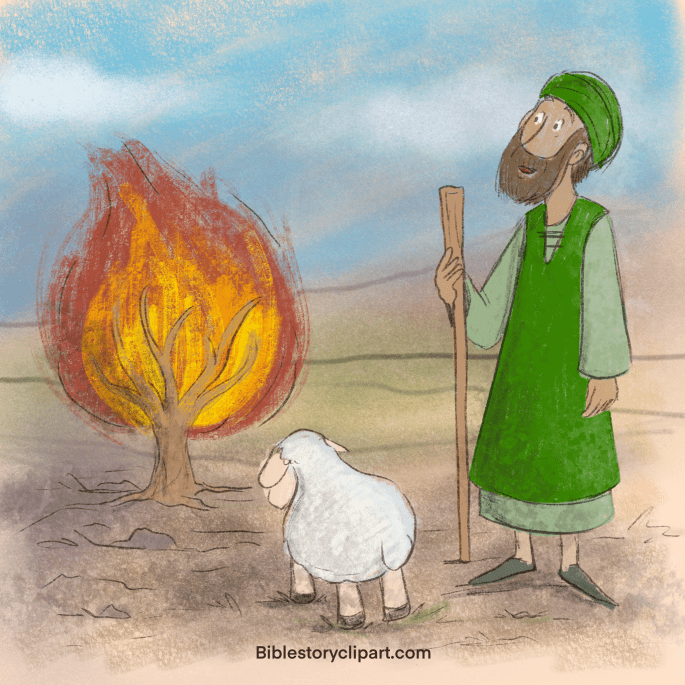
And those AHA moments were truly profound! Moments when my initial shallowness transformed into compassion and empathy for those I was serving. That’s how God works. He was converting my heart right in the midst of my brokenness.

So, there’s my story—the good, bad, and ugly. And this is my hope – that I am finally recognizing the person I was created to be and the purpose I am to fulfill for whatever time I have left here: to truly point others to God and not myself.

I’m not sure what tomorrow’s going to look like – but I am sure I’m in good hands! I will leave you with this beautiful song by Casting Crowns: https://www.youtube.com/watch?v=_eQd3K2Fxp4

Learning from Moses: Embracing Responsibility and Change

How many people throughout history have struggled and spent all their energy blaming everyone else for their pain: parents, co-workers, despicable neighbors? They would rather go down in flames than admit to their own faults. I’ve been there and often have to catch myself when I slip back there.

How about those Israelites as an example? Follow their trail from captivity to freedom. God heard their cries for years. I’m not sure why he made them wait through a few generations before he responded. No doubt he had a good reason. But, he finally did enlist Moses to go take care of it.

Remember that Moses was trying to live a quiet and unassuming life since that whole fiasco of him murdering and hiding the body of an Egyptian. He felt pretty comfy until God jumped out of a burning bush and surprised the c*#p out of him.

That’s what God was saving him for: “Pack up your stuff and go save the Israelites from Pharaoh.” Personally, I would ask for more details of his expectations and surety of the outcome before committing. That probably comes from years of abuse by an unyielding and demanding mother. In those God-calling moments, all I see is an authority figure I was supposed to feel safe with and trust. And my inner child screams, “RUN, IT’S A TRAP!”

If you think about it, Moses could have had abandonment issues while he was floating in the river in that basket for however long that lasted. He, too, could have feared trusting God (there were no therapists back then to help him sort through his issues). That could also be why he shoved Aaron in front of him, trying to get God to send him instead.

Anyway, Moses wasn’t really keen on the idea of confronting Pharaoh and tried to get out of it. But God wouldn’t have it. So he went…kicking and screaming. I think he was secretly excited when Pharaoh told him to take a flying leap, “See, God. He’s not budging. I’ll be going now.” But God stopped him in his tracks and had him sit through the litany of plagues, ten to be exact, that he rained down on Egypt:

  1. Blood
  2. Frogs
  3. Lice
  4. Flies
  5. Pestilence
  6. Boils
  7. Hail
  8. Locusts
  9. Darkness
  10. Killing of the firstborn

At last, Pharaoh relented. His patience expended; he told Moses to get them out of his sight. All the while, Moses had his sandals and toothbrush packed just in case. So they all scurried out of Egypt before Pharaoh changed his mind.

Now, the fun started. The Israelite’s story is strewn with whining and complaining at every turn, “There’s no water, this manna stuff sucks, my tent-mate snores.” Blah. Blah. Blah. How quickly they forgot how torturous their lives were in Egypt as they labored under cruel and unimaginable circumstances.

Now fast-forward. Remember when they were tent camping at the foot of the mountain, eating beans, roasting marshmallows over an open fire, and singing cowboy ballots while they waited for Moses to return from his historical visit with God?

(Blazing Saddles – Tenor GIF)

Wait, no, that’s the wrong scene. Sorry…

Anyway, surely you know this part of the story. Right? Bolts of thunder and lightning and God up close and personal. “No thanks! We’ll wait here.” They all gave Moses a high-five and “ATTA BOY, you got this” pep talk. Then, they waited at a safe distance. No doubt some bet on God pulling Moses into that burning bush, and that would be the last of him. They just weren’t trusting any of it.

And while we’re on the subject of us messy humans, let’s not forget that Moses wasn’t the poster child for perfection. I mean, he did kill that Egyptian and bury him under a pile of rocks. And he did tell God “No” several times when he didn’t like his plan. And, he whined incessantly about the Israelites whining.

Can you hear the “IT’S NOT FAIR!” mantra that must have droned on and on from all of them for FORTY.  LONG.  YEARS?

So, what about us? This is the point where we need to look in the mirror and try our damndest to deny that we do the same thing over and over and over again. Come on, you know I’m right. We do it so often it probably slips by our consciousness.

Okay, you sit there staring in that mirror if you want to, trying to excuse yourself to the God who knows better. I’m moving on. Though I’m not really sure how that’s going to work if I stay tethered to my past.

Letting go of the known, even if it’s negative thoughts and feelings that serve no good purpose, is just plain scary. So often, we would rather stay right where we know what to expect than risk the vulnerability that is sure to accompany something new and uncertain.

Looking back at the abuse of my mother, as bad as it was, I knew exactly what she would do and how to dodge the bullets so-to-speak. It became so commonplace it was almost a game at times. And when she tripped herself up, like the time she chased me up the ladder on our bunk beds and it fell backward, I probably felt a great deal of satisfaction. At least until she got her hands on me.

There is a flip side to that coin. Now that I’m adult(ish) and have no one to answer to, I also have no one to blame but myself if things go sideways. Which, I believe, is how God intended it. Taking responsibility for our actions and cleaning up our own messes in the process is how we are called to live in this unpredictable, messy life.

Unconditional Love: Learning to Love Through God’s Grace

LOVE

I Said I Loved You, But I Lied

Often the words, ‘I love you” are just that – words.  If I am married I feel obligated to tell my spouse. If I have children or parents, I should tell them, at least sometimes, maybe Christmas is enough, or Christmas and birthdays. Maybe I could just send a card or an email or text.

Can I beat my child or abuse my spouse out of “love”, for their own good? Many of us carry scars of past pain and hurt that play out in our lives today. I swore I would never be like my mother – does that sound familiar?

I recall one time in my life when my mother told me she loved me. It was in this context, “Now you know I love you or I wouldn’t ask you this question, are you on birth control?” I never heard her say it before or after, and I was twenty-two at the time.

Any time love is attached to something; when it is conditional, it is worldly; shallow, and indifferent. No one said loving others would be easy. If that were the case, Jesus would have either not come at all or would have lived to a ripe old age. He showed us how to love. God’s immense grace can help us love those that we find humanly impossible to even like – even ourselves sometimes.

Now here’s the key: I can learn to love only when I have accepted God’s love myself. Scripture says we love because he first loved us. I can’t give something I don’t have to give. I had nothing to give most of my life because it was only recently that I have grown to accept God’s love for me.

Know the Difference

Worldly love wears the sheepskin of an “if it feels good” mentality over the wolf that devours childhood innocence, destroys relationships, makes compassion a burden, and muddies the pure waters of selfless love that was created by God.

The love God created, “…suffers long and is kind; love does not envy; love does not parade itself, is not puffed up; does not behave rudely; does not rejoice in iniquity; but rejoices in the truth; bears all things, believes all things, hopes all things, endures all things” (1 Cor. 13:4-8)

God loves unconditionally. May you too know the depth of that love.

JOY

“Shout joyfully to the Lord, all the earth; break forth in song, rejoice, and sing praises.” (Psalm 98:4)

My response from my former life would have been something like this: “News flash, dufus, joy is the noise made by fools who don’t have a clue what is going on in the world. Have you missed the constant killing of innocent people? Wildfires, tornados, and floods?  Have you been in a coma or what? Am I finished, or are you still stupid!?”

All right, fair enough (no need to call me names). I actually do know about the horrors that have visited this world since the beginning of time. I also know about a man who suffered an indescribable death at the hands of those who wrongly accused him of a crime. He was beaten, tortured, spit on, mocked, and made to carry his own cross to a hilltop. Then he was nailed to that cross as many watched him slowly suffocate and die.

I know about men and women who followed him because they believed in him even though they knew they would suffer their own trials and the same fate: jail, stoning, torture, and death. Do you think for one moment they would have signed up for that if they were following a fool? There is a common thread in all of their writings and teachings: joy – sheer unadulterated joy in all their circumstances. Why? Good question. Here’s the answer….

They knew that the only way to bring nonbelievers to Christ was to live joyfully because no idiot would follow someone who spewed bad news on a regular basis. Cynicism is the devil’s tool to keep unbelievers away from Salvation’s door.
We are called to go and make disciples. How would that be possible if our minds and hearts are focused on ourselves and our misery, and not on Christ? Suffering has a purpose, and when you discover that truth for yourself, as I did after so many years, you will have arrived at a place where you can shout for joy and share the Good News with others. But if you live according to the flesh and have your mind set on things of the flesh, you will be a “clanging cymbal” (1Cor. 13:1) to those around you who will see Christianity as a joke. Why would any nonbeliever come to Christ if Christians are as miserable as they are?

Joy Is…The oasis of laughter in the desert of loneliness. It is a caring touch coming through the locked door of a broken heart. It is peering through tear-stained eyes into an empty tomb. Pain and suffering are temporary. Joy is eternal.

PEACE

  “Do you want to be made well?”

Can you imagine a doctor asking a sick patient that question?  “So, from all of our tests, it looks like you are gravely ill. Do you want to be made well?” Is this a trick question? Was it when Jesus asked it of the man who had an infirmity for thirty-eight years? (John 5:5-6)  No, and Jesus was serious when he asked me the same question, was I tired of shallow attempts and continual backsliding?

If I wanted true peace in my life, I would have to let go of the anger and lashing out. I would have to recognize the part I played in my misery, and I would have to release the people who were on the receiving end of all the pain and hurt that was bottled up inside of me. In public I was the picture of calm and peace; in private my life was out-of-control. It is important to understand that anger is not the underlying emotion; it is the outward expression of unmet needs.

The Antithesis of Peace

The Israelites were a perfect picture of what peace and contentment are not. Moses got them out of Egypt where they were being persecuted. Do you think they were singing, “Free at last, free at last” as they were escaping the brutality they experienced at the hands of the Egyptians? Or possibly praising God? No way.

They whined and complained about everything – and when they did, God responded. No water? God sent it.  No food? God sent it. Egyptians closing in all around them and God does that little parting of the sea. But they continued to bellyache. Moses was beside himself trying to keep them happy. How embarrassing it must have been for him to continually have to take their complaints to God. “Um…excuse me, Lord, I’m sorry to bother you again…”

I look back and wonder how difficult it must have been for others to live with my bellyaching and complaining. I wonder if some heads were shaking and eyes were rolling in silence. Did I turn some people away from God because there was no peace in my life? 

Yet, peace and contentment are not out of our reach. Granted it is not easy. You would think there would be nothing pleasant about the journey God brought me through as he was revealing my sins and healing my pain. When in actuality, I am blessed for all of those experiences that brought me closer to God and showed me a peace I could never have realized any other way.

One of Jesus’ final acts was to offer his disciples peace, and they were going to need it! “Peace I leave with you, my peace I give to you; not as the world gives do I give to you.”  The world has never been at peace, and what passes for peace one moment changes the next.

Have you known someone in your life that just radiates peace?  Someone, that you seem to gravitate towards, not really knowing why?  You can be pretty sure that person is walking in the Spirit. And if you are wise, you will do everything, short of stalking them, to be in their company, to glimpse through them the very nature and essence of God, which is the very essence of peace. And then claim it for yourself.

PATIENCE

Today patience is a dinosaur, and if perseverance doesn’t come in a pill form, we aren’t interested. I want it now! I don’t want to feel it, I don’t want to deal with it. Give me another credit card, a pill, or a bus ticket out of here. A display of patience we might tolerate would be something like a gentle nudging to wait your turn; wait for your elderly grandmother to catch up; wait in traffic; wait for a phone call, and so on.  Just a small interruption in our daily routine.

But for such a small interruption, haven’t we seen people handle it as though it were a major life-altering event? A sales clerk puts you on hold. When she returns you blast her with, “It’s about time. I’ve been holding for 20 minutes!” Have you really? Most likely it was about 3 minutes, tops. Think of the times you have been impatient with someone. Was it really a major setback for you? Really?

Wanna know the original meaning of the word? It was likened to the suffering of Christ. It literally means to suffer and endure. If that is true then how much more would we react to the events in our lives that call for patience? How much more would be required to be in a relationship with someone who is unbearable or endure intolerable circumstances? But that is exactly what God requires when he calls us to patience; to suffer and bear the burdens of life.

We excuse ourselves when we fail to be Christ-like to others and yet we expect God to be all-loving, all-forgiving, and all-patient with us. “Well, God’s a bigger man than I am.”  So, you’re comfortable with that excuse are you?

Here, go ahead, water this one down:

“And do you think this, O man, you who judge those practicing such things, and doing the same, that you will escape the judgment of God?  Or do you despise the riches of His goodness, forbearance, and longsuffering (patience)?” (Romans 2:3-6)

There you go. You can spin it, dance around it, ignore it, whatever – but you will not escape it. Truth is truth no matter how much we disagree with it because it doesn’t suit us.

But hold on, I have some good news for you. God doesn’t demand anything from us that he will not give us the power, his power, to achieve. So why is God so patient with us? God longs for us to trust in him. He longs to shower us with blessings and guide us through all the obstacles this world presents to us.

When I first began my walk with God I often found it very difficult to accept that he could be so patient. That wasn’t what I was used to, and I continually failed him.  I found it hard to turn to him because I was sure of what would be waiting for me when I went to him: The disapproval, the cursing, the spanking, the reminder that I was “bad”. But that was my experience with my mother.

Over the years, I had erected a wall that would keep others away from my heart. I didn’t trust anyone. Little by little I tested God’s assurances and found him to be loving and trustworthy. Whenever I hesitated I simply reminded myself of all the times he was faithful to his Word. That didn’t mean it was easy to change or to stand before him when I had sinned. But it did mean that I could trust him. His love was steadfast.

Am I a Stumbling Block to Others?

Patience is not a weakness or an excuse to sit back and proclaim that we are waiting on God. Persistence is the activity of patience; to be diligently at the work of changing for the sake of others; to be ever in prayer for the grace and strength of God to endure our struggles with other people and circumstances, knowing that they are in our lives for a reason.

KINDNESS & GENTLENESS

“Will you look at the way she struts around in that disgraceful outfit!”

“You idiot! Get out of my way!”

“I will never forgive you for that!”

What are the prejudices and injustices we perpetrate on others because of our pride, pious attitudes, and our forgetfulness of just how imperfect we are? I don’t like looking at so much of my ignorance in such a small space, but I have a story to share!  I call it…“The blessings we miss.”

Several years ago, I went to a funeral service for a dear friend’s father (I will call her Judy and him Bill). I knew the story. I knew enough that I even distanced myself from him when he was at Judy’s house.

Bill and his wife were long divorced, and his relationship with his daughters was strained at best. Some of them wanted nothing to do with him. Although Judy seemed to deal with it well, I knew he had hurt her, and that was cause enough for me to dislike him. Why should I bother?  It wasn’t like it mattered. But sadly, I would discover on the day of his funeral, that I was the one who was the loser. I missed a blessing.

After the funeral, everyone was invited to a luncheon. I couldn’t stay long so Judy and I decided to meet the next morning. As I was leaving the cafeteria, I found myself going against a stream of people. Who were they that they even stayed for the luncheon? Didn’t they have better things to do?

The next morning Judy and I met. I asked how the luncheon went. Tears began to flow down her face as she related one story after another. It seems she opened the floodgates when she thanked everyone for coming and encouraged anyone who was willing, to share stories about her dad. Well, they did. One stranger after another. The stories seemed endless of his concern for them and their problems. He was a good listener. He cared.

Wait a minute. If he cared so much, why was his relationship with his daughters so bad? If he cared so much why didn’t we know that? There is an explanation, and it is a huge part of the human condition. If we thought about it we could all probably call to mind at least one person in our lives right now whom we have distanced ourselves from because of struggles in our relationship. That person may be as close as our living room couch.

It hurts, and we are determined to stay focused on that hurt as long as it takes to make that person suffer. But, you know what? That person is a child of God just like we are. That person is broken just like we are.

Am I better, more perfect, without fault? No. The sooner I realize that the sooner I can get beyond the hurt. If I never do that, then one day, perhaps it will be me standing at the funeral. It will be me hearing stories from strangers about this person I never knew because I would not allow him to be anything other than the person who abused me as a child, who cheated on me, who stole something valuable from me, probably so long ago I quit trying to recall the source of my pain. But I haven’t quit hating him, or her, for it. How many times do we miss a blessing because we refuse to forgive?

“Everyone you meet is fighting a battle you know nothing about. Be kind” Brad Meltzer

GOODNESS

Everyone feels benevolent if nothing happens to be annoying him at the moment.” C. S. Lewis

What is your definition of “good”?

  • One who hides behind the mask of “goodness”?
  • One who gets the “Saint of the Year” award.

And while we’re at it, let’s think about where we fit in this mix. I think I fell into the first category most of the time.

I learned a few tricks from my mother who was the master of masking. She was from the old school of, “what would the neighbors think?” When you walked out the door, you left the dark family secrets behind and played the game in public. She got caught one time though. I was a teenager, and our family went to the home of a man who was a youth minister and loved to engage people in conversations about family dynamics. He was very straightforward. He looked at my mother and me and asked, “Do you have a good relationship?” My mother’s rapid-fire response was, “yes”, and mine was, “no” as I walked away. It didn’t have a life-changing effect on our relationship, but I savored the moment.

Oh, the games we play; the lies we tell. But the real tragedy, I believe, is that we really believe we are faultless, even though our sins tell a different story. Goodness really doesn’t seem to be on the same scale as holiness, does it?  I think I could rationalize myself into the category of good, but I would have a tough time comparing myself to Mother Theresa, although I tried once…

I have to tell you this story. This is really pathetic and I shouldn’t, but here it goes. Many years ago, I went to a banquet. It was an annual event honoring the “Person of the Year”. As the evening began, first with dinner, then speeches, I secretly (this is really bad!) wondered if I was the nominee. Then came the time for the award. I was hoping I didn’t have spinach in my teeth or a run in my stocking (yes, we wore those!). The anticipation was building! The President of the organization stepped up to the podium and began speaking about the honoree. But, as she revealed, bit by bit, the litany of selfless acts and humility of this person, she was, at the same time, revealing my pride and arrogance. And the reality of it slapped me a good one! I really don’t recall all that she said, but I half-expect Mother Theresa to walk up and take the award, then thumb her nose at me on the way back to her seat. And I would have deserved it! God can humble us in the most profound ways.

How easy it is for us to consider ourselves good people, just because we exist. Maybe in the eyes of the world, it will do, but not if we call ourselves Christians.

As Christians, most of us really want to do good, but we are constantly in a battle. That battle is described in Galatians 5:17, “The flesh lusts against the Spirit, and the Spirit against the flesh, and these are contrary one against the other so that you cannot do the things that you would.” True goodness is virtue that comes from God alone.

Galatians 6:9 says, “Don’t grow weary doing good.” People who are superficially good do grow weary because the game is a lot of work. Our true character is who we are when no one is looking. David Morsey once said, “The occasional good deed of the unbeliever no more reflects the Spirit of Christ than the occasional bad deed of the believer reflects the spirit of Satan.”

So the litmus test for goodness is how you treat that nosy neighbor, that crotchety checker at the grocery store…that you encounter when you are tired and grumpy yourself. How about that mother-in-law of yours or the boss who is a direct descendant of Attila the Hun?

Now comes the proverbial question, “Why should I?”  And the answer is?  Being good, especially to our enemies, can bring far greater rewards than treating them the way they deserve to be treated. Our returning good for evil may just bring that person to repentance. We are not talking about random acts here; we are talking about a daily, purposeful, and guided life of goodness. And if you still need convincing go back to the Cross for a reminder of what loving your enemy looks like. Now, go love that jerk  (oops…child of God).

FAITHFULNESS

 “Examine yourselves to see if you are in the faith; test yourselves.” (2 Cor. 13:5)

God’s faithfulness is steadfast, but what about ours? I will not tell you that I possess all wisdom and have vast theological knowledge because I don’t. So why would you care what I have to say about this subject of faithfulness? I can only relate to you what has brought me to a place where I know faithfulness means far more than I was ever willing to admit. That didn’t happen as a result of one miraculous event. No burning bush, no parting of the sea, no Lazarus-like miracle. Just a journey–a very long journey, to a patient and loving God.

Ray C. Stedman wrote an article about America’s Spiritual Decline”, “Pollster George Gallup has described America as richly religious but ethically impoverished. While religion is highly popular in America, it is to a large extent superficial; it does not change people’s lives to the degree one would expect from their level of professed faith. In ethical behavior, there is very little difference between the churched and the unchurched.”

How do we rationalize our indifference to the horror of what took place at Calvary?  Could it be that we trivialize Jesus’ suffering to make our meager sacrifices appear to be significant and our sins acceptable? Thus Jesus becomes a warm fuzzy, and we are off the hook.

“Take up your cross and follow Me.” (Mark 8:34) Oh boy, here we go. This is where we disconnect.

We know the kind of men the apostles were before Jesus died. They were a bunch of misfits. They couldn’t understand his teachings, and they argued for a coveted spot next to him when he ruled. They doubted, they questioned. They fell asleep when he asked them to pray with him, and they ran away when he was taken to be hanged. They may have scattered, but even from a distance, they all knew what was happening. They knew he was being tortured and crucified, and they knew they screwed up big time!

Just think of a time when you did something that you regretted. We all have. You replay everything you did over and over again. You know there is no way to justify it, and the shame is too much to bear. You will never be able to face your spouse, your parents, your boss, again. You can’t do it over, and you can’t change it.

A Second Chance

Now here they are in the Upper Room after Jesus is buried, eleven men lost in confusion and grappling with their weakness; their denial. We only think of Judas betraying Christ, but they were all guilty of betraying the One they once said they would follow to their deaths. But alas, he walks right through the wall of that room and stands in their presence.

Can you imagine the look on their faces?  The look of dread and fear is all over them. They’re gonna get it now. But what are his first words? “Peace to you.” (Luke 24:36)  There standing before them what they could no longer question, a God who truly loved them. When Jesus said, “Anyone who wants to take up his cross and follow Me, anyone who wants to suffer the same fate as Me, step forward.”  They did. All of them. There would be no turning back now, no running, no denying. The cock could crow till the cows came home and not one would falter, not this time. Why? What was different?

They had time to contemplate his incredible act of submission to the will of God. They were firsthand witnesses to the immensity of God’s love for them, and for a moment they were afraid they would never have another chance to make it right.

Now, most of us are not called to martyrdom. We are called though, to die to our own selfish, self-centered ways.  We are called to be different, to suffer if need be, as our suffering is the most powerful witness we can give to the reality of the risen Christ and to a faithfulness that accepts anything that comes our way in his name. We must stop asking, “Why me Lord” and accept our trials with a faith and trust that God is right there with us to turn our sorrows into joy.

SELF-CONTROL

Everything that Satan is behind—those worldly things that we call pleasure are really his skillfully disguised handiwork. That piece of chocolate cake that you couldn’t resist, the neighbor’s wife you couldn’t resist, the new outfit you couldn’t resist? What about those tiny indiscretions? What happens is that each time we justify the smallest sin, we become insensitive to the fact that it actually is sin.

Does Jesus speak to us about such things?  You bet He does. Here are just a few scripture verses, though there are many that speak to the issue:

1 John 2:15, “Do not love the world or the things in the world.  If anyone loves the world, the love of the Father is not in him.  For all that is in the world—the lust of the flesh, the lust of the eyes, and the pride of life—is not of the Father but is of the world.”

For all those who have been deceived into believing that there is such an excusable thing as a “tiny indiscretion”, those are the lies of Satan and the lies I lived most of my life that kept me out of relationship with God.

While we are on the subject, we would do well to look at all areas that we excuse but God does not:

“Gossip isn’t murder”…unless you consider you are killing the dignity of that person you are talking about.

“Flirting isn’t adultery”…When you flirt you are not only tempting yourself, you are tempting the other person. It is dishonest and misleading. There is a very fine line between flirting and adultery. You just don’t want to go there.

“Everyone tells a little lie sometimes. Everyone cheats, it isn’t hurting anyone. Everyone steals something, usually something small that no one would miss; it’s not like you’re robbing a bank.” The bottom line is that all three of these acts are about deceit.

How do we get so confused as Christians when we can call evil “good”? I believe that we are confounded by what we see all around us. We have been lulled into a belief that there is nothing wrong with what we are doing. What has happened to our consciences? What has changed from the time when these sins we engage in daily would have been shocking in the past?

Leo Tolstoy, in his essay, The Lion and the Honeycomb, Why Do Men Stupefy Themselves? explains: “What people most want is not that their consciousness should work correctly; it is that their actions should appear to them to be just.” Clearly, it is easy for us to justify tiny sins.

Now let’s say you have determined that right this moment you are going to live the life God has called you to. You don’t care what your friends say or what other people think; you are turning over a new leaf. You ask him to forgive you, and you are on your way to sainthood, right? Not so fast. We make God promises that we can’t keep, and we’re convinced it’s because we are weak. Then we hate ourselves and are sure God hates us too. We have no control, no willpower, and no clue. It may seem I have just rained on your parade but bear with me for a moment.

Is your heart in a place where you don’t want to hear those awful words (after your bags are packed and you thought you had your ticket “Home”), of Matthew 7:21-23? “Not everyone who says to Me, ‘Lord, Lord,’ shall enter the kingdom of heaven, but he who does the will of My Father in heaven…and I will then declare to them; depart from Me, you who practice lawlessness.”

Well then, consider these words when you step on that path:

If you have run the gamut as I have, you would have amassed some serious battle scars trying to change and failing repeatedly. You will have thrown up your hands, thrown out the white flag of defeat, and thrown faith to the wind as you settled back into the life you recognize as comfortable. You have found it easier to live the life you are familiar with.

Holiness is for saints, I guess it wasn’t for me. It looks like the perpetual Monday morning diet doesn’t it? How can God say in 1 John 5:3, “For this is the love of God, that we keep His commandments. And His commandments are not burdensome.”? Seriously? They seem awfully burdensome to us, don’t they? Why? Well, it’s really simple. When I tell you, you are going to smack your head and say, “Duh, why didn’t I think of that?”

Self-control is not self-alone! Granted, as Christians, we are called to be disciplined in our lives. Until we can give everything to God; until we can come to a place where we are “seeking the Kingdom of God first” (Matthew 6:33), we will repeatedly fail. Have you smacked yourself yet?

PUTTING IT ALL TOGETHER

Following Christ does take a great amount of discipline, and it is only possible through him. To everyone who is battle-scarred; whether those battles of life have only been skirmishes or if they have been “all-out, fight-to-the-death, take-no-prisoners” wars, take heed. This is not a once-and-done deal. We don’t make a one-time – this is it – I surrender – commitment, and then throw ourselves a party.

Living life as a committed follower of Christ, is a day-to-day, sometimes moment-to-moment surrender. If you think all your sinfulness will instantly be eradicated, you’re gonna fall hard, smack your loser head, and go join the circus.

Come back here. Don’t do that. Just fall on your bruised knees, seek forgiveness from a merciful and loving God, and start over. You can do this! God created you and equipped you to do this.