Winding dirt path through grassy hills with sun rays breaking through dark clouds

Rewriting Eve: Lost Stories, Divine Fairness, and Finding God in Unjust Times

Did you know that Eve spent three years in therapy? No, you didn’t, because that fact was erased from our history along with so many others that just didn’t fit the criteria of the authors of Scripture.

Oh, don’t get me started! – Too late!

I believe it’s very telling that a lot of the missing facts in Scripture just happen to be about women. In particular, strong, powerful women who had something important to say about God’s call in their lives.

Okay, I got way off track. But, if you want to read more about it, I highly recommend the writings of Dr. Bart Ehrman, “The books removed from the Bible, whether from the Old Testament Apocrypha or early Christian writings, reveal a dynamic and evolving process driven by theological debates, questions of authenticity, and the shifting needs of early Jewish and Christian communities. Excluded texts, however, continue to offer valuable insights into the religious and cultural context of their times. While they may not have made the final cut into the canon, their existence highlights the diversity of beliefs and practices that characterized early Christianity”.

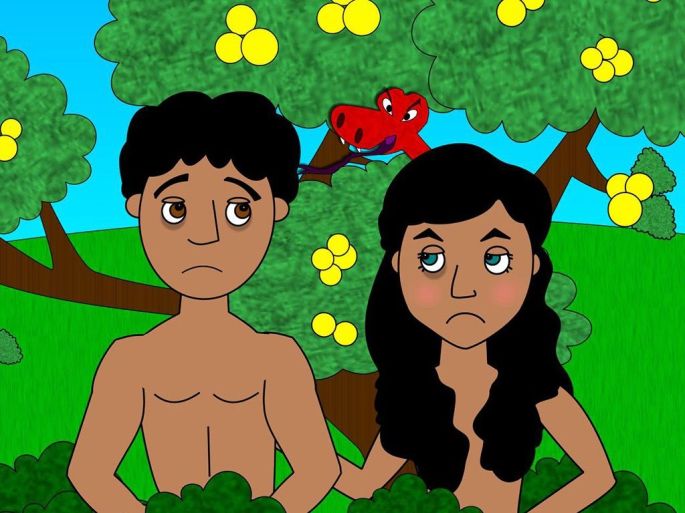
Anyway, back to Eve’s therapy sessions. If you recall, Adam, metaphorically being caught with his pants (or more accurately, his fig leaf) down, pointed his finger at Eve, “It was her fault, God! She made me eat the apple. I don’t even like apples!”  Oh, and you think Eve wasn’t pissed? She, and every woman bearing children after her would have to endure the pains of childbirth. How is that fair?

So, after Eve suffered at least four times in childbirth while Adam sat in the waiting room watching a football game, she had had enough. When she was able to pull herself together, she made an appointment with a therapist. She was done! But, it didn’t go well in therapy either because at every session she cried uncontrollably, “IT’S NOT FAIR! God believed Adam when he blamed me for that whole apple incident while he snickered behind that damn tree?! IT’S NOT FAIR!!!”

After six sessions with her and nothing being resolved, the therapist sent her away with a copy of the forthcoming book, “When Bad Things Happen to Good People”, by Harold Kushner. Since it would be a LONG TIME before the book came out, the therapist gave her a synopsis, which I will share with you in a moment. But first, let’s get serious…

How many of us today are horrified and angry with God for all the terrible things we are seeing on the news or are experiencing ourselves: the hatred, abuse of innocent people, children going hungry, immigrants detained in detention centers under deplorable conditions, a failing economy, and a war out of control? Of course, all that invokes anger and fear. But have we concluded that God doesn’t care because He won’t answer our prayers, or worse, that He has caused all of this turmoil to punish us for some reason?

I have to say that today I am in a better place to deal with all of this emotionally because I did my fist shaking at God years ago at one of the worst times in my life, which I wrote about in my book. During that time, I turned away from God because I was certain He didn’t care about what I was going through, and I told Him so. I felt so lost and angry that I struck out at Him, “If you cared so much about me, where were you when my mother was abusing me and when I was sexually abused by my brother-in-law?!” And then, suddenly, I heard Him speak to my heart so clearly, “I was right there with you. Your tears were my tears. Because I have given you all free will, I cannot control your actions, which breaks my heart. But, Linda, you too have sinned and fallen short.” OOPS!

So, now let’s consider these words from Harold Kushner. Who wrote his book after the death of his son:

“Life is not fair. The wrong people get sick, and the wrong people get robbed, and the wrong people get killed in wars and in accidents. Some people see life’s unfairness and decide, ‘There is no God; the world is nothing but chaos.’ Others see the same unfairness and ask themselves, ‘Where do I get my sense of what is fair and what is unfair? Where do I get my sense of outrage and indignation, my instinctive response of sympathy when I read in the paper about a total stranger who has been hurt by life? Don’t I get these things from God? Doesn’t He plant in me a little bit of His own divine outrage at injustice and oppression….Our responding to life’s unfairness with sympathy and with righteous indignation, God’s compassion and God’s anger working through us, may be the surest proof of all of God’s reality.”

So, never forget, God has given us His heart of compassion and empathy for others who suffer unrighteousness. And, yes, we are justified in the anger we feel. However, shaking our fist behind locked doors is not the answer. When we do that and insist that God fix it, his response, if we’re listening, is, “That’s what I have created you for, to be my hands and feet in this broken world. How will anyone know my love for them if you don’t show them?”


It’s to Die For: Caring for the Poor in an Age of Consumerism


All across the country, people stand in lines three-deep for hours to be the first to plop down a few thousand dollars for the latest iPhone. As usual, the media, the gatekeeper of American values, gleefully stands watch over the frenzy.

Nearby, and unnoticed, other people stand in lines. They are the invisible poor in our midst. Statistics show that on any given day, some portion of the 14.3 million families in this country are standing in food lines (Bread for the World 2022).

 And it’s getting worse. Those numbers will increase as programs like the Child Tax Credit, the Supplemental Nutrition Assistance Program (SNAP), and the Special Supplemental Nutrition Program for Women, Infants, and Children (WIC) are all being cut by our current administration.

To the “haves”, the expression ‘It’s to die for” refers to our obsession with “things”. To the “have-nots”, that expression resonates from the pit of their empty stomachs. In both cases, consumerism defines who we are.

For those obsessed with self-gratification, and there are many “Christians” in their ranks, what they “have” defines who they are. For the poor, what they don’t have determines their value. The former well fed, the latter hungry, both dying spiritually. But this is nothing new. God has grieved over this fact of our humanity since the beginning of time.

He has been sending us Prophets, starting with Amos and Isaiah, to speak to this travesty. And they did not hold back! They continually called out those who believed all their riches and privilege were due to being favored by God. So, the admonishments and “woe to you” warnings of the prophets were simply laughable and annoying to them. Perhaps that’s why Jeremiah wanted to run and hide when God called him into service! But he finally went when he could no longer bear Yahweh’s grief, and he paid a hefty price for that courage.

Then, along came Jesus. Jeremiah and Jesus shared the same passion for the poor and disgust for their oppressors, and they bore the same hatred from those who didn’t want to be reminded of their sinfulness. God’s message was clear to both of them: Be willing “to die for” those who suffer.

Christ still tells us that when we care for the least of these, we care for him. Why are we still not listening? Could it be that we, too, are so enmeshed in this consumerist mentality and individualism that we simply don’t care? Or could it be that the gospel of American Express is louder and more appealing? “Woe to you, shopper, if you don’t use your REDcard for all your needless purchases.”

Do we feel a little better about it if we know that a tiny percentage of our spending goes to African Relief? That works for the barely guilty and isn’t risky because we don’t actually have to see the poor and suffering. Not so easy when hungry children are right in our midst, as are modern-day prophets.

How are today’s prophets speaking to our obsession with self? They are speaking the truth about the chasm between the rich and the poor. They scream unfair andtell us boldly and without reserve, that if we call ourselves Christians, we are charged to care for the poor.

 Mother Teresa says Woe to us if we do not recognize the dignity of the poor, that they too are made in the image of God. “Being unwanted, unloved, uncared for, forgotten by everybody, I think is a much greater hunger, a much greater poverty than the person who has nothing to eat.”

Dorothy Day was a tireless advocate for the poor: “The Gospel takes away our right forever, to discriminate between the deserving and the undeserving poor.”

John Kavanaugh, S.J. “It is our consumeristic culture today that defines our values, and forms our meaning and purpose. Companies market hope and identity in commodities, not relationships.”

Walter Burghardt, S.J., said that feeding the hungry is not simply a miracle Jesus performed; it is a mandate for Christians.

Kenneth Himes tells us that the word “consume” means “devour, waste, exhaust“, and calls our obsession with consumption in America pathological. “Consumer behavior has been removed from ethical judgment”, which then allows us to become complacent about God’s call to share our resources and acknowledge our indifference toward our starving neighbor. What has been lost is the essence of who we truly are and why we exist.

Mirabai Starr, “Our encounter with the manifold losses that characterize the human experience can till the soil of our hearts so that we are more available to the suffering of other beings and the earth we share. Sorrow can be paralyzing at first, but compassion, which can sometimes take the form of anger, is a wellspring that offers infinite sustenance.”

 As for me, my life changed drastically when I finally looked in the mirror and saw my own sinfulness. Woe to me! My greed and self-fulfillment came on the backs of the poor and hungry. My refusal to give up the slightest want caused children to go to bed hungry. “Thus says the Lord God, enough, Linda! Do what is just and right.” (Ezekiel 45:9)Truth be told, I still suck at it at times. But I’m getting better at self-correcting ahead of that Holy Whack!

In a country in which the majority of people profess to be Christian, our actions do not match that profession of faith. Woe to us, “Hypocrites!” Pope Paul IV spoke of rights as the right not to “have” more, but to “be” more. That is true for all human beings – the needy, and perhaps even more so, the greedy.

Only Man/Woman can Prove that God is Love

I’m taking this out of storage!

We are currently in the midst of incredibly challenging times. This is a truth that some may only whisper, perhaps in the hopes that it will all fade away. However, the reality is that it won’t. So, in the face of this reality, how do we move forward with any hope for our children and grandchildren’s future?

I believe it must begin with God – and acknowledging the fact that many doubt he even cares. It conjures up an image of him sitting in his heaven, feeling rejected by humanity and giving up on the whole lot of us. All while smacking his head and rethinking that “free will” idea of his.

Archibald MacLeish, an American poet and writer, powerfully explains what God may have hoped for by refusing to control us, “Man depends on God for all things: God depends on man for one. Without man’s love, God does not exist as God…and love is the one thing no one, not even God himself, can command. It’s either a free gift, or it’s nothing. And it is most itself, most free, when it is offered in spite of suffering, of injustice, and of death.” 

Do MacLeish’s words resonate with you? They certainly do with me. But believe me, I tried to deny that truth for a long time as I continuously prayed for God to “fix” this broken world and the people in my life who made me miserable. It never worked. Even though I believed my suffering was created by other people that I desperately wanted to control. Can you relate?

Well, dear ones, take heart because this broken ground we stand on is holy ground, and we are called to stay put, no matter how hard it seems. We are called to stand on that hilltop and emulate the LOVE that is God. We are to boldly and without apology declare that God has not abandoned us but is in our midst, cheering us on for the sake of his kingdom.

But the love of God will not manifest if we merely sing his praises in church to get that “I showed up every Sunday” card punched. God isn’t interested in our praises. He longs for us to show up in the midst of the brokenness that surrounds us and love those who suffer. If that seems scary, it’s understandable.

Think of the Desert Monks who went off into the wilderness and lived in caves. They prayed A LOT for the brokenness of the world, and I’m sure God loved their prayers. But I prefer to focus on why he sent Jesus into the world. It surely was meant as a wake-up call for us to come out of hiding. Just sayin’.

Yes, Jesus also went into the desert to pray when things were tough, but he didn’t stay there!  He offered his prayers to God, accepted his fate, and came out swinging! Remember that whole table-tossing event?

I believe that’s what God is calling us to do now:  to do what we can to care for the most innocent, those without a voice, those who suffer. This is no time to fret or worry about the outcome; there’s too much at stake.

It will likely be challenging and perhaps dangerous, but as that ever-pressing question goes, “If not us, then who?”

Like my hero, Esther, who knew she was called to a fate that would likely end her life. And her response? “WOOHOO, I will go, and, oh well, if I die, I die!” Okay, she probably wasn’t that thrilled, but she was determined to fulfill her purpose, and that should be our response to God’s call for us.

Oh, you don’t believe God has spoken to you about that? This may be where self-critical thinking is required. Is it possible you’re not listening? Is it possible you’re spending too much time whining and complaining about how others are making your life miserable, and you’re just sitting and waiting for God to take care of that first?  Then you’ll consider moving beyond your own selfish longings in the comfort of your shallow existence? Sorry, I guess that was mean. But is it true?

I know it was true for me for longer than I care to admit. And here’s the sad reality of that: my being so angry and hateful toward those who hurt me over so many years was probably worse in some instances than the injustices of others toward me.

My own actions likely provoked some of that. Like the time I threw a bar stool at a wall to get my husband’s attention! Yeah, I did that, and it worked for a millisecond. But I’m not proud of it and never used it on a resume as an example of my creative leadership skills!

No, I was not innocent and denied my own sinful behavior towards them. Of course, there would never be healing in our relationships until I was able to admit that. I needed to seek and offer forgiveness before healing was possible. Not wait for someone else to take the first step.

Healing the wounds of the world must begin by first repairing our personal relationships. Because if I claim to love God but do not love my neighbor, I am a liar, a noisy, clanging symbol (1 John 4:20). Ouch.

The Ungrateful Poor

(Shutterstock Image)

In the years I worked with the homeless, I came to see what I had never seen before; the deep heartache of those cast aside, those we tend to ignore, look away from, or judge.

We may not know the circumstances of the people we encounter day-to-day: the poor struggling to survive or the homeless, who are more and more visible on the streets today. But God calls all of us to compassionate care. No exceptions! They are our brothers and sisters in Christ, no less deserving of value and dignity than we are. Rev Dr. Liz Theoharis calls them “God’s chosen nobodies.”

I have always been inspired by Dorothy Day. She and Paul Maurin began the Catholic Worker Movement in the 1930’s. She reminded everyone who came to serve with her, particularly those with an ego, that “There are two things you should know about the poor: they tend to smell, and they are ungrateful.” 

Why would she say that? Because if we have some expectation of their eternal gratitude for us taking our precious time to hand them a bowl of soup, we’ll be sorely disappointed and likely there for the wrong reason.

“Not all of us can do great things, but we can do small things with great love.” Saint Mother Teresa

 I believe God challenges us to sit with this stark reminder of how the poor and homeless are generally treated. Have you ever considered what happens to them when they die on the street? Jesus’s words in Matthew 25:40-45 should elicit shame in our hearts, “whatever you do to the least of these you do to me” – but does it?

It did for those who started the Homeless Remembrance Project in 2003. “We’ve stood for more than 2050 women, men, and children who have died! These are outdoor, public, or violent deaths only of presumed homeless and temporarily housed people!” 

Can you wrap your head around those numbers when considering their work is ONLY in a small area of Seattle, Washington? They define it as “A collaborative effort of homeless women, faith community leaders, designers, artists, social service providers, and other friends—working to create places of hope, healing, and beauty to honor and remember homeless people who’ve died in King County.

Our concept is twofold: the Tree of Life, in Victor Steinbrueck Park, is a sculpture with space for community gathering, hope, and healing to recognize that we are one people, homeless and housed together, and we can end homelessness. Leaves of Remembrance on Seattle sidewalks bear the names of those who have died, and we share their stories at the site Fallen Leaves.” https://homelessremembrance.org/

Luke 16:19-31 speaks to the massive gap between the rich and poor in America. Years of a growing obsession with independence, greed, and wealth accumulation have manifested indifference to the plight of the poor.

But some feel compelled to stop looking away and respond to God’s call to serve those who suffer. If you feel that call, I believe it first requires honesty about where you stand and, if there is a tug on your heart to serve, consider why.

What is your “why”? It’s an important question that deserves a great deal of reflection. Is it a response to an obligation you felt after last Sunday’s sermon, checking off the “volunteer” box? Is it a misguided notion that you are their “savior”? -because that job’s already taken.

Mother Teresa’s words should resonate with all who call themselves Christian, “It is a poverty to decide that a child must die so that you may live as you wish.” If that truth resonates deep within your heart, congratulations, you are on your way to fulfilling your life’s purpose!

Never, Never, Never Give Up!

As soon as I opened my eyes this morning I started ruminating on the negativity of our new reality since the elections. Then, I looked at my phone and realized that I missed my grandson’s concert at his school yesterday. I was devastated and felt terrible.

Am I trading enjoyment and purpose for loss and fear even when I try to convince myself that God is still present and still has a plan for me, for all of us? I’ve been so stressed about what is likely coming that it has consumed me with angst and dread, in particular for those most vulnerable. But if I continue to dwell on things that I can’t change or control, I will surely miss the beautiful parts of my life right now.

There are certain things that have not, and will not change, no matter what lies ahead: We are all called to care for those God cares most deeply for: The lost, the broken, the suffering. He is surely heartbroken when so many people refuse his call to fulfill their life’s purpose in whatever way he has gifted them. And I am also saying “no” when I want to check out of life.

Debie Thomas speaks of our interconnectedness, “We cause pain and loss when we hold ourselves apart, ….it’s especially challenging to do so now. We live in bitterly divided times. We have good reasons to be cautious and self-protective….Whether we like it or not, our lives are bound up in God’s and in each other’s. The only true life we will live in this world is the life we consent to live in relationship, messy and entangled though it might be.”   

What brought it all home for me were two readings from yesterday. First came the reading of the Prodigal Son’s brother, “then he became angry and refused to go in.” The author of this meditation asks, ”Are you angry and refusing to participate in some space in your life? Is an invitation waiting for you, too, if you can set aside your resentment and anger?”

Oops…Gulp

Next came the Benedictine mediation for that day in which I previously highlighted these words:

“Benedictine spirituality is about coming to a sense of the fullness of life. (It) never gives up on life. Why? Because every day we have gives us another chance to become the real persons we were meant to be. The point, perhaps, is to never give up on life and never doubt that every bit of kindness, every tender touch we lay upon another in life can heal what might otherwise have died, certainly in them, perhaps even in ourselves.”

So, God has spoken to me profoundly in these last few days. He couldn’t be clearer if he tried, even for a hard-head like me!

God needs us now, more than ever, to stay strong in faith, to be that beacon on the hill that he calls us to be in Matthew 5:14, 16, “You are the light of the world. A town built on a hill cannot be hidden. In the same way, let your light shine before others, that they may see your good deeds and glorify your Father in heaven.”