I know many people, and I’ll bet you do too, perhaps even you, who can’t believe God has a plan for them. Over the years, I have encountered people who don’t believe me when I tell them my story. “Oh, really?! God told you to do that, huh? Right!”
To be honest, I wouldn’t have believed it myself if he hadn’t gradually brought me to a place where I could trust him, even if I was fearful and had no idea what he was up to. Which, frankly, is still most of the time.
God has always longed to grow me into the person he meant me to be. It was me resisting, me not being present to him, me missing the mystery and majesty that surrounded me because I was just too busy to notice, or more likely, too afraid. So instead, I skipped along, trying to drown out his voice, “Lalalalalalalala, I can’t hear you!”
For years, there were little promptings that, in hindsight, proved to me he was on the job (Romans 8:28). Then bigger ones that required more trust and offered way more grace than I deserved. God opened my heart in ways I could not have imagined.
Though I still mess up – and often – I know God’s response is out of love for me; his admonishments tell me that he loves me too much to let me stay stuck in my messiness.
We are so used to being in a world that is loud and demanding of our attention. We busy ourselves filling in uncomfortably quiet places. That’s how we miss God’s “still small voice” or “gentle whisper” (1 Kings 19:12). Sure, he’s good at those show-stopper whirlwinds and earthquakes and fire. Even what I have called 2×4 moments but didn’t leave marks like the ones my mother inflicted.
Because of her, I was always on guard for those “laying down the law” whacks that I expected from God, too, when I messed up. However, I believe he speaks more often through the Spirit’s whispers of pure grace.
We can become so enmeshed in and blinded by the things of this world that we miss our whole purpose for being here. So if you are going through life day after unremarkable day, schlepping through the same routine to ad nauseum – STOP IT! Your life has a purpose that God depends on you to fulfill. You matter that much!
We are all called to holiness, called to use the gifts and talents already given us for God’s kingdom work right here – right now. It just takes awareness on our part. (I would highly recommend Anthony DeMello’s book by the same name, “Awareness”).
Leo Tolstoy’s novel, “The Death of Ivan Ilyich,” considered a masterpiece, was written just after his own “profound spiritual awakening” and conversion experience.
While lying on his deathbed, Ilyich ruminated about the reality that his entire life was superficial and self-serving, and he profoundly stated, “Maybe I didn’t live as I should have done.” In the end, he posited a question that Tolstoy must have pondered himself, “What if I really have been wrong in the way I’ve lived my whole life, my conscious life?” Oops, a little late, buddy!
It was too late for Ilyich, but not Tolstoy. He discovered his purpose and rejected his aristocratic life to follow Jesus’ teachings – particularly the Sermon on the Mount. Years later, his writings had a profound impact on Mahatma Gandhi, Martin Luther King Jr., and countlessothers.
Soooooo, what are you waiting for? You must still be breathing, or you wouldn’t be reading this. That’s a start. Incredibly, no matter how you lived your life to this point, it’s not too late to begin again. New beginnings are God’s specialty!
“To infinity and beyond!” God coined that phrase, you know. Don’t believe me? HUMPH! Check out Ephesians 3:20, “Now to him who is able to do immeasurably more than all we ask or imagine, according to his power that is at work within us.”
Alrighty then, you’re pumped and ready to go, right? You’ve packed your sandals and camel hair coat and checked Google Maps – for what? A sign from God?
(free bible images)
Stop! Take a deep breath. Maybe start by sitting quietly with God and waiting.
Don’t look to anyone else to give you a formula or a checklist to send you on your way to your destiny. But I willtell you this: You cannot love and serve others (which is our greatest calling) until you can love yourself.
And you can’t love yourself by utilizing any of the myriad self-help books on the market. You can only do that by growing in the knowledge that you are deeply and passionately loved first by the God who created you!
And you can only do that by being in relationship with him, which requires your time and attention. You are his son/daughter with whom he is well-pleased (Matthew 17:5). Let that sink in. We are all deeply loved sinners. It’s high time we act like it, don’t you think?
Absolutely, go to church, take the time to read scripture, and pray, But mostly, LISTEN! Geeeezzzzz, we’re so bad at listening.
When your family is happy and healthy, your job seems secure, and the bills are paid –When everyone is doing what you demand, and no one challenges you – you’re certain your life is under control, and you have yourself to thank.
Life is good; God is in his heaven where he belongs, and that’s where you want him to stay. You’ve got this. You’re doing just fine. Thanks.
Then the bottom falls out: someone gets out of line and upsets your “plans”. Someone you love becomes desperately ill and dies. You lose your job and your security. You watch the murder of innocent children on the daily news, and your most certain assumptions about life are shaken to the core.
Everything is suddenly out of control, even the state of the country, which wasn’t even on your radar six months ago!
How did that happen? How will you handle it? Where do you turn? My guess is that you will fall apart, like I nearly did, and probably shake your fist at God in the process. You’re certain he could fix it if he wanted to, but he hasn’t, and that’s why you don’t trust him. Never mind that you’re doing a sucky job of controlling it yourself! Just sayin’.
So, You Dig In
Because you are now certain that God hasn’t got a clue or doesn’t care about what’s happening to you, to us, or to our world, you will take it upon yourself (as usual) to tell him how to fix things. You always have your list of demands on hand, so it requires little effort or thought to whip it out and shake it at him – like Santa with his naughty list.
But, what you will not do is fall on your knees in surrender to his will because surrender means defeat. It’s too risky and makes you vulnerable to a God you don’t trust in the first place.
If the question of who’s in control has not been settled for you, then your life will be wrought with uncertainty and fear when it’s assaulted and overrun by pain and sorrow. You won’t be able to handle that because you have not dealt with it in the calmness of daily life. You can’t wait until you’re thrown overboard to learn to swim. Peter tried it, and look where it got him.
God’s Got This
No doubt you have heard on more than one occasion, usually in church, that God is in control, not you. If you thought about it at all, it would likely be in those desperate moments in life when you had to face the reality that you have no power over anything or anyone beyond yourself. If you were honest about it, you’re also failing miserably at that! Which is probably why God hasn’t reached out to you for advice. Recall his words to Job, “Stand down, buddy. I’ll let you know when I need your advice!”
How well I know this to be true in my own life, and how long I frantically tried to deny it because I believed my peace and happiness depended on me. No one had ever proven themselves to be trustworthy, so the only way I could protect my fragile heart was to deny access to it by anyone – even God – especially God. How often I cried out to him to explain to me where he was when I was a child and being abused. Then sat in silence for an answer.
Often, when we hear “God is in control,” we frame it in the context of the sadness and suffering in our lives and in the world where it’s easy enough to deny. What kind of God would allow such suffering? It’s much easier to believe that he plopped us down here and left us on our own, “There you go. Have a nice life. Good luck – you’re gonna need it!”
What is critical to look at, first of all, is our understanding of free will. Second, we have a belief that God causes pain and suffering. But God is not in control of our choices. Most people are basically good; some do evil things. It’s a choice we make. Please know that I am not saying that mental illness is not a determining factor in some people’s choices, especially choices that are beyond our comprehension. That’s not what we’re talking about here.
We cannot understand, or possibly even accept, the notion of free will if we believe that God causes bad things to happen. Often, in the midst of a tragedy, someone will ask, “Why did God allow that?” – Or “My brother died even though we prayed faithfully for God to save him.” But sickness happens, relationships fall apart, natural disasters occur, and death is inevitable.
Father Richard Rohr asks, “Do you realize with what difficulty surrender will come to a fixing, managing mentality? Nothing in that psyche is prepared to understand the spiritual wisdom of surrender. Pain teaches a most counterintuitive thing—that we must go down before we even know what up is. Suffering of some sort seems to be the only thing strong enough to destabilize our arrogance and our ignorance.”
God is Always at Work for our Good
But God will have the last word. He will use the tragedies in our lives for his glory. That truth cannot be denied when we witness the compassion of strangers on the daily news when disaster strikes somewhere in the world. Sadly, the nightly news usually only highlights extreme cases like hurricanes and mass shootings. But I assure you that every day, someone, somewhere, is quietly going out of their way to offer kindness to a stranger who will never make the news.
I thank God daily that my peace, contentment, and joy are not dependent on me! Surrendering our certitudes and obsessive need for answers in order to live our lives fully is the great paradox of our humanity. I believe that is what Jesus came to show us!
Those who suffer deeply, parents who have lost their precious children, the poor and the destitute, and those who know they are at the end of their broken lives have much to teach us about sorrow, and joy, and surrender. You see it, don’t you? In the aftermath of a terrible tragedy, something incomprehensible and beautiful unfolds. It’s God bursting into the hearts he created. Strangers reach out in love and compassion, families and neighbors draw closer together, and someone forgives the unforgivable.
It’s a necessary reminder that it’s okay to surrender our incessant need to control because God makes all things new.
God calls us to trust him in all things. In Revelations 21:4-5 we’re assured that:
He will wipe away every tear from their eyes.
Death will be no more.
Mourning no more, crying no more, pain no more.
And that he will make all things new.
Blessings and Peace!
I am sharing this post in January 2025. I suppose it has been sitting quietly in a folder for some time, waiting for this moment. My hope is that it will offer you peace in these uncertain times.
This is my prayer for you and your loved ones: (Numbers 6:24-26)
God is in control. No matter what happens, no matter how awful or awesome, no matter who suffers or comes out on top, it’s all God’s plan. Ain’t it grand?!
Sorry, I don’t buy it.
Consider this: God creates Adam and Eve, drops them into this magical garden where they romp through fields of flowers with no cares in the world—got that picture?
Okay, so then almost immediately, they screw it all up by eating that damn apple…O. M. G.!
Personally, if I were going to be cast into the eternal fires of hell for such a minor transgression, I would have held out for Amedei Chocolates – but that’s just me.
You may have thought God knows everything, but according to this story, he clearly doesn’t. As the drama continues, they run and hide, knowing full well they’re in deep trouble and this will not end well for them.
AND… here he comes…the God of the universe, the master control freak, the ultimate planner of all that is.
They all play hide and seek, and God is “it”. “Come on out, you crazy kids. Where are you? I’m gonna look in these bushes now.”
When he finally finds them, he demands they stand before him in their underwear as he brushes off their attempts to beg for forgiveness. Nope. Ain’t happening. He admonishes them for screwing up his perfect plans, then sends them off to suffer a living hell forever and ever.
Then he gets his second wind, “Oh, I’m not finished with you!”
Now, God’s totally exasperated as he acknowledges the failure of his painstaking and grand plan for the universe. He decides to make an example of Adam and Eve. Their sins will be cast upon every child born thereafter, stamped with the seal of “broken mess” right out of the birth canal.
Maybe then all of humanity will get wind of it, surrender to his will, submit to his “laws”, and behave accordingly. Nope – another big fail. He decides to start over with new characters – maybe reconsidering that whole free will thing – Nope!
Is all this working for you? How about this: “The biblical story of the perfect and finished creation from which we human beings have fallen into “original sin” is pre-Darwinian mythology and post-Darwinian nonsense.” John Shelby Spong
Let me throw another random thought into the discussion: instead of God being a harsh, unyielding authoritarian, what if he were actually submissive? What if he has been surrendering to us all along? What if he never intended to control us? What if that whole Adam & Eve story was just that – a myth created by some inane humans long ago? Stay with me here.
As a child, I was controlled by my mother. She called the shots; she meted out harsh punishments. Ultimately, she determined my worth. As I grew older, she still had power over me. Unworthiness was so embedded in my heart that I continued for years to live out of the belief that I didn’t deserve love – from anyone – especially God. He clearly didn’t care. If he did, I reasoned, he would have saved me from her and others who abused me long ago.
I recall crying out to him in one of my most painful moments of doubt about his love for me: “God, if you loved me, why did you allow my mother and others to abuse me? He spoke into the most broken part of my heart, “Linda, I do love you. When you were being abused, I cried with you. Because of their free will, some people make terrible choices that hurt themselves and others. You have sometimes done the same, but I have never stopped loving you.”
Jesus was the beloved son of God. That we know. God watched the unfolding of his three-year mission. That we also know. Jesus went to him constantly in prayer. We can be pretty sure they discussed how he was making a lot of enemies who were making threats against him in an effort to shut him up. When that didn’t work, they went after him and dragged him to the cross to be crucified. He was beaten and hung there for three hours before he died. WHERE WAS GOD? He was right there suffering the pain and heartache of his son’s death. Something he could not control. Why?
Archibald Macleish offers these powerful words, “Man depends on God for all things: God depends on man for one. Without man’s love, God does not exist as God, only as creator, and love is the one thing no one, not even God himself, can command. It is a free gift, or it is nothing. And it is most itself, most free, when it is offered in spite of suffering, of injustice, and of death. Love – love of life, love of the world, love of God, love in spite of everything – is the answer, the only possible answer, to our ancient human cry against injustice. It is in man’s love that God exists and triumphs, in man’s love that life is beautiful, in man’s love that the world’s injustice is resolved. To hold together in one thought those terrible opposites of good and evil which struggle in the world is to be capable of life, and only love will hold them so.”
If you believe God is this powerful controller of all things, why did he not save his own son? I’m going to leave you with that question to ponder during this blessed season of Lent.
It seems like such a stretch – no – an impossibility, for us to accept what God desires from us and for us. Not a list of commands we can tick off like the rich guy in Matthew (19:16), not a quick rote prayer on our way to more important things, not a list of complaints we keep bringing to him until they are heard and remedied.
And so, here we are, stuck in our miserable small lives, blaming our unhappiness on God or some inept human and demanding the universe be reordered in our favor!
We seem oblivious to life’s special moments with friends and loved ones, majestic sunsets, breathtaking rainbows, and, most of all, a magnificent life full of richness and purpose. All planned out for us by a God who doesn’t do ordinary and never did.
Afraid of intimacy
Do you ever think about why we stay stuck there? I believe we are afraid of intimacy. Deny it, poo-poo it, thumb your nose at it, but think about it. Keeping ourselves at arm’s length from a relationship with God and others requires nothing from us. Intimacy is too scary. But surprisingly, it too makes no demands. By its nature, it cannot demand.
Intimacy is the love relationship modeled for us by the Father and his beloved Son through the work of the Spirit. It is self-emptying and gratuitous. It seeks the best for others over our own wants and needs. It is life-giving, and it is what God longs for with every one of us. He beacons us into a relationship with him, and he will court, swoon, and get all mushy over us until we let go of our fears.
Afraid of vulnerability
But intimacy requires trust and vulnerability; we’re terrified of being vulnerable and exposing our weaknesses. Yeah, I tried that once. No thanks.
If we could realize that vulnerability is not a character flaw to be conquered. It is integral to our relationship with God and is meant to be transforming. It means accepting and loving who we truly are, sins and all. It is birthed in the grace of God, not shame.
We continually believe that we’re not good enough, not perfect enough, not “holy” enough. Who told us that? I can think of several people, beginning with my parents, especially my mother. Unfortunately, countless more people have been eager to reinforce that lie over the years. When you think about it, it’s amazing that we allow other broken people to define us and determine our worth. Then point to them when we try to prove to God that we are not worthy of love.
Truth be told, it’s the ego that holds us back, which is a paradox, actually. The ego is our sacred cow. And yet, we live this meager, paltry, desolate life tethered to our fears while pumping up our false selves for display to anyone who threatens our fragile sense of self.
I wasted so many years trying to defend myself against the lies and blamed God for all my misery. In my lowest moments, I accused Him of not caring, “If you loved me, where were you when I needed you?! What was I supposed to think when You were silent while my mother abused me?” More silence. “Yeah, I thought so.” Then, proving my point, I could go off and do what I pleased. You’re on your own, Linda.
I’m pretty sure God was silent in those moments because he knew I was a hot mess, that my heart was too closed off to hear him. I wasn’t interested in healing. I just wanted him to bring down fire and brimstone on everyone else.
Fear denies us a loving, generous, merciful, forgiving, extraordinary relationship with God, and in turn, with others. Instead, we settle for crumbs. We live in defiance of our truth because it seems impossible to believe God would really “desire” our broken, self-centered, imperfect selves. What Glennon Doyle calls “this crappy version of ourselves”. Instead of embracing it, we give up trying because it’s just too hard to be the flawless human we’ve been led to believe God requires. We’re certain that we are a disappointment to him. That he’s tallying up all our transgressions. It’s really annoying.
Fear has a source that God continually warns us about. I love this quote from John Eldridge:
Our capacity to love is innate
When we don’t believe in our blessedness, we begin to doubt and fear. So, how do we get beyond that? How do we learn to embrace; to love what God sees in us? Perhaps we should start with this truth: Even if your parents failed to love you well, it’s okay. You are okay because you already possessed an innate capacity to love and be loved before God formed you in your mother’s womb.
Our mothers, no matter if they love us well or totally suck at nurturing, are not the creators of our essence. That distinction is God’s alone. Got that? Let that soak in.
And the journey begins
I was able to begin my long road to change when I came face-to-face with this God who seems to forget our offenses even when we can’t. Not a change that signifies accomplishment but change that begins with me embracing my messiness, brokenness, and imperfections.
One of my most powerful moments of growth came when I realized that my mother, my mean, abusive mother, was loved by God. But, sadly, she was never able to grasp her truth. When I was younger, I hated her and told her so. I believe she lived and died, never knowing the person God longed for her to accept and embrace as his beloved daughter.
What I wouldn’t give to have her back. What I wouldn’t give to offer her the forgiveness and love that I now know. But when she was alive, I was too lost and broken myself. God knows that, and he has been relentlessly pursuingmy heart so that I could forgive myself and offer his love to others.
I honestly feel that the moment I could forgive my mom, even though it was long after she died, that our spirits connected, and that mysterious, mystical love of God transcended all our barriers and healed our hearts. I could deeply sense it even though I couldn’t explain it. But, of course, as soon as you try to “explain” mystery, it is no longer mystery.
God’s love resides in the depth of our hearts
When we allow ourselves to open our hearts to God, the magic begins. Suddenly, our worldly longings don’t seem so significant. We stop demanding anything from anyone, ourselves included. If we can get just a tiny taste of the peace and indescribable joy God will bring to our lives when just sitting in his presence becomes everything, it is equivalent to heaven because it is heaven.
Jesus said to all with ears to hear, which has never been many, “For indeed, the kingdom of God is within you” (my emphasis). Luke 17:21. You don’t have to strive for it or wait until you “get to heaven, to experience it
Wake up!
Saint Irenaeus said, “The glory of God is man fully alive”. Conversely, the joy of Satan is man sound asleep. Are we even aware that there is a battle raging in our hearts that is continuous and unrelenting? Jesus warned about it, but we’re not listening because we don’t think it applies to us.
How much of Scripture do you believe is meant for us today; is intended to be a guidepost for how we should live and move and have our being? And how much do we toss away as irrelevant? That, my friends, is Satan at his most cunning. Like that pesky snake in the garden, “Oh, come on, you don’t really believe all that stuff do you?! God wants you to have a fun-filled life with no worries! Party on, munchkins”.
Jesus warned his followers then and warns us now, “The thief comes only to steal and kill and destroy; I have come that they (you and me included) may have life and have it to the full”. John 10:10. Do you feel like you’re living your fullest life possible? Or does it feel like one hurdle after another to overcome so many barriers, heartaches, and detours that wear you down?
God’s Challenge
“Try me out for thirty days. When you arise in the morning, come talk to me first. Read some Scripture, tell me what’s on your mind, what breaks your heart. You may already be doing that, but I would ask you to go deeper because this is where it gets real. Give me ten or fifteen quiet minutes without expecting anything. Then, if you don’t feel something stirring within you (by the way, that would be me), I will give you your miserable life back! What do you say?” – God
I see you there, thinking, “Yeah, been there, done that, and got lost in a maze of “rules and regulations” along the way. But I’m busy, and this is complicated. Can you just give me the bullet points?”
I think we have the notion that God doesn’t understand our obsession with bullet points in our hurried life. Look how we are drawn to articles that provide 5 Easy Steps to _________ (fill in the blank). Four would be even better. Just get to the point!
Actually, he did. Perhaps he made it too easy, and we can’t wrap our minds around something so simple. Ready?
1 Easy Step to permanent peace and joy:
“Be still and know that I am God.” Psalm 46:10 – Any questions?
Oops. Did you just spit your coffee on that new white shirt? Sorry. My bad.
While you’re cleaning up there and before I go any further, I think a disclaimer may be in order. Everything I say about God, aside from my own personal experience, is my humble opinion and has no basis in fact. What did you pay for that opinion? Nothing. So, what is it worth? That’s right. Nothing.
So let’s continue.
There are many different beliefs and opinions concerning heaven and hell. But, there is only one fact: no matter what someone tells you or what “proof” they provide, no one knows. No different than a recent conversation I had with a friend who collects clowns. She thinks they’re delightful and enchanting. However, I actually believe some satanic force created them to kill us in our sleep. So, who’s right? (I’m pretty sure I am, but I have no proof of that either.)
So, if your bubble just burst or your halo deflated, I apologize. But this is kind of important stuff to consider because if heaven and hell aren’t an actual piece of real estate, then maybe your reason for being nice, or not, to the jerk next door needs to be reevaluated. And, spoiler alert, this will not be easy or fun.
This is not heaven!
(Shutterstock)
And this is not hell!
(Shutterstock)
Diana Butler Bass speaks of this idea of heaven and hell as “vertical faith”. She says, “Sacred traditions replete with metaphors of God in the elements were replaced by modern theological arguments – about facts and religious texts, correct doctrine, creation versus science, the need to prove God’s existence, how to be saved, and which church offers the right way to heaven. These are the questions of vertical faith.”
So, when it is said that we make our own heaven and hell right here, where we live and move and have our being, what exactly does that mean? This is the tough part I referred to earlier because our Western brains can’t seem to grasp anything mysterious or inexplicable. Therefore, everything in existence has to be named and categorized or it gets cast aside as irrelevant.
We are very good at compartmentalizing everything in our lives. Nice people who are low-maintenance get to be a part of our club. Unpredictable, moody, or disagreeable people don’t get to join. We only converse with those who agree with us and avoid or argue with those who don’t. We even compartmentalize life and death. We separate the two with the certainty that there is no connection. Mufasa would not approve! He explained to Simba, “when we die our bodies become the grass. Then the antelope eat the grass.”
You may be too young to recall the days when wakes were held at home in a family parlor where life and death were celebrated as a continuum. That all changed with the advent of the funeral parlor. Funeral parlors sprung up so “professionals” could manage the uncomfortable aspects of death and turn bodies into pasty replicas of loved ones. Frankly, I think funeral parlors came into existence when some guy got tired of his mother-in-law hanging around in a box in his living room for a week (before the invention of formaldehyde!). But I can’t prove that either.
We keep everything in our lives separated into neat, tidy piles that we can easily manage, like peas and applesauce on our dinner plate (yuck, don’t want those to touch each other). So it’s no surprise that we stick God in heaven, so he’s separated from us by time and space.
The thought of God being right here in our midst, looking for any soft entry into our walled-up hearts is just too much to fathom. But, let’s stop for one minute, let down our guard, and imagine how different, how rich, and full our lives would be if we could comprehend that reality.
How about this uplifting thought about hell: Gian Carlo Menotti tells us, “Hell begins on the day when God grants us a clear vision of all that we might have achieved, of all the gifts which we have wasted, of all that we might have done which we did not do.”
Wait, if hell is here now, and we begin to understand our true purpose, then we have a chance to correct our pathetic, despicable, pitiful selves before we drop dead. That is Good News, right?!
So, what does all this mean? Again, I can only speak from my own experience. For most of my life, I ignored God and when I did acknowledge him it was usually in a display of anger directed at him. I too believed he was distant and could care less about me – a heathen.
If God is known as “Father” then it would stand to reason that I would view him just as I viewed my own father. In which case, he would be distant and aloof. He would be sitting on his sofa eating ice cream and mindlessly watching TV, while the world fell in around him. Or if my mother was any indication of who God was: a controlling, punishing, and unforgiving “parent”, it’s no wonder I ran like hell in the other direction. Who needs that? Either way, he would not get a “Father of the Year” award from me and there would be no Hallmark card created for him.
We seem to like the notion that God is way up there while we’re way down here We might be relieved to think he’s not watching while we try to run our own lives. “Don’t need you, God. I’ve got this!” We’re probably hoping he’s much too busy with other more important things to pay any attention to us and our antics.
In many traditional faiths, God sits in his heaven and doles out rewards and punishments to each of us according to our merits or sinfulness. Think of Job in his most distressing time and how his friends wagged their accusing fingers at him, certain that he had sinned in some terrible way to have been the recipient of God’s wrath. “It’s pretty obvious Buddy. You screwed up big time! Now, you need to fess up before God gets his second wind!”
So, what changed for me? It certainly wasn’t that God changed his ways after he read a book annominously sent to him, “How to Win Friends and Influence People”. No, I had changed. I opened myself to a relationship with him that allowed me to experience who God really was, not who I imagined him to be. Knowing about God and experiencing him is the critical difference necessary to live as fully as we are called to live, and to trust what lies ahead.
God tells us in Jeremiah 29:11, “For I know the“plans I have for you,” declares the LORD, “plans to prosper you and not to harm you, plans to give you hope and a future.” We can choose to believe what we have long been told about a God whose wrath is to be feared, or we can choose to experience the God of immeasurable love and compassion.
Oh, if we could just grasp the reality of heaven and hell perhaps we would live our lives differently so that Menotti’s words would not be the end of our story.
Listen to these prophetic words of Father Richard Rohr: “When hell became falsely read as a geographical place, it stopped its decisive and descriptive function, and instead became the largely useless threats of exasperated church parents. We made (heaven and hell) into physical places instead of descriptions of states of mind and heart and calls to decisions in this world (emphasis mine). We pushed the whole thing off into the future, and took it out of the now. Jesus clearly says the kingdom of heaven is among us (Luke 17:21) or “at hand” (Matthew 3:2, 4:17). One wonders why we made it into a reward system for later, or as Brian McLaren calls it, “an evacuation plan for the next world.” Maybe it was easier to obey laws and practice rituals.”
I love the Gospel of Thomas. Yes, there really was one, but he didn’t make the cut. Neither did Mary Magdalene but don’t get me started on that one! Thomas writes, “Jesus said,“Seekers shall not stop until they find. When they find, they will be disturbed. After being disturbed, they will be astonished” (my emphasis).”Now, hold that thought a minute.
The scripture verse we are most familiar with is similar but clearly less challenging, it is Matthew 7:7, “Ask and it will be given to you; seek and you will find; knock and the door will be opened to you.” Our shallow, non-threatening translation? Just ask and you’ll get whatever your little heart desires. This reads like a Christmas wish list: Apple AirPods? Done. Captain Marvel Legacy Hero Smartwatch? It’s yours. Chanel’s Quilted Tote bag? Because Lindsay Lohan!? Whatever. Here you go.
Okay back to Thomas. I’m guessing that his gospel was rejected by the “editors” of scripture because they were afraid they could not control us if we discovered who God really is and the power that truth gives us. Of course, I wasn’t there, so I’ll admit I’m really just pushing hot air, but I think the verse is useful for making my assertions.
Thomas tells us that we are to be seeking God and when we find him in our very hearts, it’s all over. What being “disturbed” and “astonished” means to me is that this only happens when we are in relationship withGod.
Micah (6:6-9) tells us what God wants from us. In verses 6-7, these two stupid rich guys were trying to gather up all the best they had to appease God and buy their way into heaven. Somebody even threw in a firstborn child for good measure. But God rejects their attempts to buy his favor.
God: “Nope, I don’t want your stuff, I want you.” Micha lays it out succinctly, “He has shown you, O mortal, what is good. And what does the Lord require of you? To act justly and to love mercy and to walk humbly with your God.”
That last verse is the very core of who we are called to be as children of God: And what does the Lord require of you? To act justly and to love mercy and to walk humbly with your God. Does that sound like the demanding, controlling, cruel, never to be pleased God you learned about in Sunday School when you were six and then couldn’t sleep for weeks because you had nightmares about him finding out that it was you who dunked your sister’s doll in the toilet?!
I fully believe that we are living our heaven and hell right here on earth, in our day-in and day-out lives. Each time we make choices to love and serve others, or conversely, serve ourselves. Each time we seek out those God calls us to bring his love to, or we take care of number one. Each time our hearts break over the pain and suffering that permeates our world and then do something about it or turn our backs and cling to our fear of what it might require of us. With every choice we make to love or hate we choose our own heaven or hell right here.
Now, how does that translate to what eternity looks like for us when we take our last breath?
Wait for it….
Wait for it…
I have no idea.
But I will tell you this: I live daily as a sinner/saint. Don’t laugh, my mother-in-law thought I was a saint once for about five minutes (I screwed that up the first time I opened my mouth!). In my seventy-four years, I have known anger, pain, and bitterness. I have been hurt and I have hurt others. At one point I attempted suicide because the idea of living another moment was too unbearable (clearly I sucked at that too – thank God).
I have come to realize that I have been blessed to live the indescribable joy of a rich and full life, even in the messy parts, especially then. A life that encourages giving, serving, forgiveness, and caring for others. That calls us to be in relationship with God and everyone around us – to be Christ to a broken world.
We humans are complicated but it’s okay. I now know that I can show up for life unkempt, messy, disordered, and at times unpleasant because I am a beloved sinner. I know I serve a God of mercy and unconditional love so I am not afraid to humble myself before him and I am not afraid of what lies beyond this life.
And as for you, my friend, if you’re reading this you are still breathing, and if you’re still breathing it’s not too late. Even if you feel like your life is empty and you’re a total failure – you’re wrong! How do I know that without even meeting you? Because you were created in God’s image and he said as much when he first laid eyes on you as a tiny thought in his imagination, “Yep, I did good, real good! You’re a work of art, even if I do say so myself!”
(I have to throw this in because I’m stilllaughing) My all-time favorite book is “Holy Rascals”, by Rami Shapiro. I have read it so many times it’s falling apart. It is ridiculously poignant and hysterically funny! He says that we are all children of God. Every last one of us. That includes Saint Mother Theresa right alongside Jeffrey Dahmer. The only difference, he says, is “if Jeffrey Dahmer invites you to dinner, you should decline!”
You always have another chance to get life right, to erase regrets, heal broken relationships, seek forgiveness, serve others, and be all you were created and gifted to be! God is your biggest cheerleader (don’t try to visualize that!). And, dear ones, this is not something you want to put off till Monday, like that diet!
I will leave you with this quote by Ralph Waldo Emerson “You cannot do a kindness too soon, for you never know how soon it will be too late.”
May God bless and keep you. May God’s face shine upon you and give you peace.
John (5:-5-6) is such a challenging question, “Now a certain man was there who had an infirmity thirty-eight years. When Jesus saw him lying there and knew that he already had been in that condition a long time, He said to him, ‘Do you want to be made well?’”
(Artist: Marten de Vos)
REALLY!? Come on. Why would he ask that? Jesus could end thirty-eight years of misery for this guy in a heartbeat! Is there any possibility that he would say “no”? Well, yes, there is. I know that for a fact because I have said “no” to God longer than that! I turned my back on him and suffered a life of emptiness for years. Truth be told, I still suffer the consequences whenever I close my heart to God and choose to go my own way.
I was angry and self-indulgent (I often still am). My faith was shallow and lifeless (it, maybe not so often, still is). I continually picked at the scabs of the wounds inflicted by others, refusing to forgive and, at the same time, denying my own sinfulness (yeah, you guessed it – still doing that).
As I listened to God’s word and began to meet some faithful Christians, I became aware of an unexplainable longing in my heart. That was God, though I didn’t realize it at the time. I found myself getting bolder at reaching out to trust him. Though I still considered myself unworthy of anyone’s love, especially God’s.
I was also learning to become a better parent. I believe God intended for the parenting skills he taught to be passed down from generation to generation, but some of us have to look elsewhere for guidance. As much as I resented my mother for abusing me, and as determined as I was not to be like her…I was. Her way was the only way I knew. But then God gave me lessons in “Parenting 101” through others in my life.
However, as I poured more of myself into my children, a new reality was setting in. My husband and I were headed for disaster. I begged him to look honestly at our relationship while refusing to do it myself. I prayed we could work harder to mend our hurts and strengthen our marriage. But my pleading fell on deaf ears, and my fears were becoming a reality.
One by one, our kids were leaving home, and my husband and I became lost in the deafening silence of our empty nest. So after much thought, counseling, and prayer, I made the heart-wrenching decision to leave. It was probably the most challenging decision of my life! I had no idea what the outcome would be. I will say this in hindsight; I know I did not sense God was approving my decision or telling me to leave. But I am sure he intended to use this new reality “for his good”. (Genesis 50:20)
So, off I went. I decided to go to Kentucky to volunteer for an organization that worked with the poor in Appalachia. Before I left home, I prayed a prayer that I had never prayed before, that God would change me, not every other person in my life, but ME! God was just giddy with excitement! And, oh, the lessons I was about to learn!
How can I describe to you the soul-cleansing I experienced during that time, what those eight months were like for me? Every single day seemed to bring to light another of Linda’s issues to deal with. I didn’t enjoy confronting my pride, anger, and resentfulness. As a matter of fact, it was, in essence, like being in hard labor – for eight months. Non-stop. With no anesthetic!
“Come on, breathe for me,” says the doctor. “Breathe for me?I’ll give you breathe for me!How about if you try to breathe for me while my hands are around your neck, choking you? How about that?” (Oh, sorry, I must have been having a flashback.)
Anyway, for the first time in my life, my longings, my brokenness, and my hope that maybe I was worthy of love were laid bare. God was beginning to change my heart, though I hardly knew all the implications of that at the time. It was a beautiful example of how he can work in our lives when we “allow” him to do what only he can. All of my past attempts to change failed because I tried to do things my own faulty way, refusing to yield my will to his.
Sheer desperation began leading me to accept whatever God deemed necessary to change my life. No strings attached, that would allow me to yank control back if things became too hard or too painful. I would resist the impulse to switch to an easier route, though that’s how I reacted in the past when I was afraid. And what did I receive in return? Oh, not much…just a new relationship with God, my family, my husband of forty-three years, a purpose that fulfills me, and the joyful hope that endures, even during the most challenging times. In short – an abundant life I could never have imagined on that fateful day I left home.
John 10:10 says, “The thief does not come except to steal, and to kill, and to destroy. I have come that they may have life and that they may have it more abundantly.”
The fulfillment we seek can seem elusive. It can be confused with something as insignificant as a new outfit or something as unattainable as somebody else’s life. When we’re removed from our groundings and feel overpowered by our struggles, God reminds us that we’re right where he wants us. In our brokenness is where we’ll learn to be most like him. That’s where we discover that our joy cannot be stolen unless we allow people or circumstances, rather than God, to define us. Coming to grips with that truth will open us to the fullness of life.
In his most beautiful book, The Return of the Prodigal Son, Henri Nouwen enfleshes all that I have experienced, all that I have been so afraid to admit or even look at honestly. His vulnerability and openness about his own struggles give others the courage to trust that when Jesus comes to us and asks, “Do you want to be made well”? Our “yes” can be the beginning of more than we could ever imagine or hope for. (Ephesians 3:20)
Nouwen talks about his “coming home”; about being in his Father’s embrace, “I so much want to be, but am so fearful of being…It is the place where I have to let go of all I most want to hold on to….It is the place that confronts me with the fact that truly accepting love, forgiveness, and healing is often much harder than giving it. It is the place of surrender and complete trust.” I believe Henri Nouwen would agree that it is where God’s call and our self-emptying “yes” meet in the fullness of his grace.
All these years later, I’m still being challenged daily, and I don’t always respond as I should. My sinfulness is constantly a force to be reckoned with. After all, I’m still a messy human being. But I know God longs for us to claim the gift of his extravagant love amid all our messiness. If we only look within ourselves, we can see what is already there. We can become who we already are. God offers that joy to all of us. All we have to do is claim it. When Jesus asks, “Do you want to be made well”? – and your answer is finally “yes”, strap yourself in for the ride of your life!
Who aggravates every fiber of your being? Come on, you know someone in your life – past or present – you have wanted to throw from a moving train in one of your most angry moments!
Perhaps it isn’t your mother (like Danny Devito in Throw Mama from the Train) You love your mother. How about Uncle Bill? Uncle Bill makes you dread holidays! Every.Single. Blessed. One. He hates holidays and, in short order, makes you hate them too. He also hates your new living room set, your cheesecake, thinks you’ve put on too much weight, and wants to borrow another $200.
How about that annoying and relentless neighbor who causes you to lock your doors and pull your shades when you see her coming? Sometimes she catches you off-guard and holds you hostage in your own yard as she rants incessantly about absolutely nothing! Oh yeah, and she thinks your new birdbath is tacky (she might be right about that).
Anyway, you walk away, dazed and confused. Ewwww, she got you again! She makes you want to smoke more, drink more, or kick the dog. (Don’t do that. It’s not the dog’s fault.)
It’s really not the dog’s fault, Uncle Bill’s fault, or your neighbor’s fault. It’s your fault because you choose to allow others to control you. Don’t think they’re doing that? When you allow another person to upset you, for whatever reason, they are controlling you. How do you like being controlled? If you’re like me, you pride yourself on being the one in control and refuse to believe anyone could have that kind of power over you.
NEWS FLASH: When we cling tenuously to control or give it up to another, that is the prescription for misery.
Mark 7:14-23, “Nothing that enters one from outside can defile that person; but the things that come out from within are what defile. From within the man, from his heart, come evil….”
My dear mother-in-law recently passed away at the age of ninety-eight. Before her health took a turn for the worse, she was happy and content and loved being with her family, especially the grandkids. She was always very giving of herself and generous to a fault. But, the last few years of her life, she was miserable. Daily she expressed that misery to us, “Why won’t God take me?!” She felt like a burden, that her life no longer had purpose. She was angry, frustrated, and confused. Throw in hip pain, a bad back, possible strokes, and dementia, and of course, she was miserable!
But what’s my excuse? What’s your excuse? I believe we have forgotten who we are. Life presents a series of blows to our fragile ego, and the joy God intended for us is overshadowed by misery. Misery that we inflict on ourselves, all the while blaming others.
“Wounded by sin, clouded by temptation, we are our own worst enemy. Everything we say and do arises from within our own hearts. If our hearts change, it stands to reason that our actions will follow.” Terry Modica (http://gnm.org/good-news-reflections/ )
We see misery played out powerfully in the lives of the Pharisees during Jesus’ time. He not only came to show us by his own life how we are to live, but he also used the Pharisees as a prime example of how we are not to live. They were pious and arrogant! They were mean, vengeful, and always trying to trip up Jesus. Their hatred for him was palatable because he was constantly exposing their sinfulness. No one wants to be exposed. If they could just get rid of him! Mark 8:11 tells us that Jesus “sighed from the depth of his spirit” because of their actions.”
He could have retaliated, but he didn’t. We would have liked him to so we could justify our own reaction to the hurt we feel from others. But, he humbly walked away, and in the end, he humbly received the torturous beatings and crucifixion.
Misery can be a stern mother. But Psalm 119 tells us that being afflicted is a good thing, “It is good that I have been afflicted, that I may learn your statutes.” Also, sometimes, we can learn from others’ afflictions. Take my mother-in-law, for instance. I learned more from her at the end of her journey when she lay dying and unresponsive. I learned more about compassion that cannot be measured, love that cannot be returned, and inexplicable joy in the midst of it all.
When I would sit vigil in the evening with her, I could sense God’s presence, as in Genesis 28:16, “…surely the Lord is in this place.” The joy I felt during that time was unmistakable. The joy of knowing that Catherine would soon be in God’s presence. Truth be told, I was a bit jealous. I recall saying to her several times, even though she could not respond, “Aren’t you excited?! You will soon see all of your family and friends that have gone before you. They’re waiting for you. God is waiting for you. Oh yeah, and don’t forget to put in a good word for me – I need it!” I thought I heard her say, “Yes, you do!” once, but it was probably my imagination.
In all the training and experiences I have had as a Hospice volunteer, you just know that God is present. You can’t explain it or quantify it. You just know. For me, the most intense times of joy are these experiences and the Lenten journey we are now on. The joy that comes in knowing God never forsakes us; never abandons us. These are times when he asks me to return to him. Joel 2:12 says, “Even now,” declares the LORD, “return to me with all your heart…”
Listen to this beautiful song by John Michael Talbot.
Every Lent, I read Henri Nouwen’s “The Return of the Prodigal Son”. I am enthralled by this book and Nouwen’s honesty about his life and struggles. It is a beautiful and powerfully written account of a story most of us know, yet few of us delve so deeply into it. Nouwen uses Rembrandt’s portrait of the Prodigal Son to tell the story:
(cover of Henri Nouwen’s book)
The son made a choice. He chose to leave his father and go his own way, to take his inheritance and “set off for a distant country, and there he squandered his wealth in wild living” (Luke 15:13). Soon, he was broke and in the midst of a famine. He was hungry, but no one offered him anything to eat.
This is a very telling example of what happens when we turn to the world to meet our needs, but all we meet there is misery. We want the world to fill us with all we ever thought we wanted, but what we want is never enough. The world can’t/won’t satisfy. The world only takes and leaves desolation in the empty places of our souls.
Notice, though, that the son finally, instinctively, knew where to turn when he was starving – his father. Though he felt he wasn’t worthy of his father’s love because of the shameful way he acted, he also hoped his father would at least feed him as the servants were fed (15:17-20). That was all the son hoped for. Imagine his surprise when he didn’t even get his well-rehearsed words out of his mouth…
HOLY FATTED CALF, BATMAN!
Being willing to receive crumbs, the son got the surprise of his life when “the father saw him and was filled with compassion for him; he ran to his son, threw his arms around him and kissed him.” (15:20) There’s no way my father would have done that, and my mother would likely have changed the locks on the doors when I left. The father had compassion for his son because he knew he was a miserable, lost soul – but now he was found. It was a time to celebrate; it was a time of joy and thanksgiving.
Well, okay, the oldest son was not so joyful and was not willing to offer his brother the least bit of sympathy or support. He was also angry with the father because it all seemed so UNFAIR! Here’s that “misery gremlin” again! Sucking the fullness of life and joy from anyone too self-absorbed to notice.
Nouwen says, “It seems to me now that these hands have always been stretched out – even when there were no shoulders upon which to rest them.” And of the son, he says, “He realized he had lost his dignity as his father’s son, but at the same time, he is aware that he is indeed the son who had dignity to lose.” He says, “I am loved so much I am free to leave home.”
Think about that.
What brings the joy we so long for? It’s a choice we make in how we respond to our circumstances. You can be the younger son who learns from the misery he inflicted on himself or, the older, bitter son who doesn’t seem to “get it”. It is a daily, sometimes minute-by-minute choice.
Nouwen says, “And this concerning the attitude of the elder son: “Am I so ensnared in my own self-righteousness complaints that I am doomed, against my own desire, to remain outside of the house wallowing in my anger and resentment? God says to the elder son, you are with me always, and all I have is yours.”
The real trap, however, is self-rejection. As soon as someone accuses me or criticizes me, as soon as I am rejected, left alone, or abandoned, I find myself thinking, “Well, that proves once again that I am a nobody.” … [My dark side says,] I am no good… I deserve to be pushed aside, forgotten, rejected, and abandoned. Self-rejection is the greatest enemy of the spiritual life because it contradicts the sacred voice that calls us the “Beloved.” Being the Beloved constitutes the core truth of our existence.
God always has more for us. We are always only at the beginning of love (you must understand) Jesus is pleased with you right now. He sees how much you’ve already done. He wants to see you overcome the next hurdle and get that much closer to the finish line. He is committed to taking you there.“I came so that they might have life and have it more abundantly.” (John 10:10)
Often, my prayer is that God will not give up on me and that I will daily surrender to this love that is beyond my understanding, that I will let go of all those hurts and sorrows that steal my peace and joy.
For SO MANY YEARS, my life was out of control, and my brokenness held a death grip on the teeniest desire I may have had to change. During that time, if anyone would have told me to be grateful, I likely would have side-eyed them while restraining myself from doing them great bodily harm! (Don’t laugh! I still have my green belt in karate from thirty years ago that never expires! Yeah, that’s right, I can be dangerous!) So anyway, in their stunned state, while I had their attention, I would have pulled out my handy “gratitude – NOT” list and spewed all my anger and bitterness right at them.
Let’s see…
Thanks, mom, for all the abuse. That was fun.
Thanks, psycho-neighbor kid, for introducing me to perversion when I was too small and afraid to run away from you. Oh yeah, and for breaking my nose with a 2×4 (not kidding).
Thanks, ex-husband, for your “lying, cheating, cold dead-beating, two-timing, double-dealing, mean mistreating, (un)loving heart”. What a knight in shining armor you turned out to be!
Thank you, world, for gleefully providing all my trivial wants, empty longings, and self-centered demands.
Oh yeah, and thank you, God, for totally ignoring all the above.
I was bitter and hateful all those years, entrenched in such a deep sense of emptiness and hopelessness that I felt the only relief from the pain was to end my life, and I made a failed attempt at that when I was twenty-three (Okay, I’ll thank you now for that, Lord). Two years later, when I married my current husband, Tom, I became a Christian. But, for years, it was in name only, and nothing really changed. Like “putting lipstick on a pig,” as they say.
Though that was the beginning of my faith journey, it took years of healing for me to warm up to this scripture verse that is most critical for a life to be filled with joy and passion and purpose: 1 Thessalonians 5:18, “Be thankful in allcircumstances, for this is God’s will for you who belong to Christ Jesus”.
It has only been in the past twenty years or so that I have been able to truly grasp and claim for myself the meaning and depth of gratitude in two significant areas of my life that kept me trapped: the painful experiences of my past and my sense of entitlement. I was always striving for “things”, successes, whatever it took to numb the pain. Constant shame battled with my pretense of being emotionally stable and spiritually healthy, “Look at me, people! Aren’t you jealous? You are, and you know it!”
I know gratitude for the pain as well as the joys in life seems like a paradox – it makes no sense at all, right? Believe me, I get it. The pain inflicted by others left me empty of purpose and hope. I had no concern for anything or anyone beyond myself. But gratitude loosened my white-knuckled grip on all that hurt and my own sins as well, which was actually my biggest hurdle. I suppose that’s why it got stuck at the end of the line while screaming for my attention.
The beginning of my transformation was like the forest and trees analogy: I had to step away and look back to realize how God was with me all along, that he did love me, and had a plan to use my pain in service to others. My gift was to share my story. My purpose was and still is, to walk alongside those God puts in my life that are also broken and lost. I owe a debt I cannot pay to a God who will never send bill collectors to my door – not ever!
My life has never been richer. I have never been happier. Beginning with the discovery that anything the world has to offer could never fill the void or heal my wounds. As Brennan Manning tells us:
So is my life pain and heartache free because I shop the sale racks now? No…but…now I know how to access God’s love which resides within my very being; I know I can hope and trust in him to overcome anything life throws my way, even if I may not have the slightest idea what good will come of those struggles.
Sooooo, how do you replace discontent with gratitude? Is gratitude a simple act of the will?
It’s important to first realize what we’re up against. I believe the biggest obstacle to gratitude and contentment is our Western culture’s sense of scarcity in all areas of life. We need more gadgets, a bigger house, a better car, a more important job to be happy.
We’re always comparing – because someone else has more and they look happier. The Scarcity Gremlin eats up sufficiency for a midnight snack. So, each day begins with a sense of “not enough” of___________ (fill in the blank) and then a striving to get it. Whatever “it” is.
How can you be content, you ask, when your new neighbor, who just moved into a house twice the size of yours, is younger, prettier, has a career you envy, and a pool to die for? And if all that wasn’t bad enough, she speaks eight languages – you only speak four. She has traveled to fifty-two countries – you have only made it to thirty-eight. She’s been married six times – you’ve only been married once! Okay…ENOUGH! It’s endless and exacerbating. And, guess what? Even the wealthy we envy are suffering, especially the kids who are paying the price.
Our sense of scarcity, our need to one-up others, distorts and devalues all the blessings and gifts we have been given. We are so hyperfocused on what we don’t have we fail to appreciate or show gratitude for what we do have. Gratitude seems to be a lost virtue.
According to a CNN article, “Suniya Luthar, a professor of psychology, has been studying the lives of privileged children for 25 years. Her research has shown that drug and alcohol use among affluent teens is higher than among kids of the same age group in inner cities. Further, children growing up in wealthier households are more likely to be suffering from anxiety and depression compared with the national average, according to the research.”
David G. Myers, the author of The American Paradox: Spiritual Hunger in an Age of Plenty, wrote in an American Psychologist article. “Compared with their grandparents, today’s young adults have grown up with much more affluence, slightly less happiness, and much greater risk of depression and assorted social pathology. Our becoming much better off over the last four decades has not been accompanied by one iota of increased subjective well-being.”
You know you want to change because there is something deep within your heart that has been relentlessly pursuing you for a very long time. Annoyingly reminding you how discontented and unfulfilled you are with your life and with all your “stuff”. You need to trust that God is just waiting for the slightest motion toward him. That mustard seed step of faith (Matthew 17:20). A faith that begins with patience and hope, which are two critical elements of a healing heart:
Gratitude requires a great deal of patience and trust in God’s timing and ultimate plan for our lives.
(iStock image)
Hope is not tangible; it is in things unseen: “Now faith is confidence in what we hope for and assurance about what we do not see.” Hebrews 11:1
Dr. Robert Emmons of the University of California-Davis, considered the world’s leading expert on gratitude, says, “Gratefulness is a knowing awareness that we are the recipients of goodness.” When we turn our focus from ourselves to God, we are the ones who benefit. “The self,” in the words of Emmons, “is a very poor place to find happiness or meaning in life.”
“Every good gift and every perfect gift is from above (not Amazon prime), and cometh down from the Father of lights.” (James 1:17)
Now then, time for more true confessions. Until six weeks ago, I felt pretty altruistic and benevolent toward “the least of these”. After all, over the years, I have given away perfectly good: designer clothes, furniture, household items, a kidney, canned goods, and my precious time and energy. I thought I knew what poverty and hopelessness were all about. I was wrong.
My husband and I went to Rwanda in Central Africa to visit our son (who’s in the military), daughter-in-law, and two of our grandkids. It has been one of my most profound and overwhelming experiences! Here, hunger has stared down my apathy. I have seen the memorials that display the graphic reality of the genocide in 1994: A mass slaughter of almost a million men, women, and children in just one hundred days, by their own neighbors, while the world stood by and watched. I have talked to survivors and been surrounded by hungry and shoeless children. I can’t even describe how it has torn at my heart.
When I think of the contrast between Rwanda and America: what we have and they don’t, what they appreciate and we don’t, I can’t help but think about the virtue of gratitude. When we left there, I prayed that I would be a different person when I returned home. That I wouldn’t forget. I prayed that contentment would look much different. That I would be mindful of the difference between need and want, and I would not be so wasteful or take anything for granted again. Since then, I have been a mix of getting it right and getting it terribly wrong. But I keep trying.
Just try to imagine the following contrasts. I hope these will give you a sense of how this experience has impacted me:
Here’s a challenge: How about some honest soul-searching? Come on – stay with me – it’ll be fun! Okay, it probably won’t be fun if we are actually honest. But let’s give it a go.
I’ll start.
For most of my life, I have not allowed myself to admit I screw-up. Doing things like making instant judgments about other people or becoming a modern-day Job when God seems to be pushing my buttons or ignoring my demands. I decide daily how things should be and then set out to make myself, you, and God conform. It’s a full-time job, and it’s exhausting. Oh, wait! Maybe I don’t have to tell you. Perhaps you know exactly what I’m talking about.
I should, you should, we should, they should, trees should, rocks should, animals should, the weather should, God should. My boss should be nicer, my kids should be more respectful, my husband should do the laundry, I should let go of that hurt – NAH.
Have I left anything out? We are obsessed with shoulds and calculate daily, almost moment-by-moment, what should be. Then we adjust our lives accordingly.
What if we were given the power to enact all the most significant shoulds we have ever envisioned? What would they be? This is pretty broad, so let’s make three categories:
My shoulds.
Everyone else’s shoulds.
God’s shoulds
Let’s begin with these:
My shoulds:
I should be thinner, smarter, prettier, and healthier; exercise more and eat less.
I should be more forgiving and less judgmental.
I should spend less time on the internet and more time with God.
I should quit counting offenses against me and begin counting my blessings.
I should be perfect by now.
Chocolate should not be fattening (it’s my list!)
Everyone else’s shoulds:
People should be more generous and less self-serving.
Wicked people should be blown up. (Oops, too extreme?)
Wicked people should be allergic to chocolate. (Better?)
People should love and accept each other.
People should mind their own business.
People should be more like me. Then we’ll all be fine!
God’s shoulds:
God should not allow suffering – especially for Christians.
God should punish all evil, sinful people – except me.
God should make people behave.
There should be some reward for those who are good…like…hum…I know! Chocolate would not be fattening for us – no one else – just us!
God created everything, and when he was finished, he said, “I’m pretty awesome – even if I do say so myself”. “Well, okay, I could have tweaked that goofy Linda a bit (I won’t be making another one of those any time soon).” Think about it. As soon as God created everything on the earth, he declared it “good”. He doesn’t wait until we prove ourselves for him to admire his work.
And there it is, people! Even though God was perfectly happy about his creation, he was also well aware of the likely outcome of giving us mortals a free will. “I made everything perfect, then you guys screwed it up just as I thought you would. So I made love and forgiveness my signature MO. Try not to abuse it, ok?”
No one is without fault. Romans 3:10-12 tells us, “There is none righteous, no, not one; There is none who understands; There is none who does good, no, not one.” Not one stinkin’ one of us.
NOT. ONE.
Why is that so hard for us to accept? I believe I know. It’s probably because we are unwilling to be vulnerable or dare to be imperfect. I know. I have lived most of my life refusing to believe the simple truth that I AM ENOUGH, which, in turn, does not allow me to accept you as enough.
God tells us that we should have the faith of a child. Unfortunately, as a child, I was made to believe, by those who were supposed to take care of my tender heart, that I was not good enough, not worthy of love. I eventually stopped allowing myself to be vulnerable and tried desperately to hide as much of my imperfections as possible. I still do at times.
I could not accept my own brokenness or the brokenness of others. I viewed everyone and everything through that lens, even God. Everyone was suspect. This is the false self Richard Rohr speaks of often, “The false self is your psychological creation of yourself in space and time. It comes from your early conditioning, family, roles, education, mind, culture, and religion. The false self is who you think you are! But thinking doesn’t make it so. The false self dies and passes away. Yet it is the raw material through which you discover your True Self in God.”
As I began to sit in prayer with God, I gradually grew to realize that he could be trusted with my fragile heart – and it began to change. I grew to recognize that he not only admonished me for my sinfulness but loved me in spite of it. I began to love and accept myself and others in a way I had never experienced before. As I let go of the hurt and pain of my past, others began to lose their stronghold on me.
Now, Saint Mother Theresa, I am not. DUH! I still do, and am sure I always will screw up.
The Spirit of God lives and works and has its being within us 24/7. Not just when it’s convenient for us. Of course, we would prefer God be “on-call” because the idea of him“hanging out” there conjures up all kinds of frightful thoughts. Being “busted” comes to mind for me.
Here’s what happens when you arrive at the place where you can hear God’s still small voice through the thunder of your own wretchedness. Often, I will become defensive with someone and strike out at them to preserve my fragile ego. Usually, it looks like this, “You idiot! You ________(fill in the blank)”. There, I got it out. I’m feeling better already. Never mind how it made you feel!
Then it comes, almost immediately, “So, Linda…yeah…what he/she did was pretty stupid (my ego still intact at this point. A bit of gloating showing through.)”. But…
Wait for it…
Wait for it…
“But, Linda. Remember, just last week when you did the exact same thing?” Shoot! Busted! “Lord, why couldn’t you be somewhere else right now instead of all up in my business?” And off I go to apologize. But it’s okay. I can now laugh at myself and carry on. We have to laugh at ourselves, or this whole business of acceptance fails to work because we become too overwhelmed with our failures.
Let’s call it getting back to basics. God calls us to the childlike innocence, love, and joy he originally created. Children are full of contagious laughter, silliness, trusting innocence, vulnerability, and curiosity.
If you have expectations for yourself and others that are beyond human capacity, you will always be disappointed. We are all broken and incapable of being the perfect parent or child or friend or neighbor. God calls us in our suffering to lean in on him and draw life and fullness from him. Understanding that helped me to forgive my mother long ago. As a child, I hated her; as I grew older, being honest, I realized she did the best she could. She was simply incapable of being the mother I needed her to be.
So, cut yourself and others some slack. Like Father Rohr says, “Once we have learned to discern the real and disguised nature of both good and evil, we recognize that everything is broken and fallen, weak and poor—while still being the dwelling place of God….That is not a put-down of anybody or anything, but actually creates the freedom to love imperfect things! As Jesus told the rich young man, “God alone is good!” (Mark 10:18)
So, come on, let’s begin with a simple step: laugh at yourself at least once today and then sit down for a while, be quiet, and contemplate the experience in the context of the imperfection of all things. Let me know how that turns out.
In January 1994, my mother died of heart disease. Eight months later, my father died of cancer. Because they hadn’t belonged to a church, a minister was provided by the funeral parlor.
Before my mother’s wake, the minister gathered all twenty grandkids and great-grandkids. He asked us to tell him something about this woman he’d be eulogizing the next day. He wanted to relate some happy memories of my mother at her funeral.
In complete silence, we looked at each other, incredulous, thinking, “Come on, somebody. Come up with something!” Digging into the recesses of our memories, we slogged through the anger and sorrow. Trying desperately to recall a long-forgotten quip or enlightening conversation, maybe a silly habit, a favorite joke, one particular Christmas tradition, or what about that time when…?
Nothing.
At the end of my mother’s life, her family had nothing to say about her. Well, nothing you would say at a funeral. You think it, but you don’t say it. Seeing that there’d be no wealth of joyful material from which to draw his comments, the minister politely excused himself to hunt up some old familiar one-size-fits-all sermon. That experience left me numb.
My father’s death was like suffering through a bad movie for the second time: The same cast of characters, the same setting, and faulty plot line. But, again, the twenty of us couldn’t come up with a thing; even though my dad wasn’t mean, he wasn’t there for us either. The silence was deafening – and I was angry. I wanted to shout, “How could the two of you do this? How could you inhabit this earth for over seventy years, at the epicenter of a family you were supposed to love, and not leave behind even the faintest happy memory?”
I hadn’t expected this level of grief. I didn’t understand it. How could I grieve for the parents who had left me nothing to miss? Eventually, though, I realized that I was grieving the absence of love. I longed for my parents’ love all my life, but I had just been fooling myself. And now…that longing would remain unfulfilled.
Those two funerals, and my indignant response to them, proved pivotal to the changes in my life that would follow. I was inspired to set two goals: To seek the love that would draw me closer to God and to share that love with others, especially my family.
My Turn
I hoped I’d have a different funeral, a different legacy than my parents. I wanted to be remembered as someone who had loved, had honestly and openly confessed to others when I’d failed or fallen short, and had needed and known God’s mercy. And I wanted everyone who attended my funeral to have a smile on their face! – a smile that reflected the joy we’d shared, the compassion we’d known, the forgiveness we’d received, and the love we never doubted.
As scripture tells us, “…if you have faith as a mustard seed, you will say to this mountain, ‘Move from here to there,’ and it will move, and nothing will be impossible for you.” (Matthew 17:20)
After determining my two goals and reviewing my life accordingly, I could see that a mountain would indeed have to be moved. And, in all honesty, I also felt that it might be impossible! Did I even have the strength of character to become the person I envisioned?
Your Turn?
That was over twenty years ago, and I can tell you with absolute conviction that it is not only NOT impossible, but it is God’s promise to us and will be fulfilled by him! He simply needs our mustard seed of faith, shaky knees, sweaty palms, and trepid “okay, I’ll give it a try” response. The result is not ours to know. However, it is God’s already set-in-place plan if we’re willing to cooperate with him – and trust.
Perhaps, unlike everyone else in all creation, you are privy to the date and time of your demise. But, even then, you may or may not have LOTS of time to fix all the messes you have made in your life and the lives of everyone around you. Otherwise, procrastinating on this one is probably not a good idea.
I’ll leave you with this fun little bit of wisdom from Gian Carlo Menotti, “Hell begins on the day when God grants us a clear vision of all that we might have achieved, of all the gifts which we have wasted, of all that we might have done which we did not do.”
I am a nominal Christian. There I said it. Perhaps that is the beginning of change, like someone who goes to AA. They have to admit they’re an alcoholic first.
I have wanted God on my terms because I never really trusted him. How could I? I have not been able to trust the most important people in my life. Why would he be any different? So, in the name of self-preservation, I wanted him in time-out until he got his act together.
God wanted to be the most important thing in my life, but I kept him at a comfortable distance. He wanted to show me how much he loved me, but I refused to accept his love, reasoning that he was trying to trick me. He had to be. He said he wanted me to trust him and surrender my life to him, but his cunning wouldn’t fool me. I was smarter than that! Sure, I played the game when it served me. But I’m not sure my “playing” was believable to others, and God certainly knew!
I do have moments of sincerity and longing that God latches onto. He doesn’t miss an opportunity. When the door is opened, even just a crack, he zooms in with lightning speed! One recent example was when I was struggling in a relationship with someone important to me. I felt a “loving confrontation” was necessary to resolve the issue once and for all.
Now, I don’t handle confrontation very well. So, in a rare moment of submission, I turned to God first and prayed for his guidance. I wonder if he’s gotten over the shock yet, especially considering I waited for his response! That’s nothing short of a miracle.
A few days later, I went for a run at about 10:30 in the morning – not my usual time to run. I turned on my MP3 (that’s right, shocking, huh? I don’t have an iPhone, an iPad, or any I-want-what-you-have gadget. But somehow, I manage to hobble through life).
I turned on the radio instead of my playlist – also not usual. As soon as I turned it on, the woman announcer talked about a book she was reading, “Unoffendable” by Brant Hansen. As soon as I got home, I downloaded it on my Kindle. I couldn’t put it down. Honestly. It was amazing and just what I needed. Not just for this situation but for all time. He is so spot on and so incredibly funny. (He says he’s not, but he is.)
When Hansen says we Christians are the worst examples of always being offended and reacting with “righteous anger”, sadly, he’s right, and I am the worst offender of all. And, folks, that is why I have to admit that I am a nominal Christian, no matter what else I do to try and convince myself otherwise. But, hey, I tithe generously, fast, pray, and go to church. Why isn’t that enough?
Wait! Who do I sound like? The guy in Luke 18:13 who stood humbly before God and prayed? “He would not even look up to heaven, but beat his breast and said, ‘God, have mercy on me, a sinner.’” Not hardly. More like this guy in verses 11-12: Looking around to make sure everyone was listening, he says, “God, I thank you that I am not like other people—robbers, evildoers, adulterers—or even like this tax collector. I fast twice a week and give a tenth of all I get.'”
When I consider my “righteous” anger in the context of my relationships, I have to understand that I am making a statement about my faith and about God. Every time I try to one-up someone, I show them a false image of God, of Christ. I imagine them saying, “Oh sure, Linda, you have planted within me a burning desire to run to God with arms stretched out. Longing for His tender embrace.”
NOT!
What I am actually doing is turning others away. There’s a scripture verse for that, starting with WOE TO YOU, knuckleheads! Check it out all through Matthew 23. It’s not an affirmation! And, no, he doesn’t use the word “knucklehead”. What He does use is worse!
So, back to Hansen’s book. I was looking through it for my favorite quotes, but there are too many. And the scripture verses he quotes are too numerous to mention. So, just get the book and fasten your seatbelt!
After reading the entire book without taking a breath (I’m not kidding! Okay, I’m kidding), I prayed, asking God’s forgiveness for my pride and self-righteousness, for seeing myself as the savior of the world, and then I finally let it go. God’s timing is impeccable, considering Good Friday and Easter Sunday are right around the corner.
The Pascal Mystery is relived for us every year because we too quickly forget! Our tears of sorrow on Good Friday may turn to tears of joy on Easter Sunday, but then dry up on Monday. If God is lucky, we might make it to Tuesday. If our promised surrender to God was something tangible, it would end up on Craig’s List like the treadmill from a New Year’s Resolution with the heading, “Like New – Rarely Used”.
Being a nominal Christian does not have to be my fate. I no longer believe surrendering to God is an instantaneous, magic wand moment or nothing at all. In Matthew 4:5, the devil tempted Jesus to jump off the cliff with a promise of great reward. Not God. God doesn’t give us an all-or-nothing ultimatum.
If we just start somewhere in our messiness to trust him, to give up something we are clinging to, he will show us what he can do with it. He will reveal to us the peace and joy in our hearts that can only come from turning loose of our need to control.
This can be the time for us to sit at the foot of the cross and “see” withour very hearts what is right before us.
What do you see there?
Do you see a God to be feared?
Pixabay
Do you see a God trying to trick you into submission?
Do you see a God who will betray your trust?
Or do you see a God who loves you THIS MUCH:
God is not a nominal God, and we are not called to be nominal Christians. Instead, we are called to take his love into a hurting and broken world without fear, knowing he goes before us.
Are we in or out? (By the way, that confrontation I told you about never took place because I felt God’s gentle nudge to let go of the need to “fix” other people. And the angels rejoiced!).


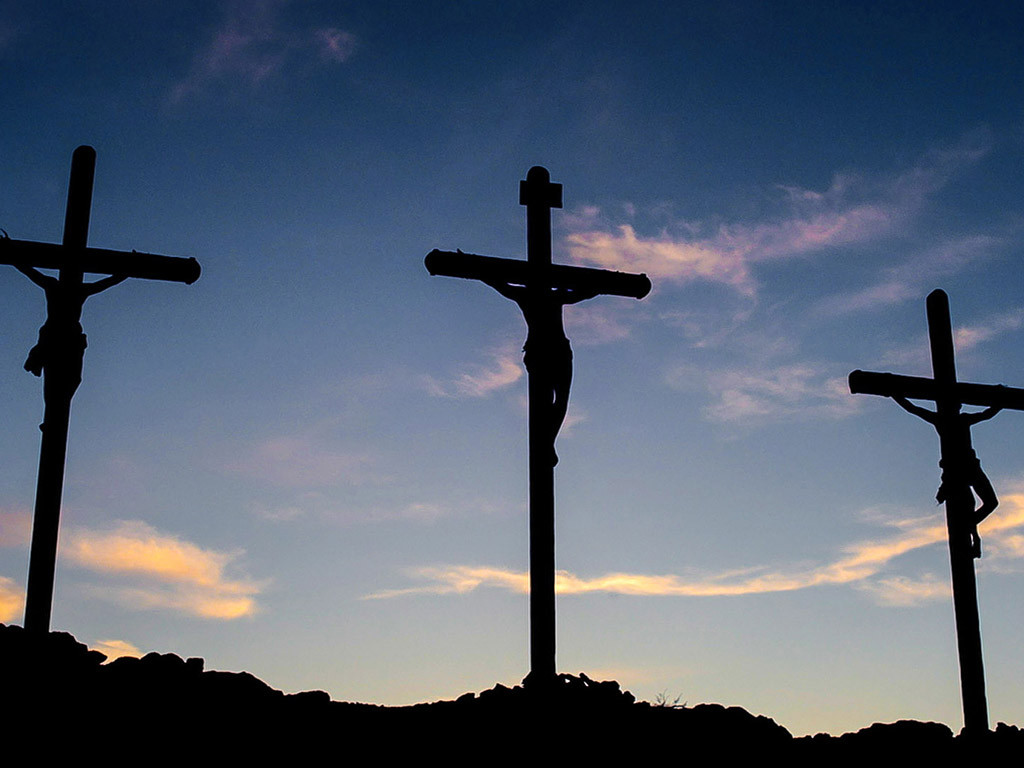







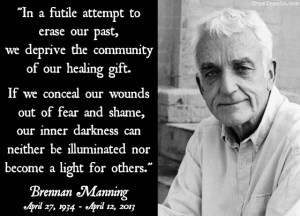

















 PASSION, PURPOSE & POOPYHEADS