Let’s dive right into Mark 12:30-31, “Love the Lord your God with all your heart and with all your soul and with all your mind and with all your strength. The second is this: ‘Love your neighbor as yourself. There is no commandment greater than these.” (Emphasis is mine, but it should be anyone who claims to be a person of faith.) How have we strayed so far from this commandment that God said was most important? Maybe it wasn’t before this era of social media and biased news, but it is now.
What we now have is what has been recently termed “contact bias,” which is described by Brian McLaren as a “form of prejudice or stereotyping that arises from a lack of sustained personal contact or interaction with people who are different from oneself. Without real-world, meaningful exposure, individuals’ preconceived notions and false assumptions about the “out-group” remain unchallenged and are free to flourish. In this way, the prejudice cycle spins on, unchallenged across generations. As prejudice persists, it becomes embedded in cultures and institutions, creating systems of racism and hatred, marginalizing groups who are stigmatized, dehumanized, scapegoated, exploited, oppressed, or even killed.”https://cac.org/daily-meditations/overcoming-contact-bias-2021-03-04/#:~:text=Overcoming%20Contact%20Bias-,Thursday%2C%20March%204%2C%202021,for%20who%20they%20truly%20are🙂
Today, fear and mistrust are growing and being reinforced by the news and social media. Violence against our brothers and sisters never seems to abate, and neither does discrimination, which can be cruelly subtle. We strip our fellow human beings of their dignity when they are suffering, and we refuse to involve ourselves in their lives. How easy it is not to notice the misery of others! Will we ever find our way back to God, who loves everyone, welcomes the stranger, and calls us to open our hearts to those the world casts aside?
Since I really enjoy sharing the times I have been less than loving to strangers, here is one of my favorite examples: In January of 2005, my husband and I were blessed with the opportunity to travel to Belfast, Northern Ireland, and spend a year there working for Habitat for Humanity.
We lived close enough to the City Center to walk there on occasion. One morning, I decided to go to the post office and mail some letters before continuing on to work. My time was limited that day, so I moved faster than usual.
As I walked down Falls Road, I noticed a very small woman, or girl, lying on the sidewalk. Several people had passed her by without a glance…and so did I. A few yards later, however, my conscience began slowing me down. “Go back,” it said. Although at first I tried not to respond to it, the call became more persistent. I went back.
Dropping my mail on the sidewalk, I sat down beside her. At first, I thought she was sleeping, but I soon realized that she had passed out. Nudging her, I prayed for a response so I wouldn’t feel even more guilty if she was dead. She gradually regained consciousness and sat up next to me. When I asked her what I could do for her, she pushed me away: “Leave me alone.”
“Sorry, but I can’t do that. You’re not safe lying on the street. I’ll get a cab, and we’ll find you something to eat.”
“Look at me!” she demanded. “It’s useless! Leave me alone!”
“What’s your name?”
“Karen”
“Well, Karen, I am looking at you, and I see a beautiful creation of God”. My words were firm, but my heart was aching. She continued to insist that she wasn’t worth my trouble, or God’s trouble, and I continued to insist that she was wrong.
“Do you have a fag?”
“No,” I replied. “I don’t smoke. Smoking is bad for your health.” At that, both of us laughed.
Just as I was preparing to hail a cab and take Karen to a restaurant, a minivan pulled up, and a young man got out, addressing her by name. He then gently helped her up and walked her to the van. I asked if there was a number I could call to check on her, but he said no. However, he took down my phone number so that she could call me if she wanted to.
Then, after they left, I resumed my walk to the post office, while questioning God, “Lord, what just happened? I’m certain I’ll never hear from Karen again. What was the purpose of all of this?” And as I continued to walk in silence, I could feel God speaking to my heart: “Linda, next time, don’t pass Me by.” OUCH!
We are currently in the midst of incredibly challenging times. This is a truth that some may only whisper, perhaps in the hopes that it will all fade away. However, the reality is that it won’t. So, in the face of this reality, how do we move forward with any hope for our children and grandchildren’s future?
I believe it must begin with God – and acknowledging the fact that many doubt he even cares. It conjures up an image of him sitting in his heaven, feeling rejected by humanity and giving up on the whole lot of us. All while smacking his head and rethinking that “free will” idea of his.
Archibald MacLeish, an American poet and writer, powerfully explains what God may have hoped for by refusing to control us, “Man depends on God for all things: God depends on man for one. Without man’s love, God does not exist as God…and love is the one thing no one, not even God himself, can command. It’s either a free gift, or it’s nothing. And it is most itself, most free, when it is offered in spite of suffering, of injustice, and of death.”
Do MacLeish’s words resonate with you? They certainly do with me. But believe me, I tried to deny that truth for a long time as I continuously prayed for God to “fix” this broken world and the people in my life who made me miserable. It never worked. Even though I believed my suffering was created by other people that I desperately wanted to control. Can you relate?
Well, dear ones, take heart because this broken ground we stand on is holy ground, and we are called to stay put, no matter how hard it seems. We are called to stand on that hilltop and emulate the LOVE that is God. We are to boldly and without apology declare that God has not abandoned us but is in our midst, cheering us on for the sake of his kingdom.
But the love of God will not manifest if we merely sing his praises in church to get that “I showed up every Sunday” card punched. God isn’t interested in our praises. He longs for us to show up in the midst of the brokenness that surrounds us and love those who suffer. If that seems scary, it’s understandable.
Think of the Desert Monks who went off into the wilderness and lived in caves. They prayed A LOT for the brokenness of the world, and I’m sure God loved their prayers. But I prefer to focus on why he sent Jesus into the world. It surely was meant as a wake-up call for us to come out of hiding. Just sayin’.
Yes, Jesus also went into the desert to pray when things were tough, but he didn’t stay there! He offered his prayers to God, accepted his fate, and came out swinging! Remember that whole table-tossing event?
I believe that’s what God is calling us to do now: to do what we can to care for the most innocent, those without a voice, those who suffer. This is no time to fret or worry about the outcome; there’s too much at stake.
It will likely be challenging and perhaps dangerous, but as that ever-pressing question goes, “If not us, then who?”
Like my hero, Esther, who knew she was called to a fate that would likely end her life. And her response? “WOOHOO, I will go, and, oh well, if I die, I die!” Okay, she probably wasn’t that thrilled, but she was determined to fulfill her purpose, and that should be our response to God’s call for us.
Oh, you don’t believe God has spoken to you about that? This may be where self-critical thinking is required. Is it possible you’re not listening? Is it possible you’re spending too much time whining and complaining about how others are making your life miserable, and you’re just sitting and waiting for God to take care of that first? Then you’ll consider moving beyond your own selfish longings in the comfort of your shallow existence? Sorry, I guess that was mean. But is it true?
I know it was true for me for longer than I care to admit. And here’s the sad reality of that: my being so angry and hateful toward those who hurt me over so many years was probably worse in some instances than the injustices of others toward me.
My own actions likely provoked some of that. Like the time I threw a bar stool at a wall to get my husband’s attention! Yeah, I did that, and it worked for a millisecond. But I’m not proud of it and never used it on a resume as an example of my creative leadership skills!
No, I was not innocent and denied my own sinful behavior towards them. Of course, there would never be healing in our relationships until I was able to admit that. I needed to seek and offer forgiveness before healing was possible. Not wait for someone else to take the first step.
Healing the wounds of the world must begin by first repairing our personal relationships. Because if I claim to love God but do not love my neighbor, I am a liar, a noisy, clanging symbol (1 John 4:20). Ouch.
Recently, I was reminded of my long-standing frustration as I gathered my thoughts on what Church is supposed to be and what is actually happening.
I left the Catholic Church several years ago, and though I feel like I have landed in a church I’m growing to love, I still find myself searching for a true depth of faith I want to encounter, not just in others, but also in myself.
I want it to be like those guys on the Emmaus Road (Luke 24:32). You know, when they were bellyaching about how their lives were upended, and all of a sudden they realized their hearts “were on fire” as they walked with this guy who showed up out of nowhere. I had my own experience of that in Kentucky, and it changed my life!
In the past, I was great at shaking my finger – at someone, anyone, to blame for the indifference to God’s call to love that I witnessed almost daily: The clergy, bishops, the Pope, but not the faithful sitting unaware in the pews (if they’re sitting there at all). Never those poor innocent folks in the pews.
I assumed that for some reason beyond their consciousness – poor religious instruction or perhaps sucky sermons that can rival Ambien’s effect as a sleep medication – they have never encountered the “living” Christ. How is that supposed to happen when we’re either nodding off in the pew or thinking of that much-anticipated Super Bowl in just a few hours (more on that later).
If liturgy is, as I learned from Church teachings, the “source and summit” of faith, then it must give meaning to our lives. Right? Meaning that should cause us to sit in stunned silence in the presence of the Incarnate Word of God. Where, in awe and wonder, we remove our sandals on what is surely holy ground.
Gradually, it would seem, Sunday after Sunday, we would fall in love with Love. Perhaps we would begin to squirm in the pew we once found comfortable as we realize that God calls us to take responsibility for responding to that love. It’s really not optional if we call ourselves “Christian,” you know.
From the Greek leitourgia, liturgy means “the work of the people.” That’s all of us, every single one! Let’s look at the early Church where it began – with Jesus himself. Think of Jesus and his disciples at the Last Supper. Think of John resting on Jesus’ shoulder. Jesus poured the wine, washed their feet, loved on them, and said, “Do this in memory of Me, always recall My love for you, prepare yourselves for the work I’m calling you to.
Sooooo, what are you waiting for? Get out there and love on people!” I can guarantee you that not once during that supper did Jesus or any of his apostles ruminate on the Super Bowl or long for hot wings while consuming dry bread. Not one of them!
But we do. The significance and power of our worship seems to be lost today. It isn’t confined to the Pastor. There isn’t a list of formalities we can check off: Enter, bow, glare at the person who’s sitting in your spot, gaze out the stained glass windows past the tearful widow next to you, tune out the sermon, rush out the door. Repeat.
Jesus said, “Do this in remembrance of Me. But don’t stop there!” He gives us explicit instructions to respond in action, to “love and serve the Lord.” Every part of our worship should lead us to that end.
Here’s what I believe a life of faith should look like. It’s what I strive for and so often fail miserably at. We go to Church to be nurtured by God’s Word, to seek and know we are forgiven for our sins. We are challenged by the sermon, share the peace and love of God with others, and then are sent out to be Christ in a hurting world.
If, instead, we sit as silent spectators simply waiting to get our card punched for the week, a hurting world suffers the loss. What is missing? Many people today say they can be spiritual without the Church. Those who simply “show up” also miss the point.
Here’s a question for you: Who wants to watch the Super Bowl alone? We surround ourselves with friends and indulge in a feast made for a king. It’s a party! If we could only approach liturgy with that same excitement. We are called to prepare our hearts and minds at the banquet table, where we celebrate the love of God.
Guys, the liturgy is a feast celebrating God’s extravagant Love. We relish the fires of hot wings while the fire of the Holy Spirit lies smoldering in our hearts. This realization always causes me to point my finger in the mirror again and again. Perhaps many believers have not encountered the living Christ, but I have. Yet, I, too, often resist his most profound call to love.
Mary Collins speaks of “God-seekers” who “risk more than the ordinary. They risk their sanity….The rest of us go to church”. It’s too frightening. We don’t want the responsibility to love like that. We want that left to those “holy” people we often read about. But….
What if we had an Emmaus encounter with Christ right in the midst of communion?
What if we actually saw Christ proclaiming God’s lavish, magnificent, and unending Love?
What if we turned to offer others the sign of peace, and Christ took our hand?
What if in our “Amen,” we meant it? “Amen” means, “Yep, I wholeheartedly agree!” It doesn’t mean, “Let me think about that and get back to you.”
What if, in sheer gratitude for God’s self-giving Love, Christ in our midst, we became that very Love emptied and spilled out into the world? Catherine Vincie calls this “the prophetic function of a dangerous memory.”
Then, how dangerous would this be – what if we saw Jesus Himself as the primary sacrament of grace. Could we handle that? All forms of love, goodness, sacrifice, and resurrection are salvific. In this sense, Jesus is the greatest sacrament of all. Why does that reality not trump football? Why does Jesus always have to be competing with a cheap imitation?
There are several examples in the Old and New Testament of people abandoning God and going their own way to do their own thing. Probably most notable for us is when Jesus was hauled away in the midst of his disciples – his friends – to be crucified. They instantly and collectively decided that was not something they signed up for and ran like hell.
Of course, the good news is that they came back stronger and more determined to follow Jesus’ example of God’s love for a broken world. This time they would not turn back. This time they would willingly die for him. And to that end, all but John became mortars. How do their lives compare with ours today? Well, the abandoning Jesus part lines up.
How did we get here?
Let’s start with statistics from the Pew Research Center: Today, about 28% of U.S. adults are religiously unaffiliated, describing themselves as atheists, agnostics, or “nothing in particular” when asked about their religion. In our latest data, 17% of “nones” identify as atheists, 20% say they are agnostic, and 63% choose “nothing in particular.”
Why?
When asked why they are not religious, two-thirds say they question a lot of religious teachings mainly because they don’t see those teachings lived out, or they don’t believe in God. “Many also bring up criticisms of religious institutions or people, including 47% who say that one extremely or very important reason why they are not religious is that they dislike religious organizations. And 30% say bad experiences they’ve had with religious people help explain why they are nonreligious.”
So, that doesn’t leave much more to dislike besides uncomfortable pews and bad music.
Many researchers that have followed the attitudes of Gen Z’s, and Millennials in particular, believe it is linked decisively to Donald Trump’s election in 2016 and even more so in 2024.
I believe that if we have any chance of restoring care and compassion for each other and for those God calls us to love: the weak and vulnerable, we must open our hearts to those who have lost their way.
Matt. 5-14-16 tells us: “Here’s another way to put it: You’re here to be light, bringing out the God-colors in the world. God is not a secret to be kept. We’re going public with this, as public as a city on a hill. If I make you light-bearers, you don’t think I’m going to hide you under a bucket, do you? I’m putting you on a light stand. Now that I’ve put you there on a hilltop, on a light stand—shine! Keep open house; be generous with your lives. By opening up to others, you’ll prompt people to open up with God, this generous Father in heaven.”
How do we do that?
I’m glad you asked. It’s not going to be easy because we have to start with our own understanding of God’s love and what he is calling us to, and then have the courage and conviction it will require.
Let me share a bit of my own story that might help. Thirty years ago – give or take – I was a Youth Minister. Each year, the school allowed us to speak to the seventh graders about the Youth Program and invite them to come. We would have an initial event to start the year. I knew some of the boys came because there were girls there, and visa-versa.
I didn’t care what got them there. I just hoped we could offer them something special that would keep them there. To that end, we offered two big events during the year, and they both had to do with serving others.
On Thanksgiving Day, we went to a church in the inner city and delivered meals to the poor. Then, during the summer, we went to Georgia for a week-long service project, helping paint and fix up homes in the poorer areas of a community. It was a huge endeavor that brought large numbers of kids from several states together. Every night we gathered for prayer and celebration. Our kids were blown away by all of it!
But, here’s the beautiful part: The result of those two experiences didn’t end there. The kids shared the impact on their own lives. Thanksgiving had a whole new meaning for them. When we came back from Georgia they couldn’t get enough of opportunities to serve their own community. They would come up with things to do. For example: we started what we called “Rake and Run”. We would go to the homes of the elderly, rake their leaves, bag them, and sneak away (they loved the sneaking away part!)
For years, I have watched kids sit in church bored to tears – if they actually showed up. I’ve seen some parents drop them off at church and leave. Some of those kids didn’t even go inside. Youth programs were few and far between. Like the adults, they were just expected to go for that hour to get their card punched. Like that would somehow magically convert them into lovers of Christ and become His “hands and feet” in this broken world.
Making a change will not be easy or quick
Our country is overrun by heathens who are already wreaking havoc and will continue to destroy everything in their path. God only knows where it will end and how many innocent people will suffer. But, I do know this: if we care, we must step out with courage and conviction that comes from God alone.
This is not a time for fear, anger, or timidity. It’s a time for action! It’s a time to live the Beatitudes as God intended:
Being Poor in Spirit means to act with humility not hatred.
Mourning – calls us to recognize our sins and the sins of others. Not only the sin of hatred that we harbor in our hearts but also the sin of culpability when we excuse the sins of others – to have the courage to call them out.
Meekness – does not mean weakness, but to be submissive to the will of God, who calls us to love others.
Hunger and Thirst for Righteousness – this is a call not only for us to hunger for God, but as Mother Teresa, Martin Luther King, and so many others, we are called beyond a hunger and thirst for God within ourselves, but also directed out to those who suffer.
Merciful – not simply feeling compassion for others in need. True, deep, inner compassion calls us outward to service and care for the most vulnerable.
Pure in Heart – not only speaks to what we do as believers but why we do it. The why informs our motivation.
Peacemaker – bringing people back to God, not by our words, but by our example.
Persecuted for Righteousness – If I am persecuted by others for loving and serving God then I am right where He wants me.
Are you ready?
God’s waiting for our response. He’s counting on us, with the guidance of the Holy Spirit and the examples of those in the trenches and those who have gone before us, like John Lewis, “Never, ever be afraid to make some noise and get in good trouble, necessary trouble.”
In the years I worked with the homeless, I came to see what I had never seen before; the deep heartache of those cast aside, those we tend to ignore, look away from, or judge.
We may not know the circumstances of the people we encounter day-to-day: the poor struggling to survive or the homeless, who are more and more visible on the streets today. But God calls all of us to compassionate care. No exceptions! They are our brothers and sisters in Christ, no less deserving of value and dignity than we are. Rev Dr. Liz Theoharis calls them “God’s chosen nobodies.”
I have always been inspired by Dorothy Day. She and Paul Maurin began the Catholic Worker Movement in the 1930’s. She reminded everyone who came to serve with her, particularly those with an ego, that “There are two things you should know about the poor: they tend to smell, and they are ungrateful.”
Why would she say that? Because if we have some expectation of their eternal gratitude for us taking our precious time to hand them a bowl of soup, we’ll be sorely disappointed and likely there for the wrong reason.
“Not all of us can do great things, but we can do small things with great love.” Saint Mother Teresa
I believe God challenges us to sit with this stark reminder of how the poor and homeless are generally treated. Have you ever considered what happens to them when they die on the street? Jesus’s words in Matthew 25:40-45 should elicit shame in our hearts, “whatever you do to the least of these you do to me” – but does it?
It did for those who started the Homeless Remembrance Project in 2003. “We’ve stood for more than 2050 women, men, and children who have died! These are outdoor, public, or violent deaths only of presumed homeless and temporarily housed people!”
Can you wrap your head around those numbers when considering their work is ONLY in a small area of Seattle, Washington? They define it as “A collaborative effort of homeless women, faith community leaders, designers, artists, social service providers, and other friends—working to create places of hope, healing, and beauty to honor and remember homeless people who’ve died in King County.
Our concept is twofold: the Tree of Life, in Victor Steinbrueck Park, is a sculpture with space for community gathering, hope, and healing to recognize that we are one people, homeless and housed together, and we can end homelessness. Leaves of Remembrance on Seattle sidewalks bear the names of those who have died, and we share their stories at the site Fallen Leaves.”https://homelessremembrance.org/
Luke 16:19-31 speaks to the massive gap between the rich and poor in America. Years of a growing obsession with independence, greed, and wealth accumulation have manifested indifference to the plight of the poor.
But some feel compelled to stop looking away and respond to God’s call to serve those who suffer. If you feel that call, I believe it first requires honesty about where you stand and, if there is a tug on your heart to serve, consider why.
What is your “why”? It’s an important question that deserves a great deal of reflection. Is it a response to an obligation you felt after last Sunday’s sermon, checking off the “volunteer” box? Is it a misguided notion that you are their “savior”? -because that job’s already taken.
Mother Teresa’s words should resonate with all who call themselves Christian, “It is a poverty to decide that a child must die so that you may live as you wish.” If that truth resonates deep within your heart, congratulations, you are on your way to fulfilling your life’s purpose!
The disciples constantly nagged Jesus to tell them what was coming and what to expect, like the proverbial question from our kids: “Are we there yet?!”
Jesus’s speaking to them in parables probably frustrated them even more. Those parables spoke to their unrelenting insistence on knowing what was coming and how to prepare. In Luke 21, Jesus simply tells them to be alert and wait for God to reveal his plan and purpose to them—all in due time. He tries to assure them that God is still in control, no matter how it seems.
Now, here we are, clutching our pearls since the election, certain the apocalypse is near! And just like the disciples, God calls us to the only assurance we need: He is still in control.
(Tenor GIF)
So, we all need to take a collective deep breath, exhale, and consider our reality in light of the work of those who are already moving to shore up our democracy and the words of those who have gone before us who fought the powers of evil in their own time. (I share an excellent resource at the end of this post)
Dr. Barbara Holmes offered her thoughts on the necessity of contemplation when a crisis arises:
“The crisis begins without warning, shatters our assumptions about the way the world works, and changes our story and the stories of our neighbors. The reality that was so familiar to us is gone suddenly, and we don’t know what is happening….
If life, as we experience it, is a fragile crystal orb that holds our daily routines and dreams of order and stability, then sudden and catastrophic crises shatter this illusion of normalcy. The crises … are usually precipitated by circumstances beyond the ordinary. I am referring to oppression, violence, pandemics, abuses of power, natural disasters, and planetary disturbances.
Contemplation after or during crisis is a stillness in the aftermath of a primal scream, the abyss of unknowing, and the necessity of surviving the trauma together.”
So many of us are now in full crisis mode, and there is no telling how much worse it’s going to get over the coming years.
I believe people on both sides are dealing with their own life struggles. Fear and uncertainty are at the forefront of those concerns, and we can react differently to them. I get that.
The bottom line for me is that I am still called to love and care for others and to be an example of Christ in the world. How did I get here – from running around with my hair on fire to settling into acceptance of the reality we now face? How have I found hope and trust that we can overcome and end up stronger from the experience, even when we have no idea what will happen? I look to those heroes of faith who have gone before us.
There have been so many examples of those who faced seemingly impossible circumstances to make a difference in the world. I don’t pretend to be anywhere near their stature, but I hope to do what I’m called to do within my own capacity – to shine a light, even if it’s just a small candlelight, in the darkness.
As long as humans have been in existence, there has been violence and war somewhere in the world. Though we don’t know what to expect in the coming years in America, we see the innocent in Ukraine and the Middle East suffer untold horrors that we watch on our daily news feeds, and that’s frightening.
But, what we don’t see on the news is the stories of Ukrainians who courageously go about their lives in the midst of it. This is from an article by HOPE International, “Ukrainian believers continue to walk in God’s leading in times of war, just as they had done in times of peace. Despite the devastation Russia inflicts on their country, the Ukrainian spirit will not be broken. We will continue to see Ukrainian believers serving on the front lines of a courageous response, daily finding ways to love God and love their neighbors.” https://blog.hopeinternational.org/2023/06/28/the-heartbeat-of-hope-in-ukraine/
We, too, must trust in God each day to give us all we need, not to simply survive but to thrive and bring hope and care to those who suffer at the hands of evil. If not us, then who?
The following are amazing examples of that light in the darkness: Martin Luther King, Mahatma Gandhi, Dietrich Bonhoeffer, Nelson Mandela, Anne Frank, Oscar Romero, and Jesus. Let’s not forget Jesus.
During the Vietnam War, Thomas Merton said, “We are living through the greatest crisis in the history of man….far from being irrelevant, prayer, meditation, and contemplation are of the utmost importance in America today.”
Maximilian Maria Kolbe volunteered to die in place of another man at Auschwitz during World War II. “The most deadly poison of our times is indifference.”
Dietrich Bonhoeffer was hanged for his resistance to Hitler. “Silence in the face of evil is itself evil: God will not hold us guiltless. Not to speak is to speak. Not to act is to act.”
Martin Luther King Jr. was assassinated during the civil rights movement “Darkness cannot drive out darkness; only light can do that. Hate cannot drive out hate; only love can do that.”
Mohandas Karamchand Gandhi was assassinated as he led the nonviolent resistance against British rule in India. “The day the power of love overrules the love of power, the world will know peace.”
Nelson Rolihlahla Mandela spent twenty-seven years in prison because of his anti-apartheid activism. “To deny people their human rights is to challenge their very humanity.”
And let’s not forget these powerful words of Genesis 50:20, “God uses the evil perpetrated against us for His good and makes all things new”.
Lastly, I have been following Andrea Chalupa. She is an amazing Ukrainian-American Journalist and Filmmaker. Here is a link to her podcast with lots of action guides: https://www.gaslitnationpod.com/action-guide
I offer this post right before what may be the most popular day of the year – Black Friday. It is my lame effort to curtail the insanity. You’re welcome!
Have you ever read about Janis Joplin’s life? I watched a documentary about her called Janis: Little Girl Blue. I found it to be such a sad account of a desperate and broken life. Her song Mercedes Benz was recorded on October 1, 1970, three days before she died, alone in her motel room, of a heroin overdose. The song was actually a slam against consumerism.
As Performing Songwriter Magazine stated, “She was outspoken about the illusory happiness promised (but rarely delivered) by the pursuit of worldly goods, a hippie-era rejection of the consumerist ideals.” But then, in contrast, she was often seen wearing a mink coat given to her by Southern Comfort because she offered free advertising for them. It seems to have been her drink of choice. Needless to say, she was complicated.
Joplin grew up in a town in the heart of what her sister called redneck country. It had an active chapter of the Ku Klux Klan. And weren’t they thrilled when she spoke out against racial segregation, which also made her a target for ridicule by the other kids in her school. According to her sister, they were relentless in their attacks on her.
Her fragile ego wasn’t spared when she went away to college, either. In 1963, Joplin was cruelly voted “The Ugliest Man on Campus” at the University of Texas. “She was left with little more than the yawning chasm of a tortured loneliness,” her publicist and biographer, Myra Friedman, wrote after Joplin’s death. Her book was titled, “Buried Alive”. On the Dick Cavett Show, she once said, “They laughed me out of class, out of town, out of the state.”
Even after she managed to get away from Texas, she could never seem to escape the loneliness and rejection she experienced there. She just wanted to be happy, to be loved, but those longings always eluded her. The sex, the drugs, and the fatalistic sense of being lost and alone tormented her to her death.
In 1968 she wrote to her family, “From all indications I’m going to become rich & famous. Incredible! All sorts of magazines are asking to do articles & pictures featuring me. I’m going to do every one. Wow, I’m so lucky – I just fumbled around being a mixed-up kid (& young adult) & then I fell into this. And finally, it looks like something is going to work for me. Incredible. We’ll pin the review up so everyone can see – I’m so proud.”
On September 18, 1970, Jimi Hendrix died of a heroin overdose. When she heard of his death, she told friends, “he beat me to it.” Two weeks later, on October 4th, she was found dead. In her will, she left her friends and family $2,500 to throw a wake party which was held on Oct. 26. One partier remembered, “Everyone got drunk and messed around, and nobody mentioned Janis at all.”
Ronald Rolheiser summed up her struggles this way, “She simply lost the things that glue a person together and broke apart under too much pressure. Janis Joplin could not will the one thing.” That “one thing” of course, is our innate connection to God, not things of this world we aimlessly strive for to take his place.
If the current rates of depression and suicide are any indication, people of all ages continue to struggle to fill a void left by our rejection of God and the great American obsession with self.
According to the CDC, in 2017, suicide was a Leading Cause of Death in the United States:
Suicide was the tenth leading cause of death overall in the United States, claiming the lives of over 47,000 people.
Suicide was the second leading cause of death among individuals between the ages of 10 and 34, and the fourth leading cause of death among individuals between the ages of 35 and 54.
And what about those who have not become a suicide statistic? According to the American Psychological Association:
7% of the U.S. population over age 12 took antidepressant medication in the past month.
There has been a 64% increase in the percentage of people using antidepressants between 1999 and 2014. In 1999, 7.7 percent of the population took the medication.
Tim Kasser, Professor and Chair of Psychology at Knox College, has studied people’s values and goals for over twenty years. He says, “The materialistic or “extrinsic” goals are the goals for money, image and status that are so encouraged by consumer capitalism. We contrast these with the “intrinsic” goals for…affiliation (e.g., having close relationships with family and friends” and community feeling (e.g., helping the broader world be a better place).”
And the bottom line? Our hunger for love is insatiable outside of God.
How often we pray for God to do something for those who suffer but fail to hear his reply in the depths of our hearts, “I did do something, I created you.” Matthew West expressed this beautifully in his song titled, “Do Something”.https://www.youtube.com/watch?v=b_RjndG0IX8
We fail to remember that God sent Jesus here to live among us, to show us what that looks like. And then…ready?…he called us to carry on that embodied love by giving entirely of ourselves. By using the gifts, he has given us for his glory. Just like God counted on Jesus, he now depends on us. Jesus says to each of us who continue to follow him, “Very truly I tell you, whoever believes in me will do the works I have been doing, and they will do even greater things than these”. John 14:12-14
I could give you so many examples of people who live that truth, and many are kids who have a significant impact as they strive to make a difference in their communities.
Look at what Jon Bon Jovi and his wife are doing. This brought me to tears: https://jbjsoulkitchen.org“The way to feel good is to do good.” Jon Von Jovi. There you go. He just said in one sentence what took me three pages!
I hope this sheds a whole new LIGHT on Black Friday for all of us. Maybe we should call it “ILLUMINATED Friday”. Yeah…I like it!
I pray that we may all stop in the midst of the usual holiday chaos and contemplate the true wonder and magic of Christmas and then share that magic with some part of this broken world.
May God richly bless you and yours this Christmas season, and beyond!
First, I will treat you to the condensed version of: “What the #%*& am I waiting for?”
About twenty-three years ago, in a clear audible voice, God told me to write a book. So I did. Then, I paid $10,000 (yep, that’s the correct number of zeros) to have it edited and self-published. Two thousand copies were dropped off on my front porch a few months later. Then, I stared at them, realizing I knew nothing about marketing. And apparently, I knew nothing about trusting a “Christian publisher” who knew nothing about editing. So they languished in my basement until I had them burned. Literally. I rewrote the book and had five hundred printed. Most of those are still in boxes.
I continually claim I want to be healthy, yet I have started, changed, and failed on more diets than I want to admit. Oh yeah – and – mint chocolate ice cream!
I am determined to start running again. I dust off my running shoes and trip over boxes of books, trying to get out the door. Then, have to rest with an ice pack on my ankle.
I have been writing a blog for 20 years and give up whenever I consider submitting articles for publication. When writing, I sometimes crack myself up with my weird sense of humor and occasionally impress myself when writing about some awesome AHA moment. But I’m likely just living in the light of my own ego.
So, that’s the condensed story of me getting and staying stuck for most of my adult life. Unfortunately, I can’t give you an accurate number of years. But I can say with confidence that I have never been good at “adulting” well!
Now, here I am, looking down the barrel of old age and the reality that I am not a modern-day female Methuselah who has lots of time to get my act together.
James Finley says of Step Two of AA, “The admitting then brings us to a place in which, if this is up to me, it is not looking good. As long as we were still holding on to this ideology of our brokenness as having the final say in who we are, we were not capable of seeing this because we actually had faith in our own brokenness as the power to name who we are.” That pretty much describes me!
Another enlightening moment materialized for me after reading Dr. Joe Dispenza’s work, which I wrote about in my last post. He tells us to “Stop telling the story of your past and start telling the story of your future.”
Apparently, all of our “stuckness” is of our own making because we have allowed others to define us. That gets embedded into our beliefs about ourselves and directs our thoughts and actions. Fun stuff!
F. Scott Fitzgerald said, “For what it’s worth… it’s never too late, or in my case too early, to be whoever you want to be. There’s no time limit. Start whenever you want. You can change or stay the same. There are no rules to this thing. We can make the best or the worst of it. I hope you make the best of it. I hope you see things that startle you. I hope you feel things you’ve never felt before. I hope you live a life you’re proud of, and if you’re not, I hope you have the courage to start over again.”
And so, here I sit after fracturing a pelvic bone and being told by the doctor to SIT for 4-6 weeks! I don’t listen well and certainly don’t “SIT” well! But this incident certainly got my attention. Actually, I believe it was God that got my attention:
GOD:So, Linda, there you sit on your broken parts, checking off the days until you are mobile again. While you’re sitting there, have you come up with a new excuse for not using those gifts I gave you? You do know I never created a female version of Methuselah, right?
I’m losing my patience with you, Linda Russell. You don’t want me to lose my patience (read: Job and Jonah).
ME: Oops.
Alrighty then. Here I go. Today, I will spend my sitting time finding a Christian Publishing Company that accepts articles. Submit one. Say a prayer. Send. Then, celebrate with a well-deserved nap!
What do we hate most about the homeless? In a word – they’re “inconvenient.” They show up in our lives in the most awkward places and inconvenient times. Unless we’re on our guard they can shake our complacency to its core. Why can’t they just stay out of sight, go live in a shelter, get a job, or, at the very least, stand with their signs somewhere else? Who believes they’re really needy anyway? They probably have a nice car parked around the corner that we paid for! Or, if we do give them our measly change, they’ll probably use it for drugs or alcohol.
By the way, I’ve never bought drugs, but I’m pretty sure they cost more than a few coins from the bottom of your purse. Now, as for alcohol, if Boones Farm Strawberry Hill wine is still on the market, that’s probably pretty affordable. At least, it was for me so many years ago. But that’s a story for another day.
So, yesterday, I came to a stoplight at a highway exit. I missed the light and was forced to sit uncomfortably, making every effort to disregard the homeless woman on the corner. It was 104° in the shade, and the light took forever to change! I chose to ignore her because she’s there a lot, and I have given her money in the past. I didn’t feel obliged to give her anything this time.
Finally, I pulled away and went straight to Panera Bread for lunch. Panera Bread is my favorite place to eat, next to home. I always get the Fuji Apple Chicken Salad with Balsamic Vinaigrette on the side. I can no longer eat their lovely whole grain baguettes because I am gluten intolerant. Sad, huh? Poor me…poor, poor pitiful me.
Anyway, as I looked down at my lovely salad, the guilt was so immense I could barely get it down. I was reminded of my most humbling encounter with the homeless woman in Belfast, Northern Ireland, in 2005. I told you about that, right? And yet, here I was again, confronted with my hardness of heart, listening remorsefully to God’s admonishments and offering my feeble response, “I’m so sorry, Lord. I did it again. I am so sorry!”
I packed up my salad, got in my car, and prayed as I drove toward the overpass where she stood, “Please be there, please be there!” She was still there! You would think I won the lottery! I quickly drove up the highway ramp, exited, got back on the highway, and exited again where she was standing, all the while digging in my purse for money. $10? No! This was at least a $20 transgression. Yes, $20. Like God would be more impressed with that. I’m a moron!
This time, when the light turned red, there were four cars in front of me. I threw my car in park, got out, and ran to her (she was limping so badly the first time, I didn’t want her to have to hobble up the hill. I felt bad enough as it was). I handed her the money, hugged her sweaty, dirty body, returned the blessing she offered me first, and ran back to my car, which, by then, was blocking traffic.
Now, I know what you may be thinking, “You’re such a sucker, Linda! It was all an act and the limp was fake”. Maybe that’s true, but here’s the thing. I don’t give a rip if it was all staged for effect, and God doesn’t either. He only wants to know where our hearts are. Then, He wants to dig in there and transform them if we allow him to.
Not surprisingly, this lesson was just beginning. They say life repeats its lessons over and over until we get them. And I am, hands down, to God’s dismay, the world’s slowest learner. This, clearly, was going to require some additional work, and God was happy to oblige.
On the same evening of my encounter with the smelly likes of Jesus, I attended a gathering of old high school friends. Those encounters always include the ones we never liked, and I had the misfortune of sitting next to one of them. She was still as crabby and mean as she was then, with some additional flab and wrinkles – which secretly delighted me.
I hate to call myself out on this, but it’s pertinent to this story. Please don’t judge me, I do enough of that on my own. Anyway, one of my honest-to-goodness friends asked me how my work with the homeless for St. Vincent dePaul was going (I know, busted!). Well, this woman with no filter, began to spew her indignation toward those nasty homeless people who have the nerve, the nerve, to interrupt her life! If, if, she was going to give any of them money she wanted to control what they did with it. Great!
I sat and listened to her rail against them and mumbled under my breath, “Lord, really? Did you set this up? It would be just like you! Fine. Can I get a beer, because this is going to take a while, isn’t it?By the way, have I said how sorry I am that we have to revisit my cold, hard indifference to those You love so deeply?
I would soon have an hour’s drive home to ponder it all, in particular, my hesitation to discuss it with that woman at our meeting (she’s not really my friend anyway) The words God spoke to my heart penetrated my very soul, “Woe to you, Linda. You hypocrite! Don’t even think about judging her!” Right, okay, I have no right to judge anyone. But, what I wanted to say to her – I needed to hear myself. So here it goes…
We have our favorite defenses against helping the homeless. The most common seem to be:
I can’t help everyone.
It’s not my responsibility.
I want to know what they are going to do with the money.
They’re lazy; they need to get a job.
Or, my all-time favorite: Let’s put it on God. – “LORD, WHY DO YOU ALLOW THIS, WHY DON’T YOU DO SOMETHING?!”
The next morning, I tried to sit quietly in prayer (I’m warning you, don’t do that unless you are prepared for your life to change forever!). God showed up! As I considered the reasons we hold our clenched fists so tightly around our measly handful of change, I had a picture of a long line of homeless people standing in front of me. Each one approached and stood there as I grilled them to determine if they were worthy of my precious change. Most I would usher off to the right, UNDESERVING. Very few would I send to the left, DESERVING, where I would hand them a few paltry tokens and expect their undying gratitude.
Then, I saw Jesus standing there. Now I was in line – a line that stretched beyond my field of vision. I watched as each person approached him in trembling anticipation. But, it wasn’t money he was handing out, it was God’s grace.
Most, he would ruthlessly question, “What have you done to deserve this? What will you do with it? Why should I give it to you?” – and then gesture to the right, UNDESERVING. A few would be sent to the left and showered with more grace and blessings than they could stuff in their pockets! I quickly got out of line and ran home to get a suitcase, certain I was going to the left and prepared to capture all the blessings Jesus would bestow on me. I was pumped!
Finally, I reached the front of the line, and without hesitation, Jesus looked at my pathetic life and gestured to the right, UNDESERVING. Slumped over in disbelief, dragging my empty suitcase behind me, I followed the long line of the unworthy masses. (I’m a visual person – I hate when God uses “Loser Linda” parables in vivid pictures!)
Even claiming to be Christian, we live our lives in the realm of the worthy vs. the unworthy. It defines who we are, who our neighbors are, who the poor and destitute are, and we act accordingly. When we can muster just a smattering (yes, I made that word up., I like it!) of concern for others, we raise our voice to the heavens in outrage, “Lord, I don’t know how you can just sit there and watch your people, especially children, suffer.”
What we fail to remember is that God came into our midst to reveal a different reality. He gives and gives abundantly. He forgives profusely, even my sorry self. Not one of us is deserving. We ask for His mercy, grace, and forgiveness, and it is ours. There are no lines to stand in. There is no reason to doubt or fear. The abundance of God’s grace is beyond measure. The riches of His generosity have no limits. But, we, like the unforgiving servant (Matthew 18:21-35), quickly forget.
Jesus came to serve. He commissioned his disciples to “feed My sheep”. In Matthew’s gospel (14:13-21), five thousand people converged on Jesus. His disciples, aware they had brought no food, insisted he send them home to feed themselves. And what was Jesus’ reply? “You feed them.” God provided…and all the people were given their fill, with food to spare.
You feed them.You do it!
The fact that there are people starving and dying every day and have been for time eternal is not because of poor planning on God’s part. It’s because many of us who have been given much (Luke 12:48) give little in return. That’s not how it’s supposed to work.
Listen, if God’s intent was to have a perfect human race, where no one suffered and no one was capable of the atrocities we witness almost daily, He could have just hard-wired us to obey Him completely. Problem solved. Not quite. God did not want robots. He deeply loved humankind and wanted that love returned – voluntarily.
The love God calls us to, by definition, requires us to love everyone. And loving them means caring for them, feeding them, giving generously from our abundance of blessings. And, for the love of God, stop judging them! We are Christ’s hands and feet in this broken world. They should be moving.
And lastly, I thank you, you beautiful woman on the street corner, for showing me Christ!
Episcopal Archbishop Michael Curry speaks so powerfully of the murder of Tyre Nichols and so many others, “There is a passage from the Hebrew prophet Jeremiah, which is later quoted in Matthew’s Gospel when innocent baby boys are killed by an immoral dictator: “A voice is heard in Ramah, lamentation and bitter weeping. Rachel is weeping for her children; she refuses to be comforted for her childrenbecause they are no more.”—Jeremiah 31:15, Matthew 2:18
With the murder of Tyre Nichols, another mother, as in the biblical texts, weeps, with the mothers of Emmett Till, Trayvon Martin, Michael Brown, George Floyd, Breonna Taylor, Ahmaud Arbery, and so many others. A family grieves. A community fears. A nation is ashamed. Like the psalmist in the Bible, something in us cries out, “How long, O Lord, how long?” How long violence, how long cruelty, how long the utter disregard for the dignity and worth of every child of God? How long?”
While watching the violent murder of Tyre Nichols, I was shaken to my core, as I was each time before. But this time, there was something different. I have cried tears over the injustice, but that’s not enough. Tears don’t impact or change anything. I think that’s called sympathy without action – or, God’s favorite, being lukewarm (Rev 3:16).
I can no longer feel the horror and not be moved to do something. What? – you ask. “You’re an old white grandma. Turn off the TV and go knit something.” Those voices that once allowed me to retreat back into complacency were now drowned out by God’s voice calling me to “go”. As usual, he never seems to specify where or when. Like Abraham. Just go.
Since then, I have sat with, prayed about, and struggled with my deepest beliefs about who I am as a professed follower of Christ, who my neighbor is, and who we are as a nation. The most profound question for me that has arisen now is if and how I, as a Christian, am not only culpable but what I am called to do.
It has been messy and fluid with so many nuances, but here it is. This is a thought process that I began for my own understanding. But trying to know anything concerning God and the way he operates without any doubts is futile. I know that, but I keep going back there.
The need to know and understand presupposes that somehow we can reason this out. That’s a great start, but it can’t stop there. And that’s the rub. My head wants answers. My heart wants to trust that God already knows how he wants me to respond.
We want to stop before that. Let’s just go to church – get our card punched –done – go home, and watch football or knit (BTW, I don’t even know how to knit). But Jesus never said, “Worship me”. He said, “Follow me”.
You may disagree with me when it’s all said and done, and that’s fine. But I believe it is incumbent upon each of us to take a stand once and for all to be Christ in this hurting world. To stop pretending to be the person we claim to be only when others are watching.
We should be more concerned that God is watching! And it’s not the god who keeps a running total of our church attendance and tithing spreadsheet. That would be a shallow, small-minded god who is out to get you if you make one wrong move.
The God I’m going to stick with tells us explicitly how we are to live and move and have our being in the world through the uncompromising words of Paul in 1 Corinthians 13: 1-13 that end with, “And now these three remain: faith, hope, and love. But the greatest of these is “…following the “rules” some guys made up over beers in a bar…wait…no…that’s not it…sorry. Just seeing if you’re paying attention.
The greatest of these is Love.
Many of us will choose between love and hate. I’m guessing a lot more prefer to think of themselves as neutral – it feels safer. But that stance needs to be reckoned with too. Too much is at stake. God is adamant about it when he says, “I know your deeds, that you are neither cold nor hot. I wish you were either one or the other! So because you are lukewarm—neither hot nor cold—I am about to spit you out of my mouth.” (Rev 3:16).
(quotesgram)
Let’s say you agree that you must decide where you stand and why. The “why” is critical. Stopping short of fully embracing your “why” leaves you wobbly and vulnerable to anyone who can shove you off-balance. I have had that happen more times than I care to admit.
So, this is where I landed: As a Christian, I am compelled to consider my life and purpose from my essence, my very being, where God resides. Not from any outside influence. If I own up to being a follower of Christ, how I live that life is to manifest his love in every moment and with every decision.
It has challenged me to look honestly at how I am doing that in light of Jesus’ words in John 13:35, “By this everyone will know that you are my disciples, if you love one another”. Nowhere does Jesus tell us to only love those like us, those who don’t threaten our comfort level.
Remember Jonah, who seriously needed a bath because of the awful fish smell after God told the whale to “Spit him out. I think he has learned his lesson”? So, here I am, a modern-day Jonah, always asking God for a different assignment. “Can I pick this time, Lord?!” And God is saying, “Nope”.
Update – 6/15/24:
When I wrote this in 2023, I knew my actions had to match my words. I prayed God would take my words, which I meant deeply, and turn them into action. He obliged.
I was given the opportunity to participate in a chaplaincy training. After completion, I connected with a Chaplain at the Juvenile Detention Center and began work as a volunteer chaplain there. I can’t describe to you how incredibly blessed I feel to be praying with and loving on the kids there! It’s beyond what I imagined over a year ago when I felt that initial tug from God as I read Archbishop Curry’s words.
I’m reminded of God’s promise in Psalm 138:8, “The Lord will fulfill his purpose for me.” But he needs my “Yes”. He’ll even settle for a shaky, uncertain, hesitant “yes”!
For the year of 2005, my husband and I had the incredible opportunity to live in Belfast, Northern Ireland and work for Habitat for Humanity. During that year, we learned about a sectarian conflict there known as The Troubles.
After thirty years of hatred and violence, some were able to forgive and learned to love neighbors once considered the enemy. But, there was also an ongoing refusal of others to let go of their hatred. Annual Orange Day parades continued to fuel division year after year since the Peace Accords of 1998. Many parents passed that hatred on to their children. Today, the divisiveness and conflict may be played out differently, but it is still a reality, often manifested in rival gangs.
Ten years later, we were in Rwanda and learned about the horrendous massacre of thousands of men, women, and children slaughtered by their own neighbors. Most of the perpetrators of those atrocities were never brought to justice. They scattered into the mountains or other countries and regrouped. They’re still out there causing mayhem and promoting hatred.
Now, here we are, reliving hatred and strife in America that is pitting us against each other. Extremist groups fueled by years of hatred going back to the days of slavery and Jim Crow are more and more emboldened today to act out that hatred. Encouraged by a wink and a nod from the President. Some White Evangelical churches advocating their claim of being “Christian” – cling to power presumed given them by God.
What is going on? Did Jesus lose his way? Or have we reinvented him and relegated him to your buddy?
(Tenor images)
Let’s listen in on a few guys trying to figure it all out for themselves – perhaps you can relate:
One night a few friends gathered in a neighborhood bar. Their conversation quickly turned to questions about how to overcome fear and frustration over the current crisis playing out over their backyard fences, at family dinners, and in the news. The violence and anger coming from all sides made it hard for them to reconcile with their beliefs.
They were a varied group: two Catholic brothers – one “devoted” (as in a follower of all the “rules”) and the other lukewarm (as in “rules suck”), a Presbyterian, and a Baptist. After several beers, they found it challenging to reach any consensus on what part they played as Christians. They were even struggling to agree on what a “Christian” was.
Before departing, they jokingly decided to invite Jesus to their whine fest the following week so they could drill him to see if he could help them come to some agreement on the most basic fundamentals of their Christian faith.
They weren’t looking for clarity on what was true, noble, and right as much as fodder for their arguments. Something they could use to counter those they disagreed with. But none of them would admit to that. There were stark differences they could not overcome. They each held on to who was right and who was totally on the path to hell. At an impasse, they would let Jesus decide.
So, on the allotted day, they all showed up for a second installment of “My god can beat up your god”. And who shows up? – Jesus (through the front door, not the wall). “Hey, guys, what’s up?” Still in shock that he actually came, they offered him a chair and a beer…or…uh…wine. He took a seat and declined the alcohol, “I’m driving, but you go ahead.”
Then, right out of the gate, one guy at the table explained what had happened the prior week and why they invited him (as if he didn’t know…DUH!). Anyway, the conversation begins but immediately deteriorates into the same dispute as before. Each of them chimes in with their “beliefs”. Then someone has the foresight to ask the “Expert” sitting right in their midst, “Jesus, how would you resolve this?”
Jesus sits quietly for a moment, and then the men observe his eyes welling up with tears. They are shocked and don’t know how to react. Why isn’t he angry and pounding his fist like we do? Why isn’t he pointing out people to blame? There are plenty of them: the media, politicians, white supremacists, and other so-called Christians.
Jesus’ weeping felt akin to when their wives would cry about something they could not get their heads around – like the broccoli soufflé that fell right before Christmas dinner with the in-laws. And, buddy, you learned quickly that your response better not be some lame man-up comment because you just want that awkward moment to be over! How’d that work for you? Exactly.
This Jesus moment was like that. Sure, he was known to throw a few tables around when he got mad, but we only see that once in all of Scripture. why don’t we just put that angry, show em’ who’s boss, can’t-control-his-temper-just-like-me Jesus to rest? Sorry.
So the world is falling apart, and Jesus weeps. That’s it? That’s all he can offer us? What are we supposed to do with that? Well, let’s see:
Joan Chittister says of weeping, “Indeed, few of us see our weeping as a spiritual gift or a matter of divine design. But we are wrong. Weeping is a very holy and life-giving thing. It sounds alarms for a society and wizens the soul of the individual. If we do not weep on the personal level, we shall never understand humanity around us. If we do not weep on the public level, we are less than human ourselves.”
The Rabbi Hanoch of Alexander offers, “There are…some things that ought not to be endured. There are some things worth weeping about lest we lose our sense of self. We must always cope with evil, of course, but we must never adjust to it. We must stay eternally restless for justice.”
Chittister concludes, “If we do not allow ourselves to face and feel pain…our lies about life shrink our hearts and limit our vision. It is not healthy, for instance, to say that massive poverty is sad but “normal.” It is not right to say that sexism is unfortunate but “necessary.” It is not human to say that war is miserable but “inevitable”. To weep tears of frustration about them may be to take our first real steps toward honesty, toward mental health, toward a life that is worth living.”
We know Jesus did not just sit around weeping all day long. As with Jesus, so with us. God took that pain, that compassion he felt in the deepest part of his being, and turned it into action. “Now go,” God would tell him, “do something for those you weep for”.
He longs to tell us the same thing if we can get over ourselves. If we can see clearly the suffering all around us that breaks God’s heart, the next hurdle is being accountable. It’s way too easy to shirk our responsibility and absolve ourselves with whatever excuse happens to work at the moment.
Lately, we seem so overwhelmed by the reality of the pain and suffering in our midst that we have either become numb to it or shake our fists in anger. We don’t feel like we have the power to address the massive needs of others, even if we want to. And truth be told, we don’t. So we shrug our shoulders, retreat into our little bubbles, and utter some feeble justification for not “getting involved”.
But we’re definitely not weepers – that’s a weakness we are not willing to put out there. If suffering humanity is lucky, Jesus just blew that myth to shreds for you! Fine. He doesn’t blow things up. But you get it. Right?
And don’t worry, I’m not going to spew some moral edict to try to guilt anyone out of being a self-serving, self-absorbed jerk. This isn’t about taking on a rule-following, righteous, high and mighty stance. That would amount to the lowest common denominator required for entry into “heaven” at some later date. Is that what you want out of life?
Let’s reconsider the gift of weeping that Jesus modeled, now seemingly lost as a Christian response to hatred and suffering. Not only should we weep for the state of our nation and the wrongs done to others, but we also need to realize that Jesus isn’t your personal fixer of all things that suck. That is not his job.
I think Rami Shapiro, in his book, “Holy Rascals”, gives us the most powerful definition of people of true faith that I have ever read: “Holy Rascals have only one aim: to pull the curtain back on parochial religion in order to liberate people from the Great and Terrible Wizards who use religion to frighten them into submission and to manipulate them into doing evil under the banner of good.
We are not anti-religion; we are anti-unhealthy religion: a religion that promotes a world of “us against them” and sanctions the exploitation, oppression, and even murder of “them” in this world and the torture of “them” in the next.We are not anti-belief; we are anti-irrational belief: belief that substitutes ancient fiction for modern science.We are not anti-God; we are anti-mad Gods: Gods who sanction the lust for power that rules those who invented them.”
What saddens me more than anything today is the fact that there is such contention and visceral hatred among those who profess to be “Christians”. But, the louder they are, the less like Jesus they are, which is clearly an oxymoron: “Christians” who hate, “Christians” who seek power and prestige, “Christians” who have no empathy or compassion for others. Jesus was the Suffering Servant, not the King of the elitists. “This is my commandment,” said Jesus, “that you love one another as I have loved you.” That’s it.
We are so far removed from the Jesus known to his disciples. When the Church turned him into “Jesus Christ Superstar,” he got lost in the power struggle for whose faith was the true faith. I would say many Christians probably have no idea that it was the Church struggling for power that created the Jesus so many “worship” today. And there’s the rub, I think. Jesus never told us to worship him. He said, “Follow me”. When Jesus said, “Pick up your cross, kid, and follow me.” What do you think he meant? Pick up your bucket and shovel we’re headed to the beach?
Jesus lived and moved and had his being on the fringes of society. He was a revolutionary, a rebel, an outsider among the powerful leaders of his time. Why? Because he loved without regard for position or status or how it looked to others. He loved “the least of these” with abandon. He touched and healed and served the broken – the outcast. And they responded in love, a love that blurred distinctions between us and them, rich and poor, powerful and weak, saint and sinner.
Does that sound anything like what is preached on street corners and in some churches today? Or the hatred spewed by “White Supremacists”? They have tried to remake Jesus into someone who would be unrecognizable to his followers. It is frightening to watch.
Trillia Newbell, an author and Christian commentator, says, “I want to hear that we’re mourning and weeping, that we are active in our community, that we are going to work to love our neighbor as ourselves, that racism and any kind of hate is evil.”
Seeing the humanity of others should teach us compassion. By allowing ourselves to see Jesus in everyone we encounter, we will grow in love for those we usually disregard or, worse, reject outright. Seeing beyond the degenerate, the depraved, the lost, and the broken takes courage, humility, and trust in a God who shows us the beauty in others — and BONUS — in ourselves.
So, there you have it, you macho guys guzzling beer and feeling a bit queasy watching Jesus weep for those who suffer. How do you respond to that? You first need to offer a resounding “YES” to whatever Jesus has in mind for you. That’s it. Easy enough. Right?
Then fasten your seatbelt, brother; this is when the rubber meets the road because God has a plan for you (Jeremiah 29:11), and this probably won’t be an “I’ll get back to you next week” moment either. There’s much to do, and you’re running out of time because you sat on your duff in that bar so long trying to get out of it. Just pray and stay open to your calling. You’ll know it. Then, brave heart, this is your moment! GO!
(Tenor GIF)
Wait…maybe lose the war paint. You don’t want to scare the crap out of people. They have enough to deal with.
We all know the words of 1 Corinthians 13. Right? It’s one of the most familiar verses in scripture. Who hasn’t been to a wedding, or two, or twenty, that present it as a reminder of the love and commitment a couple is offering to each other?
But do you know the original intent of Paul when he wrote it? You may think he sat around the campfire with his “flock” and wrote this song to commemorate the establishment of his new faith community (though it’s not credited to him, and he gets no residuals. Pity): https://www.youtube.com/watch?v=bYJMtn6IJeE
Anyway, everybody’s high-fiving as Paul slaps his own back for his ingenious efforts in the name of love. He may have even imagined himself receiving a Pulitzer Prize or at least Time’s coveted “Man of the Year” award. Temporarily losing sight of his own advice about “pride” and all.
Okay, fine…truth be told, none of that happened. He wasn’t in some mushy mindset when he wrote those words to the Corinthians. Actually, Paul wrote them in a fit of anger. I kid you not.
When he established Corinth, he imagined it to be perfect. God’s dwelling place, a community of love and care for each other and all humankind. Peace on earth, Goodwill to men…and all that.
But things quickly fell apart. He was peeved at them because of their short memories. As soon as Paul was out of sight and on his way to his next church planting, the Corinthians began to fight and argue over everything. The rich and powerful immediately began to demand more and more for themselves, believing they deserved it. Jealousy often led to striving for importance and self-promotion.
But the deepest split came when the self-proclaimed “authorities” felt compelled to form a committee to decide, and then pronounce, who was going to heaven and who was headed for hell because of their messed up beliefs. So, they drew a line in the sand: the “ins” over here, the “outs” way over there – “keep going till we tell you to stop”! Love got lost in the scramble for importance. In short, they were all a mess. Sound familiar?
Sure, initially, they may have bought into the idea of love. But it wasn’t the love Jesus lived and died for. Instead, they wanted it on their terms: less demanding, just as we do today. We want the watered-down version that puts loving my new car in the same category as loving humans or puppies. (I know, puppies are much easier!)
Anyway, perhaps in our own time of so much strife, it would behoove us to revisit 1 Corinthians 13 in light of what Paul was trying to get across to those hard-heads, immature in faith and lacking the love that requires self-sacrifice – a love rooted in compassion.
So, here goes.
Love Never Fails– 1 Corinthians 13:1-8 (NIV)
If I speak in the tongues of men or angels but do not have love, I am only a resounding gong or a clanging cymbal. Like when I put myself and my wants and presumed needs first.
If I have the gift of prophecy and can fathom all mysteries and all knowledge, and if I have a faith that can move mountains, but do not have love, I am nothing. As in, “I know everything about everything that matters – to me. That’s why I have given myself all authority to laud it over you.”
If I give all I possess to the poor and give over my body to hardship that I may boastbut do not have love, I gain nothing. As in, “Look at me, ain’t I special?!”
Love is patient – except when you annoy me.
Love is kind – except when I don’t get my way.
It does not envy – except when you bought that new, nicer, shinier car before me.
It does not boast – except when I excelled in some project at work, got a significant raise, and a corner office.
It is not proud – except when I installed the biggest pool in the neighborhood.
It does not dishonor others – except when they deserve it because they’re being poopyheads.
It is not self-seeking – except when I believe I deserve fame and fortune, power and authority, and fewer wrinkles.
It is not easily angered – except when my kids can’t seem to behave appropriately – by my rigid standards.
It keeps no record of wrongs – except for all the people who just can’t seem to keep their broken, messy attitudes out of my broken, chaotic life.
Love does not delight in evil but rejoices with the truth – welllll, I don’t necessarily delight in evil. It’s just that I can sometimes stretch the definition of “truth”.
It always protects – those innocents who suffer and are downtrodden.
Always trusts – our God, who never fails us.
Always hopes – in a better way, a better life for all humankind.
Always perseveres – even when things seem impossible.
Love never fails – NEVER! END OF STORY
And finally:
Diana Butler Bass says it beautifully, “Yes, we may be in hell. The world may be hellish. COVID is hell. Our political crisis is hell. The climate crisis is truly hell. But there is another story, another song, a different word. A word we can speak and a word we can act upon. Peace has been born. We wait for its fullness….we claim the power of the Christmas story to bless, to redeem, to transform the stark earth. While “death howls in strife,” we embrace and embody the poetry of God and beat back the walls of hell. Make ready the stable of your heart. Fear not. And get busy with the work of peace.
Peace to you and your loved ones this Christmas. It is certainly a Christmas like no other we have experienced, a Christmas that may seem to counter all we have believed about goodness and love. But only if we have lost sight of the One who changed everything for all of us, Christian and non-Christian alike. This Christmas Day, may we finally “see” Jesus as the Incarnation of God’s immovable, constant, abiding, majestic, unfailing LOVE for ALL: every single messy, broken one of us! A LOVE that is not returnable. You can refuse it if you want, but God will keep trying. It’s like that ugly tie you got – again – from Aunt Lucy. (You know she buys those in bulk at after-Christmas sales, right? Yep, you’re getting one again next year!)
Have you ever regifted something your Aunt Ethel gave you for Christmas that you have absolutely no use for, which she probably got last year from her tasteless brother? Come on, you know you have. We probably all have. It’s okay. Regifting is in scripture, you know. John 13:34-35, “A new command I give you: Love one another. As I have loved you, so you must love one another. By this, everyone will know that you are my disciples, if you love one another.” I have a new appreciation for those words this year.
We have been decorating for the last three weeks for Christmas, and we’re not finished. I’m not even sure what Christmas will look like, but my anticipation this year has taken on a deeper meaning. It’s not the expectation of the sweet, non-threatening “baby” Jesus arriving. It’s about the Jesus, who seems to have gotten lost among us, especially this year.
We have all been witnessing our world collapse into chaos: the anger, violence, and hatred brought about by Covid, the Black Lives Matter movement, economic collapse, natural disasters, and the elections. That’s a LOT to deal with in such a short time. And watching the steady stream of sucky news isn’t helping. Some may wonder if Christmas is even worth the hassle, or anticipate more violence, or obsessively shop and decorate just to dull the senses. But, as I prepare for this season, I have imagined a better scenario.
As one who has fallen away from the “Institutional Church” with all its trappings of dogma and rules and birthday cake for baby Jesus, I seem to be left with the stripped-down version of the meaning of Christmas. Perhaps I can see much better, like the blind man Jesus healed. I’m not sure if Jesus would have “physically” healed his blindness. He certainly could have. But, more importantly, I think of it as compassion revealing itself. I believe the tender touch of Jesus changed that man others rejected and cast aside. Maybe he felt his worth and innate dignity for the first time in his life. If you have ever “experienced” Jesus’ tender touch, you know what I’m talking about. But there’s more, and this is where it gets uncomfortable. Jesus expected him, as he does us, to not cling to that love he was shown, but to reach out to others and share it. It’s not a commodity to horde like the last roll of toilet paper on the shelf; it’s a gift to be given away. I have come to see this Christmas as an opportunity like no other to do just that.
God wants my excitement and anticipation to result in action. He is telling me, all of us really, “That’s great you’re excited. Now go do something about it!” Offer kindness and compassion to those who suffer: The elderly who are alone, millions of children in America that go to bed hungry, the neglected and abused. Check on your neighbor. Offer a smile and kind words to everyone you meet. Quit hating and judging others. Quit whining and complaining about what you don’t have, feel gratitude for what you do have, and then find a way to share it.
When we are called to “give till it hurts”, that’s not referring to outlandish presents under the tree that are often not even appreciated. It’s about offering love back to God and others with all your heart and soul. (Matt. 22:37) That’s how we can more meaningfully celebrate Christ in our midst!
Here’s one of my favorite “Christmas-like” songs. Try not to get it stuck in your head!
Joe Newman is 107 years old. Anita Sampson, who recently celebrated her 100th birthday, is Joe’s fiancée (you read that right). Joe said he has survived two World Wars, the 1918 Flu Pandemic, and the Great Depression. His advice after reflecting on all he has lived through? “Always look on the bright side. Don’t spend time worrying about what’s going to happen since what will happen will happen.” He says the coronavirus is just another event in his life and believes we should look forward to whatever time we have, be it years, weeks, or just days, and then hope for another one. Maybe work on those wedding plans – or not. (Anita has reportedly demanded a “Promise” ring by Tuesday, or she’s moving back to her own rocker!) But, for now, it’s nap time.
Since there are now so many American Centenarians, there have been several studies regarding these 100+-year-old folks. They all have survived so much. They have lived through misery, hunger, job loss, financial ruin, the loss of loved ones, and every imaginable heartache along the way. But that’s not the whole story. There are also beauty and blessings intermingled with suffering.
The most common and inspiring thread was just as I suspected. During the Depression, people who went beyond simply surviving learned to support and care for each other. They were generous with a few extra dollars, food from their gardens, and emotional support. Many discovered a deep well of strength and optimism that carried them beyond those tough times. They had a shared sense of gratitude, kindness toward others, and even a feeling of being blessed in the midst of unimaginable hardships. They learned acceptance of circumstances you cannot control. And hope – always hope.
Today they will tell you that happiness and fulfillment come from helping others; having a positive and optimistic attitude. Most have a strong faith and a deep commitment and passion for a cause beyond themselves. And now, here we are in the midst of one of our most difficult and challenging times, and our young people are suffering. What can we pass on from the wisdom of what is known as the Greatest Generation and our own life experiences?
I believe those of us who have not simply survived but, against all odds, have thrived during this screwed-up mess called human life are not finished yet. We have a calling, a responsibility actually, to share those experiences with younger generations in these desperate, seemingly hopeless times. We owe it to them. We have a treasure trove of stories I believe they are hungry for.
I’m not close to 100, except for those achy things that are the bane of my existence. But in my seventy-one years, I have learned so much about the ugliness and beauty of the human condition, about reality and resilience. I have experienced joy and sorrow, loss and pain and grief, and epic moments of delight and wonder and unexplainable joy. I hate and love, horde and give generously, fear and throw caution to the wind.
One moment I close in on myself, and another, I can open up with compassion and empathy for the brokenness that surrounds me. I’m a mixed bag of pride and humility. I can be your biggest fan or your most vocal adversary. I can be quiet and reflective or noisy and blow things up. I’m confusing, even to myself! I think that makes me human, albeit a very messy, bewildering human, like everyone else – if everyone else were honest. Anne Lamott says it beautifully, “Everyone is screwed up, broken, clingy, and scared. So there’s no sense wanting to be differently screwed up than you already are.”
(meme generator)
What we are dealing with today: a failing economy, children going to bed hungry, job losses, Covid, wildfires, hurricanes, racial tensions, protests, and violence in the streets is nothing new. But, all at once? Good Lord! Think about all those younger than us that have not lived long enough to feel any sense of hope for their future because they have not had much of a past to draw that hope from, and from the statistics, few of them have faith in God either.
I believe we are in the midst of our collective dark night of the soul, and there’s a double whammy for those younger generations that have not found religion, or even God, to be relevant. They have rejected a religion based on duty and obligation. No thanks.
Religion, as we have come to know it since the first century, has always been top-down and authoritarian. But that is not God’s way. He sent Jesus on a mission to show his steadfast, unwavering love to the lost and broken. I have openly admitted that I have given up on the Institutional Church, but I have not given up on God or my faith, which is couched in awe and wonder at the marvels of all of creation.
Jesus didn’t wander the streets playing whack-a-mole with anyone who didn’t follow the rules, memorize rote prayers, or tithe 10%. When he said, “follow me”, he didn’t mean act virtuous, he meant be virtuous. Be kind and gentle and caring to your brothers and sisters that suffer life’s cruelties. Consider these verses: Jesus touched the blind man (Mark 8:22), he touched the deaf and mute man (Mark 7:33), he touched the leper (Matthew 8:3). The gentle, compassionate, loving touch of Jesus is what we are called to emulate.
I’m not gonna lie, it can be scary! Reaching out will require some risk and could result in ridicule or rejection from others. Hum…isn’t that what Jesus accepted to his death? Do you think for one moment that Jesus or the countless martyrs throughout history went to their deaths for a bargain-basement god? Would you?
Surely God put wisdom and gray hair together for a reason. Like Esther, we were made for such a time as this. People are scared and hurting. We have been there and hopefully have experienced the love and healing power of God. Every life has a story, and those are stories that must be told. If your story begins and ends with you, we all lose a bit of God’s glory.
So, what is your story? How have you overcome hurt and pain? How have you hurt others? How have you prevailed over life’s disappointments? How do you find joy and peace in these trying times? I Peter 3:15 tells us to “always be ready to give an explanation to anyone who asks you for a reason for your hope.” Are you ready?
People today, especially young people, are living out of fear instead of the abundance of life God has promised each of us. What we fail to understand is that it isn’t God being the mean, authoritarian father that is holding back on us. It’s us holding back. It’s us not believing our story matters. I truly feel this is a remarkable time for us old folks who are still hanging around to get ourselves off our rockers and into the fray. Why should we bother? Do they even want to hear from us? Well, you decide:
Let’s focus on what young adults (ages 18-25) are dealing with in this frightening and uncertain time:
Jeffrey Arnett, a psychologist at Clark University, says, “The pandemic struck students at a particularly vulnerable age.” He explains that this is “a time of life when many different directions remain possible, when little about the future has been decided for certain, when the scope of independent exploration of life’s possibilities is greater for most people than it will be at any other period of the life course.”
So, picture these young people that have likely never before experienced even one of the many crises we’re facing today. They have had their certainties about life jerked out from under them without any warning.
Perhaps there is a glimmer of hope. In one study, young people said they were empowered by forming connections, but they admitted they did not always know how to form them. Psychologists at the University of Manchester have found another factor critical to young adults’ resiliency — the strength of their social bonds able to provide them with the support needed to weather the worst storms. Check this out for inspiration: https://www.nunsandnones.org/
So, as their lives seem to be falling apart, that leaves a huge gap to be filled, a gap between their current reality and hope. And that’s where God can use us to step in if dancing in the midst of tragedy is our specialty. There, of course, is a hurdle to jump first (not that God isn’t the world’s best hurdle jumper!). They don’t think much of religion or God or the pain of Judgment Day…..Ohhhh, don’t get me started on “God’s gonna-take-you-to-the-woodshed on Judgment Day”! Let’s quickly move on…
A study from National Catholic Reporter asks: “Why are young Catholics going, going, gone?” Since we know it’s not just Catholics that have left their faith, this is very telling for all young adults that feel disenfranchised and left to their own devices to find their way. “Whether it’s feelings of being judged by religious leaders who don’t know or understand them, or being forced by their parents to attend church, or witnessing the sexual abuse scandal and the hypocrisy of church hierarchy, young people are expressing a desire both to break free from organized religion and to be part of a community. As emerging adults continue to navigate a difficult period, it is crucially important that they are able to maintain wellbeing and seek support where needed from those around them.”https://www.ncronline.org/news/parish/study-asks-why-are-young-catholics-going-going-gon
“Belonging before believing” may be the key to all of this! The Institutional Church teaches “rules” necessary to live as a “good” person of faith is expected to. That rigid voice has become old and tiresome, void of meaning and purpose. It cannot address the longing of a soul that knows deep down it belongs to something bigger, something more.
Where do we see in any of Jesus’ teachings to the masses gathered everywhere he went that he stopped mid-sermon for an alter call? “Look, guys, we know you’re hungry after walking for miles and sitting here in the heat for hours. The food trucks won’t be coming any time soon…BUT…we’ve got fish! Come on up and get yourselves saved, and you get some!”
Years ago, when I was a youth minister, one of the most basic truths that I grew to understand about human longing and relationships came from one statement, “I don’t care how much you know until I know how much you care.”
I didn’t have any idea what I was doing when I first got some teens in our church together to start a youth group. Truth be told, I was probably needier than they were, but I sincerely wanted to give them a place to gather, safely question anything about their faith (when Father wasn’t within earshot), serve the community, and have fun. Granted, I suffered the pains of having an A.D.D. brain that called into question my “fly by the seat of your pants” leadership style. More than one parent informed me how unorganized I was – thank you very much. Of course, they were too busy to help.
But here’s the thing: not one of the kids walked away because a meeting was rescheduled due to a bit of forgetfulness by one flighty adult. Not one kid complained when said flighty adult was the only one who thought an icebreaker consisting of sticking life savers on someone’s face was funny. I still think that one’s funny! But, oh well. (Note to self: teenager = insecurity. Got it.) They forgave my every misstep as we all learned together. Why? Because they knew I loved them. That’s it. That’s all that mattered…well…except that I made some badass cookies!
I recall a young pastor we had, new out of seminary. He came to a meeting one night and later complained that there were only ten kids there. So, why did we bother? I didn’t see that one coming and had no reply for him until a few days later. I invited a therapist to come speak to the kids about suicide: how to recognize it and what to do if they suspected a friend was at risk. One of the “just ten kids” at that meeting called me a couple of days later to thank me – like sobbing thanking me – for having her there. He got her phone number afterward and called her because he was contemplating suicide. They began therapy sessions with his mom. I still get teary when I think about that.
We all have life’s most critical and basic questions that need to be answered if we are to live fully the lives we were meant to live. Who am I? Why am I here? What is God’s purpose for me? Are you someone that can help young people answer those questions? You can, you know, just by being present to them, listening to them, and trusting God. Knowing he has already given you all the tools you need to fulfill your own destiny – you can now help them do the same.
I recently read Alan Cohen’s quote, “Please show me is one of the most powerful prayers you can speak.”
I bulked at that, or more accurately, painful memories and an ego ever on high alert, bulked, “It’s not that simple! Life is not that simple!” That comes from a place long ago when I learned not to trust anyone but myself (how scary is that?!).
As a child, I needed to trust my mother, so I could learn to trust the world around me. But she proved to be untrustworthy, which, in turn, meant the world was also untrustworthy. The world loves those who don’t know who to trust and empowers the ego to guide itself right off every unmarked cliff until we begin to doubt ourselves.
My ego-driven mind wanted every aspect of my life to be certain and laid out clearly. I believed the Spirit I dealt with didn’t care much about its guidance in my life, “You’re on your own, kid. Good luck!” Old memories, combined with my return again and again to my default settings, dredged up my monumental failures to prove I was right – hoping that Spirit-guy would finally see that I had good reason to question everything.
Two events that always come to mind are: (1) writing a book and (2) attending graduate school. Both were significant and frightening decisions that did not turn out the way I had planned. It then seemed that the outcome of these events was confirmation that Spirit-guy could not be trusted either. And just to remind him, we had a little review:
1) One day, out of nowhere, you clearly told me to “write a book”. That was you – right? Admittedly, after laughing hysterically, I finally did believe you and wrote the damn thing. That led to me imagining myself becoming a famous and sought-after author. But that’s not what happened, is it? No!
2) Then how about this? When offered the unbelievable opportunity to attend graduate school, after much consternation, I acquiesced. Even though I fully believed I would be discovered as a fraud and be tossed out on the street. When I finally realized I might actually accomplish such a crazy endeavor (which took nearly the entire three years I was there), I began to imagine myself becoming a beloved Pastoral Associate—fulfilling my need to be somebody special. But, that’s right, that’s not what happened either. Are you still with me, Spirit-guy?
When I read, “You can avoid painful errors and trials by letting the Spirit guide you”, my “failures” seem to confirm that that did not apply to me. But in a rare moment, I sat quietly and prayed. The response came quickly. I suppose because it has been the same obsessive struggle I have had for years, and you were probably peeved, weren’t you?!
Spirit (eye roll here), “Sit down and take a deep breath, Linda. Ready? Here we go for the bizzilionth time.”
1) Yes, I did prompt you to write a book and attend graduate school. And, no, it did not catapult you into fame, fortune or recognition. No associate position in the church or loads of book sales. But it did develop into your blog, which has touched lives. How many? It really doesn’t matter because that’s not the point. The experience has changed your life in ways you never could have imagined beforehand – right?
Can you not see how much your faith grew and flourished when you cared for the dying as a Hospice volunteer? Then, working with the homeless, you showed them love, when they only knew rejection. No award, book contract, or flurry of accolades will come close to invoking those tears of love and compassion you reveal every time you reach out to those who suffer.
Maybe a review of Luke 15:4-6 is in order here. You know – when Jesus dropped everything and went after ONE (you!) lost sheep. ONE! And then he danced and sang all the way back to camp like he had hit the lottery!!
2) Admit it, Linda, it took these experiences and many others to strip away enough of your brokenness (not all, but enough for now) to open you to the love of God that had been gathering dust in your heart for a very long time. And, yes, I’m still going to be there, as always, to offer you some pearls of wisdom, even if you pretend not to notice me – the elephant in the room!
Anyway, those are the things you would probably never have considered being capable of before God wrested your shallow ‘faith’ from you and replaced it with a love for others.
Purpose can never be driven by the world’s definition of success. So, stop already putting expectations on the outcome!
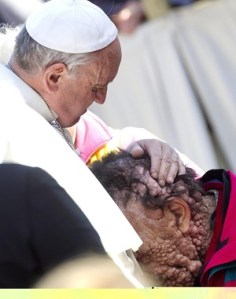
Now, come on, we have lots of work to do, and you aren’t getting any younger, you know. Just sayin’.
Can you relate? Have you experienced your own come-to-Jesus moment, but you’re not sure what that means for you?
When Jesus said, “follow me,” it was a radical call, not an invitation to tea. It wasn’t the Jesus version of Simon says, “Touch your toes. Wiggle your nose. Bend your knees. Pat your head. Here’s your prize.”
You realize, don’t you, that Jesus never said, “Go to church”. Never. Church is where we often hear the Word of God, rejoice for a millisecond, and then go home to cut the grass. Following Christ means living the Word; it means being Christ to others. He told us, “I have suffered the hatred of those in power to serve those at the bottom – the forgotten and rejected. If you follow me, you will do even more and, yes, you will suffer for your efforts as well.” Our response to that call should be a resounding, “Yes”! But, it’s often, “I’ll get back to you.”
Remember that all the disciples ran for cover when Jesus was taken away. When they saw the empty tomb in unison, they proclaimed, “Bummer, this is not how we imagined it turning out.” (Does this sound familiar?) So, when Jesus showed up unannounced at their pity party, he was surely in the same place Spirit-guy has been with me so often, “Okay guys, let’s try this again. First of all, let’s get this out of the way – none of you will be sitting on any throne no matter what aspirations your mother has (Matt. 20:20-21). You’ll be sitting in the muck and mire with the least among you and, get this – you’re going to love it there because that’s what you were created for, selfless love and compassionate care for the lost and hurting.”
Today, we have been inundated by images and news concerning Covid-19, our broken economy, hunger and homelessness, and the BLM protests that have shed an uncomfortable light on the inequities in this country.
People are suffering and dying every day because they have been victims of Covid, hatred, or both. How are you affected by these realities? What do you think of when you witness this most profound moment in our history? Do you turn off the TV and retreat to your safe place? Do you pray or send a check to a food bank? – I’m not discounting those things. Both are needed for sure. But, is there a tugging on your heart to act on that reality?
This is a time of reckoning for all of us who consider ourselves decent human beings. Never mind any label you may attach to that: Christian, Jew, Atheist, none of the above, whatever – just decent human beings who know deep down we are called to lift our “caring” to a whole new level.
I love the expression: “Bidden or not bidden, God is still present”. God still lives and moves and has his being in the very depth of your heart, whether you believe in him or not. And even if you don’t, he just hangs out there, hoping you will one day acknowledge him and, in turn, recognize who and Whose you are. He’s like the heart whisperer, “I love you, you are mine, and your life matters.”
If I ever sound like I have totally got my act together, don’t think for a moment that it’s true. We are all a work in progress. We have all sinned and fallen short (Romans 3:23). I’m just thankful that God’s love and grace know no bounds. Our weaknesses don’t anger him, and our fears won’t push him away. On the contrary, he is merciful, forgiving, empowering, and likely has a wicked sense of humor! Oh yeah, and he has never been untrustworthy. Not once.
So, let’s do this. Yes, sitting quietly is important to discern how and where you are called to serve. But then, like Jeremiah, get off your butt and get over yourself because God will give you all you need to do what he calls you to do. That’s a promise we can all trust.
I will end with this wisdom from Anthony DeMello, SJ:
Once upon a time, a disciple asked the elder, “Holy One, is there anything I can do to make myself Enlightened?”
“As little as you can do to make the sun rise in the morning.”
“Then of what use,” the disciple asked, “are all the spiritual exercises?”
“To make sure,” the elder said, “that you are not asleep when the sun begins to rise.”