It’s to Die For: Caring for the Poor in an Age of Consumerism


All across the country, people stand in lines three-deep for hours to be the first to plop down a few thousand dollars for the latest iPhone. As usual, the media, the gatekeeper of American values, gleefully stands watch over the frenzy.

Nearby, and unnoticed, other people stand in lines. They are the invisible poor in our midst. Statistics show that on any given day, some portion of the 14.3 million families in this country are standing in food lines (Bread for the World 2022).

 And it’s getting worse. Those numbers will increase as programs like the Child Tax Credit, the Supplemental Nutrition Assistance Program (SNAP), and the Special Supplemental Nutrition Program for Women, Infants, and Children (WIC) are all being cut by our current administration.

To the “haves”, the expression ‘It’s to die for” refers to our obsession with “things”. To the “have-nots”, that expression resonates from the pit of their empty stomachs. In both cases, consumerism defines who we are.

For those obsessed with self-gratification, and there are many “Christians” in their ranks, what they “have” defines who they are. For the poor, what they don’t have determines their value. The former well fed, the latter hungry, both dying spiritually. But this is nothing new. God has grieved over this fact of our humanity since the beginning of time.

He has been sending us Prophets, starting with Amos and Isaiah, to speak to this travesty. And they did not hold back! They continually called out those who believed all their riches and privilege were due to being favored by God. So, the admonishments and “woe to you” warnings of the prophets were simply laughable and annoying to them. Perhaps that’s why Jeremiah wanted to run and hide when God called him into service! But he finally went when he could no longer bear Yahweh’s grief, and he paid a hefty price for that courage.

Then, along came Jesus. Jeremiah and Jesus shared the same passion for the poor and disgust for their oppressors, and they bore the same hatred from those who didn’t want to be reminded of their sinfulness. God’s message was clear to both of them: Be willing “to die for” those who suffer.

Christ still tells us that when we care for the least of these, we care for him. Why are we still not listening? Could it be that we, too, are so enmeshed in this consumerist mentality and individualism that we simply don’t care? Or could it be that the gospel of American Express is louder and more appealing? “Woe to you, shopper, if you don’t use your REDcard for all your needless purchases.”

Do we feel a little better about it if we know that a tiny percentage of our spending goes to African Relief? That works for the barely guilty and isn’t risky because we don’t actually have to see the poor and suffering. Not so easy when hungry children are right in our midst, as are modern-day prophets.

How are today’s prophets speaking to our obsession with self? They are speaking the truth about the chasm between the rich and the poor. They scream unfair andtell us boldly and without reserve, that if we call ourselves Christians, we are charged to care for the poor.

 Mother Teresa says Woe to us if we do not recognize the dignity of the poor, that they too are made in the image of God. “Being unwanted, unloved, uncared for, forgotten by everybody, I think is a much greater hunger, a much greater poverty than the person who has nothing to eat.”

Dorothy Day was a tireless advocate for the poor: “The Gospel takes away our right forever, to discriminate between the deserving and the undeserving poor.”

John Kavanaugh, S.J. “It is our consumeristic culture today that defines our values, and forms our meaning and purpose. Companies market hope and identity in commodities, not relationships.”

Walter Burghardt, S.J., said that feeding the hungry is not simply a miracle Jesus performed; it is a mandate for Christians.

Kenneth Himes tells us that the word “consume” means “devour, waste, exhaust“, and calls our obsession with consumption in America pathological. “Consumer behavior has been removed from ethical judgment”, which then allows us to become complacent about God’s call to share our resources and acknowledge our indifference toward our starving neighbor. What has been lost is the essence of who we truly are and why we exist.

Mirabai Starr, “Our encounter with the manifold losses that characterize the human experience can till the soil of our hearts so that we are more available to the suffering of other beings and the earth we share. Sorrow can be paralyzing at first, but compassion, which can sometimes take the form of anger, is a wellspring that offers infinite sustenance.”

 As for me, my life changed drastically when I finally looked in the mirror and saw my own sinfulness. Woe to me! My greed and self-fulfillment came on the backs of the poor and hungry. My refusal to give up the slightest want caused children to go to bed hungry. “Thus says the Lord God, enough, Linda! Do what is just and right.” (Ezekiel 45:9)Truth be told, I still suck at it at times. But I’m getting better at self-correcting ahead of that Holy Whack!

In a country in which the majority of people profess to be Christian, our actions do not match that profession of faith. Woe to us, “Hypocrites!” Pope Paul IV spoke of rights as the right not to “have” more, but to “be” more. That is true for all human beings – the needy, and perhaps even more so, the greedy.


Greed – The Gospel According to Monsanto

Matthew 13:3-8 goes something like this: “Then he (Jesus) told them many things in parables, saying: “A farmer went out to sow his seed and then sprayed it with Roundup and destroyed everything in its path. Other, wiser farmers grew their crops on healthy soil where it produced a crop—a hundred, sixty or thirty times what was sown.”

Anyway…

We have lived in our current home for four years now. I’m sure I annoy more than a few of my neighbors because I refuse to use chemicals on my lawn. Here’s why, from two sources:

https://organicconsumers.org/monsanto-has-known-glyphosate-promotes-cancer-1981/

https://www.myhealthwire.com/news/breakthroughs/1100

“Dr. Anthony Samsel is a research scientist who has been investigating glyphosate. ‘I was with the ‘think tank,’ Arthur D. Little (ADL) in Cambridge, Massachusetts for many years working as a research scientist on many types of projects, from product development to environmental sciences to later switching to health sciences,'” he says.

“He’s also done contract work for the Environmental Protection Agency (EPA), and as a hazardous materials expert, he’s worked for the United States Army Corps of Engineers (USACE), the United States Navy (USN), and the United States Coast Guard (USCG).”

What he has learned:

“Glyphosate, the active ingredient in Monsanto’s best-selling herbicide Roundup, is one of the most commonly used herbicides in the world. An estimated one billion pounds a year is sprayed on our food crops, resulting in the average American eating several hundred pounds of glyphosate-contaminated food every year.

Monsanto Has Known for Nearly 35 Years That GMOs Promote Cancer. Their own research also supports the WHO’s International Agency for Research on Cancer (IARC) determination that glyphosate is a Class 2 A “probable human carcinogen.”–a determination Monsanto is now trying to get retracted….Monsanto Never Published These Negative Findings.

So how did Monsanto and Biodynamics—the company doing the research—hide these inconvenient facts? According to Dr. Samsel, they canceled out the controls and the damning findings by using historical control data from unrelated studies. It’s also worth noting that these negative findings were never published in the peer-reviewed literature or submitted to the EPA or the Food and Drug Administration (FDA). Cancer was clearly shown in their 26-month-long feeding study….Monsanto knew in 1981 that glyphosate caused tumorigenic growth and carcinomas in multiple organs and tissues…At the rate we’re going, we’re going to kill billions of people.”

So, back to my yard. We have weeds. I do my best to keep the grass cut short, so it isn’t too obvious. I also have a small organic garden. Well, it’s as organic as it can be considering we are surrounded by neighbors who spray their lawns with chemicals. That’s why I’m moving to Auroville, India!

(Sri Aurobindo)

Seriously! It was the vision of Sri Aurobindo that came to fruition in the 1960s.

Welcome to Utopia!

I imagined life in Auroville to be as close to perfect as anything this side of heaven. Probably no self-serving politicians, rabid neighbors, or drunken uncles there. No cancer or heart disease or PMS, gluten intolerance, or out-of-control chocolate cravings, and they have no idea who the Kardashians are!

Kumbaya…

Well, not quite.

After all, if God had intended to use Auroville to test market a perfect world I doubt he would have allowed certain humans, especially greedy, self-absorbed, money-hungry humans who run multinational corporations like Monsanto to come in and mess it all up.

My bubble burst when I read about Monsanto’s disastrous corporate greed that has literally scorched the earth and destroyed thousands of lives in its wake in India (all over the world actually). You can read about it here.

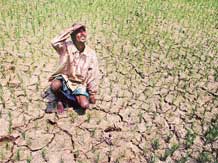
Basically, Monsanto came and made unattainable promises to hungry farmers and their families, who unwittingly signed on the dotted line. As a result, thousands of farmers and laborers have committed suicide because they lost everything as Monsanto became richer and richer. The number of suicides increased by five percent to 12,360 in 2014.  Bankruptcy and indebtedness accounted for the major cause of suicides. More here.

No doubt Monsanto hopes the destruction they leave in the wake of their self-interest goes unnoticed by the rest of the world. So far, it has been working because we happily continue to spray their poisonous chemicals all over the earth.

They not only destroy our soil, but they are also now irrefutably linked to diseases that are killing us. Before their recent exposure in the media, were any of us fearful of the chemical content of these products? Obviously not, as they are a multi-billion dollar corporation set for a buy-out from Bayer. Which raises the question: Why in the hell would Bayer willingly spend $66 billion dollars to purchase a company that has been in the midst of billions of dollars in lawsuits, with no end in sight? Why?

bayer and monsanto
Look at these two kids, all giddy about their successes.
india suicide farmers
I doubt the farmers in India will be joining their celebration.

Now for my effort to turn this into a God story. Have I lost you? Okay. Follow my A.D.D. brain on this journey. Let’s say we are the seed, and the soil would be where we are planted, right?

I have seeds that I start in small pots of lush organic soil every year. When they begin to grow into seedlings I repot them or move them into my garden which is also filled with organic soil. Don’t be too impressed – I actually suck at gardening. Most of my plants start out beautifully but fail to thrive for one reason or another. Which brings me to my point.

Because we were created in God’s image we start out perfect. But, sometimes things go terribly wrong. We can end up in dysfunctional families where we fail to thrive, as was my case. Fortunately, God did his best to “repot” me into the soil of his divine love and mercy.

But often I allowed the world around me to convince me that what I had wasn’t enough; that I wasn’t enough. I needed more: worldly pursuits, obsessions, longing for things other than God. Like unsuspecting plants sprayed with Roundup, my soul was dying little by little.

We have been called to be watchful of the often subtle and insidious destruction the world can inflict on us. Like corporations that skillfully market their products, the world markets an exciting and fulfilling life, “You deserve this new car, this great job, this man of your dreams.” Never mind the cost: the car you can’t afford, the job that will take you away from your family, the man who happens to be married –oops. And, to the extreme, in the case of India: death and destruction.

What is our foundation? Is it God in which we should live and breathe and have our being? Or is it worldly pursuits and obsessions in which we give away all that we are, all that we were created to be?

John 10:10 tells us, “The thief comes only to steal and kill and destroy. I came that they may have life and have it abundantly.” And you can be sure that the thief is cunning and resourceful. He knows our weaknesses and vulnerabilities so we must always be on guard.

And, my friends, this is where we get real, as Christians, we have also been given the responsibility of helping to protect all of God’s creation: our neighbors, the earth, and all its creatures. Are we helping or hindering God? We are surrounded by such tremendous need and suffering. What are we doing to help relieve that suffering? What are we doing to protect the earth?

I will leave you with this: Because of the unbearable suffering and death of the people of India, one man stands out as their David against the Goliath, Monsanto. His name is M. Prabhakara Rao.

This is what he gave up to battle a Corporate Giant: Tens of millions of dollars were within reach for M. Prabhakara Rao as he prepared in April 2015 to take his Indian cotton seed company public. The Indian businessman already had $54 million in initial funding from an American private equity investor. Rao had also locked in a long-term licensing agreement with Monsanto Co, the world’s largest seed company, for the technology used in genetically modified cotton seeds that made up the majority of his annual sales.”

Could you or I have walked away from such wealth to stand against a giant like Monsanto? Likewise, in our own lives, could we walk away from the world’s empty promises to fulfill us?

It’s something to ponder and pray about don’t you think?

Okay, we’re done here. I have to get busy finding a recipe for dandelion wine. I’m hoping if I give a bottle of it to all the neighbors for Christmas, they’ll forgive me!