
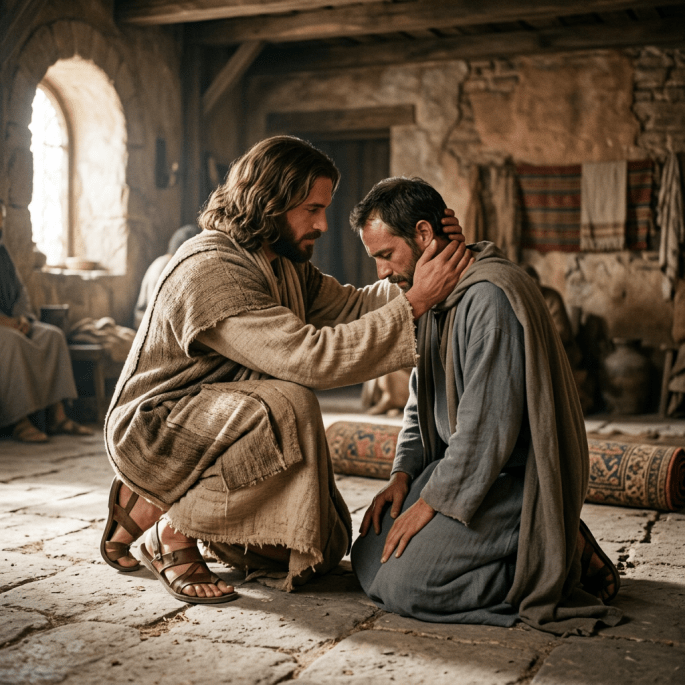
In Matthew’s Gospel (22:35-40), this rich lawyer is trying to make his way into heaven with the least effort and responsibility. First, he asks Jesus what the greatest commandment is, already feeling confident that he adhered to all the “laws”. Well, okay, there was that one tiny indiscretion when he kicked at an annoying beggar on his way to the Temple one Sunday. But, geeezzz, he didn’t kill him!
I can see Jesus looking at him side-eyed as he tells him the greatest commandment is to love God completely and your neighbor without exception. Nothing ambiguous about that.Right? Except the lawyer immediately asked for specifics: “Just so I’m clear, define ‘neighbor’.” So now he gets Jesus’ famous eye roll, which is always followed by one of his favorites, The Good Samaritan (Luke 10:25-27).
We all know this one, but here’s what many people don’t realize that makes it so profound: The man who was beaten up was Jewish. The Jews and Samaritans were sworn enemies, and that went back for centuries, long before Jesus’ time. Yet it wasn’t the Priest or the Levite who stopped to help him. They went out of their way to avoid him. It was the Samaritan who didn’t give it a second thought. A man needed help. Period.
So many of us today try to bargain with God when we don’t like what he says. Or we interpret Scripture in a way that’s convenient for us, “So, God, you really didn’t mean I have to love everybody! Right? I mean, there are lots of people who are just, well, unlovable. I can think of one right now who is destroying our country. Lots of people agree he’s a terrible person (not naming names here). Surely, you don’t like him, let alone love him! Right? Right?”
Crickets…as God gives you that side-eyed look. Again!
Father Richard Rohr tells us, “Religious people who use the Scriptures to condemn or exclude others seem to have different goals and objectives from those of God or Jesus. Their arguments generally have to do with very secular concerns: power and control, fear of the other and the unknown…. Check the Gospels if you don’t believe me.”
So, I’m asking you what part of the command to love don’t you understand, like, or follow? Then, ask yourself, am I the helper or the guy in the ditch? Things can look much different there. At times throughout life, we may all be the helper, but more often we find ourselves right alongside so many others in that ditch while people pass by on the other side of the street. Please, don’t be that person. Yes, it’s risky. You have no idea what they might do in response.
We don’t know for sure if Jesus always knew the price he would pay for caring for the guy in the ditch. But, he did it anyway. And, yes, he did pay the ultimate price for doing it. What price are you willing to pay? What risks are you willing to take if you profess to being a follower of Christ? Being a “Christian” in name only is certainly easier and safer, but is it what we are called to in the midst of all the suffering that surrounds us today? I think not.
Don’t think for a moment there weren’t times when I worked with the homeless that I didn’t wonder what the hell I was doing. Like the time I found a couple who had called us for help. They were sleeping in the woods and hadn’t eaten for days. I put them in my car and drove them to a shelter. Later, I brought them food and listened to their story. He had been in and out of jail for years and had been abandoned by his family. I hugged him. Then, this big, tough-looking guy you would have crossed the street to avoid began to cry because no one had ever hugged him or made him feel worthwhile.
At times in this life, we will be called to be the helper; other times, we will be that guy in the ditch. I have been that person more times than I can count. I will never forget those helpers God sent me during the worst times in my life. How about you? Perhaps now is the time to pay that forward.

