The Blessings, Beauty, and Boldness of Not-Quite

I am in a place in my life, that last bit of my journey, that rounding the corner and spotting the finish line, where I could easily bemoan my failings. I’m now certain it’s too late for, oh, I don’t know, running the New York City marathon or climbing Kilimanjaro. Beyond that, I don’t know.

The blessings of uncertainty

Uncertainty seems to be rejected by many Christians who see it as a weakness. Certitude, on the other hand, is what we subscribe to in a faith that makes God more acceptable and knowable, with no surprises lurking in the bushes. It offers a checklist of everything we need to do to “get to heaven” – Attend church weekly. Check. Tithe 10% of your earnings before expenses and frivolous spending. Check-ish. No cursing, snarkiness, or holier-than-thouness – on Sundays – the rest of the week is fine.

If you’ve checked those boxes, nothing more is expected of you – EVER! You can just go about your life any way you please. I can profess to having been all in with those “rules”. Until I wasn’t. That’s the point in my life when I looked back and saw the emptiness and shallowness of my existence. That’s when God spoke into my brokenness and showed me his equally broken heart because he knew he created me for more. The gifts and blessings he had given me sat unused because of fear and doubt that I was worthy of them.

In this place, I thought I could act as if God didn’t really care, and I could go about my life risk-free. But what if my denying that my life actually had a purpose turned out to be a no-good, very bad, nightmarish end? What then? Could I take my “followed all the rules” checklist to the gates of heaven, and they would open wide to me while the angels sang hallelujah? (BTW, heaven isn’t a place. You know that, right?) Anyway…

I ever so slowly began to sit with God and actually listen to his promptings to “go,” like Abraham. I trusted him—mostly. I also resisted my impulses to explain to him why whatever direction he was pointing me in was probably not a good idea. I reminded him of the litany of all my failings and wondered if someone else (think Moses) might be a better choice. Is Aaron still around?

Slow but steady change

I know exactly when I began to change. It was in 2001, on that momentous day, in the early morning, when God butted into my perfectly peaceful run and changed my life. I’ve told that story often, so I won’t bore you with it again, except to say that God has had me on a lot of adventures since then!

I have had many fits and starts and often questioned the wisdom of his guidance, only to see afterward how each experience changed and grew me in some way. They have each played a part in helping me to believe that God’s plan for each of us is perfect – always! And if you doubt that for a moment, let me share this incredible story about St. Benedict Joseph Labore. Everything in quotations is taken from the book SAINTS FOR SINNERS by Alban Goodier, S.J. https://www.ewtn.com/catholicism/library/st-benedict-joseph-labre-the-beggar-saint-5838.

The poor, homeless, beggar saint who never stumbled

Saint Benedict Joseph Labore was born into a wealthy family. His parents and fourteen siblings loved that lifestyle, but not Benedict. He rejected their obsession with fame and fortune – it disgusted him. So, off he went as a young teenager to make his own way, to discover his purpose. He was certain he was destined to be a monk. But it was a long road with many rejections and disappointments along the way.

He was first drawn to the Trappist Order as their ideas were contrary to what everyone else seemed to treasure. He applied to the La Trappe Abby, but when he arrived, they rejected him, stating that “He was underage, he was too delicate; he had no special recommendations.” But he didn’t give up. He applied to the the Carthusians of Montreuil only to be rejected once again. Still unwilling to give up, he applied to another Carthusain order. He was accepted but was soon rejected by them because “The monks grew uneasy; they feared for the brain of this odd young man. They told him he had no vocation, and he was dismissed.” Even after being rejected three times and being told he was simply not monk material, he was still resolute, knowing differently in his heart.

Undeterred, he began a year-long course of studies the Carthusians listed as the cause of his rejection. He reapplied, and they accepted him. But, again, it was short-lived, and they showed him the door. Still, he tried two more times for acceptance, to no avail.

So, at the age of twenty-five, undeterred and still determined to live his calling, he set off on his own, with nothing and no one to accompany him. He endured the extreme elements, ate what was given to him by the generosity of others, and he smelled – bad! But, somehow, he felt “no bitterness or disappointment” in this life of poverty that he embraced. He died a pauper at the age of thirty-four. Awww, too bad, you say? What a wasted life, you say? Wellll….

Here comes a miracle!

Word quickly got out that he died: “So great was the crowd that the guard of police had to be doubled; a line of soldiers accompanied the body to the church; more honor could scarcely have been paid to a royal corpse.

From the moment it was laid there, the church thronged with mourners….The throng all the time went on increasing. People of every rank and condition gathered there, at the feet of Benedict the Beggar. But the enthusiasm did not end with the funeral. Crowds continued to flock to the church, and soldiers were called out to keep order. At length the expedient was tried of closing the church altogether for some days. It was of no avail; as soon as the church was reopened, the crowds came again and continued coming for two months. Nothing like it had been seen before, even in Rome; if ever anyone was declared a saint by popular acclamation it was Benedict Joseph Labre, the beggar.”

Who am I to question God’s plan?

Now, I could easily compare St. Benedict’s story to my own meager efforts to use the gifts God has given me to serve and care for others. But what I have learned from this is that God isn’t asking for perfection. He has no expectations other than the offering of my “yes” to him and that I will do my best. The rest belongs to him. And the only thing I should long for at the end of my life are the words, “Well done!” Well done – indeed!

Living in Scary and Uncertain Times: Finding Solace in Galatians 5:22-23

This post started out differently than what you’re seeing here. I intended to simply write about the Fruits of the Spirit and most of the content came directly from my book. Then, I received a “holy prompting” to focus it on the present reality of the violence, hatred, and fear we are daily inundated with.

 Yes, we are living in scary and uncertain times, which is likely causing so many to hide behind locked doors, have the groceries delivered, skip church or any crowds, and throw up frantic prayers to God.

Which makes this a perfect opportunity to delve into Galatians 5:22-23. I have long felt it was the most poignant of all of Scripture and has so much to tell us today.

Imagine God inspiring the writer(s) of these verses and being pleased with their work. Then, sitting back crosses his fingers and hoping we choose wisely because he has no control over our decisions.

We are daily challenged to decide between:

Love or hate

Joy or misery

Peace or worry

Patience or agitation

Kindness and gentleness or malice

Self-Control or instability

So, let’s go…

LOVE

Does love have limits? Many of us carry scars of past pain and hurt that play out in our lives daily and affect how we treat others. I swore I would never be like my mother – does that sound familiar?

When love is conditional, it is worldly, shallow, and indifferent. It can easily transform into hatred. From that perspective, we watch closely for others to screw up just once, and we’re done with them.

We seem to forget that God’s immense love and grace have no expiration date. “Oops, your get-out-of-jail-free card has expired. Sorry.”

He longs to help us love those that we find humanly impossible to like—even ourselves at times. But here’s the key: I can learn to love only when I have accepted God’s love myself.

Know the Difference: worldly love wears the sheepskin of an “if it feels good” mentality over the wolf that devours childhood innocence, destroys relationships, makes compassion a burden, and muddies the pure waters of selfless love created by God (1 Cor. 13:4-8).

JOY

“Shout joyfully to the Lord, all the earth; break forth in song, rejoice, and sing praises.” (Psalm 98:4)

A common response to the idea of joy might be something like this: “News flash, dufus, joy is the noise made by fools who don’t have a clue what is going on in the world.”

All right, fair enough (no need to call me names). I actually do know about the terrible things happening in the world today: anger, violence, and hatred. I also know about a man who suffered an indescribable death at the hands of those who wrongly accused him of a crime. He was beaten, spit on, and mocked. Then, he was nailed to a cross as many watched him slowly suffocate and die.

We know the life stories of those who have and continue to follow Jesus’ example. Do you think for one moment they would sign up for that if they were following a fool? They knew that the only way to bring nonbelievers to Christ was to live joyfully because no idiot would follow someone who spewed bad news on a regular basis.

So, what about us? Suffering has a purpose, and when you discover that truth for yourself, as I finally did after many years, hopefully, you will have arrived at a place where you, too, can shout for joy and share the Good News with others.

Joy is the oasis of laughter in the desert of loneliness. It is a caring touch coming through the locked door of a broken heart. It is peering through tear-stained eyes into an empty tomb. Pain and suffering are temporary. Joy is eternal.

PEACE

If I wanted true peace in my life, I would have to let go of the anger and lashing out. I would have to recognize the part I played in my own misery, and I would have to release the people who were on the receiving end of all the pain and hurt that was bottled up inside of me. Did I turn some people away from God because there was no peace in my life? 

One of Jesus’ final acts was to offer his disciples peace, and they were going to need it! “Peace I leave with you, my peace I give to you; not as the world gives do I give to you.” 

Have you known someone in your life who radiates peace? If you are wise, you will do everything, short of stalking them, to be in their company, to glimpse through them the very nature and essence of God, which is peace, and then claim it for yourself.

PATIENCE

Today, patience is a dinosaur, and if it doesn’t come in a pill form, we aren’t interested. I want it now! I don’t want to feel it. I don’t want to deal with it. Give me a pill, a distraction, or a bus ticket out of here.

A display of patience we might tolerate would be something like a gentle nudging to wait your turn, wait for your elderly grandmother to catch up, wait for a phone call. Just a small interruption in our daily routine may be okay.

The word patience literally means to suffer and endure. If that’s true, then how much would be required of us to be in a relationship with someone who is unbearable or endure intolerable circumstances? Yet that is exactly what God is asking of us when he calls us to patience, to suffer, and bear the burdens of life.

We excuse ourselves when we fail to be Christ-like to others, yet we expect God to be all-loving, all-forgiving, and all-patient with us. “Well, God’s a bigger man than I am.”  So, you’re comfortable with that excuse, are you?

But hold on. I have some good news for you. God doesn’t demand anything from us that he will not give us the power—his power—to achieve. So why is God so patient with us? He knows our human frailties and longs for us to trust him. He longs to shower us with blessings and guide us through all the obstacles this world presents to us.

A question we are called to ask ourselves: is my impatience a stumbling block to others?

KINDNESS & GENTLENESS

What are the prejudices and injustices we perpetrate on others because of our pride, pious attitudes, and forgetfulness of just how imperfect we are?

If we thought about it, we could all probably recall at least one person in our lives whom we have distanced ourselves from because of struggles in our relationship. That person may be as close as our living room couch.

We are often so determined to stay focused on the hurt we endure from others that we’ll stay there as long as it takes to make that person suffer. But, you know what? That person is a child of God, just like we are. That person is likely broken, just like we are. It’s time to let them off the hook.

“Everyone you meet is fighting a battle you know nothing about. Be kind.” Brad Meltzer

GOODNESS

Everyone feels benevolent if nothing happens to be annoying him at the moment.” C. S. Lewis

I learned a few tricks from my mother, who was the master of masking. She was from the old school of “What would the neighbors think?” When you walked out the door, you left the dark family secrets behind and played the game in public.

And, oh, the games we play, the lies we tell. But the real tragedy, I believe, is that we think we’re faultless, even though our sins tell a different story. Goodness doesn’t seem to be on the same scale as holiness, does it? I think I could rationalize myself into the category of good, but I would have a tough time comparing myself to Mother Theresa (don’t think I haven’t tried!).

I believe most people really want to do good, but we are constantly in a battle. That’s why Galatians 6:9 says, “Don’t grow weary doing good.”

Our true character is who we are when no one is looking.

Now comes the proverbial question, “Why should I?”  The answer is that being good, especially to our enemies, can bring far greater rewards than treating them the way we think they deserve to be treated. And if you still need convincing, go back to the cross for a reminder of what loving your enemy looks like.

Now, go love that jerk …oops…child of God.

FAITHFULNESS

God’s faithfulness is steadfast, but what about ours? I can only relate to you what has brought me to a place where I know faithfulness means far more than I was ever willing to admit. That didn’t happen as a result of one miraculous event: No burning bush, no parting of the sea, no Lazarus-like miracle, just a journey, a very long journey, to a patient and loving God.

How do we rationalize our indifference to the horror of what took place at Calvary? Could it be that we trivialize Jesus’ suffering to make our meager sacrifices appear to be significant and our sins acceptable? Thus, Jesus becomes a warm fuzzy, and we’re off the hook.

Trivialize this…“Take up your cross and follow Me.” (Mark 8:34) Oh boy, here we go. This is where we disconnect.

We know the kind of men the apostles were before Jesus died. They were a bunch of misfits. They doubted, they questioned, and they fell asleep when he asked them to stay awake and pray with him. Then, they ran away when he was taken to be hanged. But they knew they screwed up big time!

Now, here they are in the Upper Room after Jesus is buried, eleven men lost in confusion and grappling with their weakness; their denial. Then Jesus shows up. And what are his first words? “Peace to you.” (Luke 24:36) 

When Jesus said, “Anyone who wants to take up his cross and follow Me, anyone who wants to suffer the same fate as Me, step forward.”  They did. All of them. There would be no turning back now. No running, no denying. The cock could crow till the cows came home, and not one would falter. Not this time.

Now it’s our turn. Certainly, most of us will not be called to martyrdom. But, we are called, though, to die in our own selfish, self-centered ways. We are called to be different, to suffer if need be. We must stop asking, “Why me, Lord?” and accept our trials with faith and trust that God is right there with us to turn our sorrows into joy.

SELF-CONTROL

Everything that Satan is behind—those worldly things that we call pleasure are really his skillfully disguised handiwork. Each time we justify the smallest sin, we become insensitive to the fact that it actually is sin.

For all those who have been deceived into believing that there is such an excusable thing as a “tiny indiscretion,” those are the lies of Satan that keep us out of a relationship with God.

While we’re on the subject, we would do well to look at all areas that we excuse but God does not. Have we been lulled into a belief that there is nothing wrong with what we are doing? What has happened to our consciences?

Leo Tolstoy, in his essay, The Lion and the Honeycomb, Why Do Men Stupefy Themselves? explains: “What people most want is not that their consciousness should work correctly; it is that their actions should appear to them to be just.”

God says in 1 John 5:3, “For this is the love of God, that we keep His commandments. And His commandments are not burdensome.” Seriously? They seem awfully burdensome to us, don’t they? But as Christians, we are called to be disciplined in our lives. Until we can give everything to God; until we can come to a place where we are “seeking the Kingdom of God first” (Matthew 6:33), we will repeatedly fail. That’s why self-control is not self-alone.

PUTTING IT ALL TOGETHER

Following Christ does take a great amount of discipline, and it is only possible through him. To everyone who feels battle-scarred right now, whether those battles of life have only been skirmishes or they have been “all-out, fight-to-the-death, take-no-prisoners” wars, take heed.

We don’t make a one-time – this is it – I surrender – commitment to Christ and then throw ourselves a party. If you think all your sinfulness will instantly be eradicated when you do that, you’re gonna fall hard, smack your loser head, and go join the circus.

Come back here. Don’t do that. Just fall on your bruised knees, seek forgiveness from a merciful and loving God, and start over. You can do this! God created you and equipped you to do this.

You’re an Idiot: Just Thought You Should Know

(Tenor GIF)

Here I go putting my vast expanse of self-proclaimed wisdom out there for everyone to see. Because – why not?! I’ve decided that in our current cultural mess, where everyone seems to be scrambling for attention and significance, something, or better still, “Someone,” is clearly missing.

The wide spectrum of beliefs and answers to our current problems are mind-boggling. And deep down, much of it is a visceral hatred that spreads all over social media and in our own backyards.

We all seem to have a sense of what “should be” in our personal lives, our neighbors’ lives, our culture, and even with God – yeah, let’s not let God off the hook!

I should, you should, we should, they should, God should, trees should, rocks should, animals should, the weather should.

My boss should be nicer, my kids should be more respectful, my husband should do the laundry, my hair should be thicker, my waist thinner (deep exhale).

Have I left anything out?

We are obsessed with how our lives should be and how others should act. We calculate daily what ought to be, almost moment-by-moment, and then adjust our lives accordingly.

Let’s say I call you out on social media because, well, you’re an idiot, and someone has to do it. Then, I see you’ve done something even more reprehensible the next day. You should then be arrested, or at the very least, get a massive dose of eczema right before a long-anticipated summer holiday and have to wear sweatpants the entire time! There, take that!

What if, one day, you were given the power to enact all the most profound shoulds you have ever imagined? What would they be? There’s a pretty broad range here, so let’s make three categories:

  • My shoulds.
  • God’s shoulds
  • Everyone else’s shoulds.

I’ll start:

My shoulds, being honest here – which sucks. But they probably won’t materialize anyway:

  • I should be more loving and less judgmental.
  • I should spend less time on the internet and more time with God.
  • I should quit counting offenses against me and begin counting my blessings.
  • I should be more like Jesus and less like a “Christian” who’s superior to everyone else.
  • I should quit calling people “idiots”.
  • Chocolate should not be fattening(oops, how did that get in there?).

God’s shoulds:

  • God should not allow suffering – especially for Christians.
  • God should punish all mean people – except me.
  • God should ignore my pompous attitude even though it runs totally counter to everything Jesus stands for.
  • God should reward me every time I correct someone’s behavior.

Everyone else’s shoulds:

  • People should be more generous and less self-serving (except me).
  • Wicked people should not prosper.
  • People should love and accept each other.
  • My neighbor should only put his trash out on trash day and make his dog stop pooping in my yard. (Yeah, I know it’s you!)

But wait; is this truly what we were made for? Is this what fulfills us and gives our lives meaning and purpose?

It seems we have gotten so caught up in demands, rules, and checklists (let’s not forget) were initiated by man, not God, that we have forgotten who and Whose we are. We must reclaim our innate call to love because of who we are in Christ.

We seem to have lost our way in a culture that is hell-bent on dividing us into opposing camps: those who deserve the best life has to offer and those who don’t. We have replaced decency and justice with one-upping our “enemies”.

We could argue and debate all day long, but that will not change anything. What’s needed more than anything is (1) we come to truly believe and live as though we are beloved children of a loving God, and (2) that we answer Jesus’ call to “Go and love on everyone you meet. No exceptions. No judgments. No prerequisites.”

Do you want a real challenge to get you started? – actually, if you’re like me, it will be ongoing! It’s terrifyingly simple: sit quietly with God – no agenda, no list of demands, no attempts to excuse your transgressions. Be quiet and listen so God can transcend your stubborn will. It is there where He will speak into your messiness and transform that hardened heart.

De. Barbara Holmes tells us, “There is within the human spirit a source of renewal, courage, and ingenuity that equips us to fulfill our purpose here on earth.”

And here’s something I know for sure because I experience it almost daily: when you lose your way – and you will, when you fall back into old habits – and you will, and when you doubt your worth, God’s love, compassion, grace, and forgiveness are steadfast. He’s never left you and never will.

And, finally, I’m sorry I called you an “idiot”! Please forgive me!

My Journey to Finding True Purpose and Self-Acceptance

Oh, the games we play. I know them well. I’ve been playing them all my life. The games that hide our suffering, that mask our own sinfulness, and help us survive.

Growing up, I was always made to believe I was not worthy of love or care. So, I tried desperately to find my worth in things and accomplishments.

I have been artificially propped up by an ego that is always on the alert for another opportunity to impress others, starting years ago as a youth minister and then at Youth-in-Need, hospice, and working with the homeless.

Being pumped up by the admiring comments of others filled a void, “Oh, I admire you for what you do. It takes a special person to do that.” I pretended to brush off the comment while secretly hoping this would be the year I would receive the Time Magazine Person of the Year award. I kinda gave up on that one. I know…shocking!

Are you impressed yet? Do you know who isn’t impressed? Who’s saddened by this litany of “accomplishments” by yours truly? GOD!

1 Cor. 7 speaks directly to the ego, What are you so puffed up about? What do you have that God hasn’t given you? And if all you have is from God, why act as though you are so great and as though you have accomplished something on your own?” Ouch!

In hindsight, I know God was present in all of this. He watched and waited for my AHA moments; for those moments, I could clearly see my shallow attempts to feed the hunger and loneliness of others – all while denying my own.

And those AHA moments were truly profound! Moments when my initial shallowness transformed into compassion and empathy for those I was serving. That’s how God works. He was converting my heart right in the midst of my brokenness.

So, there’s my story—the good, bad, and ugly. And this is my hope – that I am finally recognizing the person I was created to be and the purpose I am to fulfill for whatever time I have left here: to truly point others to God and not myself.

I’m not sure what tomorrow’s going to look like – but I am sure I’m in good hands! I will leave you with this beautiful song by Casting Crowns: https://www.youtube.com/watch?v=_eQd3K2Fxp4

Learning from Moses: Embracing Responsibility and Change

How many people throughout history have struggled and spent all their energy blaming everyone else for their pain: parents, co-workers, despicable neighbors? They would rather go down in flames than admit to their own faults. I’ve been there and often have to catch myself when I slip back there.

How about those Israelites as an example? Follow their trail from captivity to freedom. God heard their cries for years. I’m not sure why he made them wait through a few generations before he responded. No doubt he had a good reason. But, he finally did enlist Moses to go take care of it.

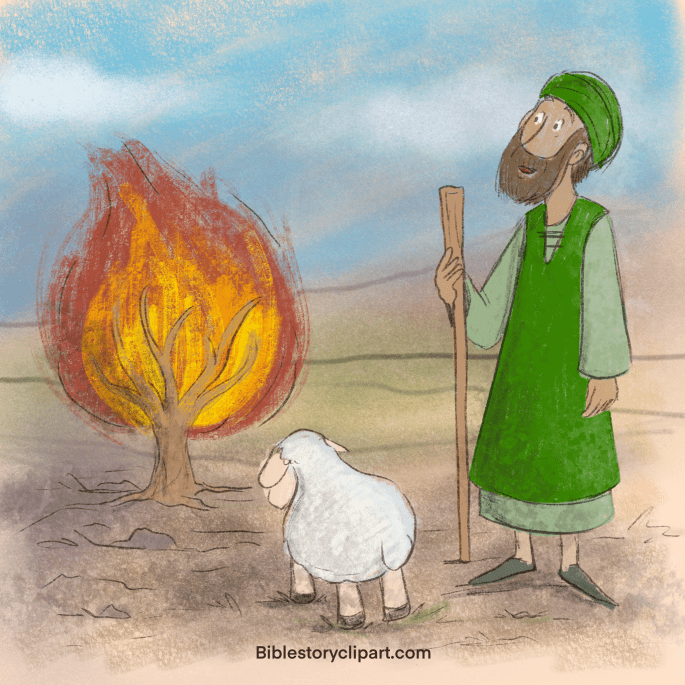
Remember that Moses was trying to live a quiet and unassuming life since that whole fiasco of him murdering and hiding the body of an Egyptian. He felt pretty comfy until God jumped out of a burning bush and surprised the c*#p out of him.

That’s what God was saving him for: “Pack up your stuff and go save the Israelites from Pharaoh.” Personally, I would ask for more details of his expectations and surety of the outcome before committing. That probably comes from years of abuse by an unyielding and demanding mother. In those God-calling moments, all I see is an authority figure I was supposed to feel safe with and trust. And my inner child screams, “RUN, IT’S A TRAP!”

If you think about it, Moses could have had abandonment issues while he was floating in the river in that basket for however long that lasted. He, too, could have feared trusting God (there were no therapists back then to help him sort through his issues). That could also be why he shoved Aaron in front of him, trying to get God to send him instead.

Anyway, Moses wasn’t really keen on the idea of confronting Pharaoh and tried to get out of it. But God wouldn’t have it. So he went…kicking and screaming. I think he was secretly excited when Pharaoh told him to take a flying leap, “See, God. He’s not budging. I’ll be going now.” But God stopped him in his tracks and had him sit through the litany of plagues, ten to be exact, that he rained down on Egypt:

  1. Blood
  2. Frogs
  3. Lice
  4. Flies
  5. Pestilence
  6. Boils
  7. Hail
  8. Locusts
  9. Darkness
  10. Killing of the firstborn

At last, Pharaoh relented. His patience expended; he told Moses to get them out of his sight. All the while, Moses had his sandals and toothbrush packed just in case. So they all scurried out of Egypt before Pharaoh changed his mind.

Now, the fun started. The Israelite’s story is strewn with whining and complaining at every turn, “There’s no water, this manna stuff sucks, my tent-mate snores.” Blah. Blah. Blah. How quickly they forgot how torturous their lives were in Egypt as they labored under cruel and unimaginable circumstances.

Now fast-forward. Remember when they were tent camping at the foot of the mountain, eating beans, roasting marshmallows over an open fire, and singing cowboy ballots while they waited for Moses to return from his historical visit with God?

(Blazing Saddles – Tenor GIF)

Wait, no, that’s the wrong scene. Sorry…

Anyway, surely you know this part of the story. Right? Bolts of thunder and lightning and God up close and personal. “No thanks! We’ll wait here.” They all gave Moses a high-five and “ATTA BOY, you got this” pep talk. Then, they waited at a safe distance. No doubt some bet on God pulling Moses into that burning bush, and that would be the last of him. They just weren’t trusting any of it.

And while we’re on the subject of us messy humans, let’s not forget that Moses wasn’t the poster child for perfection. I mean, he did kill that Egyptian and bury him under a pile of rocks. And he did tell God “No” several times when he didn’t like his plan. And, he whined incessantly about the Israelites whining.

Can you hear the “IT’S NOT FAIR!” mantra that must have droned on and on from all of them for FORTY.  LONG.  YEARS?

So, what about us? This is the point where we need to look in the mirror and try our damndest to deny that we do the same thing over and over and over again. Come on, you know I’m right. We do it so often it probably slips by our consciousness.

Okay, you sit there staring in that mirror if you want to, trying to excuse yourself to the God who knows better. I’m moving on. Though I’m not really sure how that’s going to work if I stay tethered to my past.

Letting go of the known, even if it’s negative thoughts and feelings that serve no good purpose, is just plain scary. So often, we would rather stay right where we know what to expect than risk the vulnerability that is sure to accompany something new and uncertain.

Looking back at the abuse of my mother, as bad as it was, I knew exactly what she would do and how to dodge the bullets so-to-speak. It became so commonplace it was almost a game at times. And when she tripped herself up, like the time she chased me up the ladder on our bunk beds and it fell backward, I probably felt a great deal of satisfaction. At least until she got her hands on me.

There is a flip side to that coin. Now that I’m adult(ish) and have no one to answer to, I also have no one to blame but myself if things go sideways. Which, I believe, is how God intended it. Taking responsibility for our actions and cleaning up our own messes in the process is how we are called to live in this unpredictable, messy life.

A Non-Exclusive Jesus Club

(Pope Francis blesses a leper Photograph: Claudio Peri/EPA)

Over the past few weeks, I have heard visceral and angry comments from others about homosexuality, mostly from professed Christians. Of course, this is nothing new.

I’m sure what has likely stirred the hornet’s nest for many were the recent words of Pope Francis permitting priests to bless same-sex couples. Undoubtedly, many bishops were incensed, and I’m sure Pope Francis expected it. What I’m also sure of is that he didn’t stop to worry about the fallout of his decision or how that would reflect on his approval numbers.

The noise was so profound for me because it came at Christmas. If you have to ask why that matters, I will tell you if you will indulge me. You are free to disagree. I would ask that you consider what I am sharing here in light of our having just celebrated the birth of Christ, which would soon be followed by his short life of loving as God taught him, followed by his unimaginable suffering, pain, and death because of that love.

Let me share the writings of two women here because they beautifully express what I feel:

First, Episcopal priest Cynthia Bourgeault explains the uncomfortable question of what the Bible says about sexual orientation: “How you answer this question depends hugely on what you take the Bible to be. If you believe that the Bible is a single, timeless, internally consistent teaching on matters of human morality dictated by God, then yes, the Old Testament book of Leviticus is definitely uncomfortable with homosexuality. But it is also uncomfortable with menstruating women, shellfish, and pigskin. (And for the record, it has some very harsh words to say about lending money at interest, a prohibition that even biblical literalists seem to find it perfectly permissible to disregard!).”

Oops…

She continues, “Like most other critically thinking Christians, I see the Bible as a symphony (sometimes a cacophony!) of divinely inspired human voices bearing witness to an astonishing evolutionary development in our human understanding of God…. As a Christian, I am bound, when I listen to this diversity of biblical voices, to set my compass by the teachings and the path walked by Jesus himself.”

Oops again…

“Nowhere does Jesus condemn gays or lesbians (or any other person identified in the diverse range of LGBTQ+)…. His harsh words are reserved entirely for those whose certainty about their religious rectitude causes them to condemn others. Jesus is all about inclusion, forgiveness, and empowerment.

I am compelled by my Christianity to refrain from any behaviors or judgments which arrogantly demean the dignity of another human being or cause them to lose hope.”

Now, these thoughts of Alyse Jacobsen:

“In the New Testament, the original Greek words, arsenokoitai, and malakoi, have been translated to “homosexual.” But their original meanings are ambiguous at best. Scholarship suggested the words are closer to describing someone who uses authority to gain sex, someone who uses sex to hurt another human being. There was no Greek or Hebrew word for a committed same-sex relationship. Selective and literal interpretations of the Bible are dangerous.

Jesus would have known about homosexuality. He was an educated rabbi; he would have been able to recite the verses that condemned it. But he never mentioned it. Not once. I find this astounding.

Somehow, we’ve forgotten that our lesbian neighbor is filled with the Holy Spirit, too, that she is also made in God’s image. We’ve forgotten to see her as a whole person, with dreams and goals, and divine inspiration….”

Finally, I believe if we claim to be Christian, we must honestly confront any hatred and prejudice we harbor in our hearts, in light of the only “law” God gave us (Matt. 22:37) –“Love the Lord your God with all your heart, all your mind, all your soul, and all your strength, and love your neighbor as yourself – which is every human being also created by God.”

We are all card-carrying members of a broken humanity. For the love of God, can we PLEASE try not to take our miserable mess and pile it onto others?

What are we teaching our children when we hate? What message are we giving those who are searching for the love of Christ that has been lost to them along the way? How could they feel he is trustworthy? How are we culpable in forwarding a false Christian message that Jesus doesn’t like you because you’re ______________(fill in the blank)?