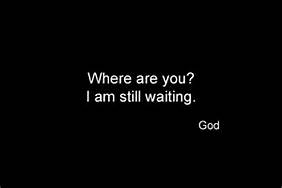
Fear of “The Other”

Don’t think hes not watching!

Let’s dive right into Mark 12:30-31, “Love the Lord your God with all your heart and with all your soul and with all your mind and with all your strength. The second is this: ‘Love your neighbor as yourself. There is no commandment greater than these.” (Emphasis is mine, but it should be anyone who claims to be a person of faith.) How have we strayed so far from this commandment that God said was most important? Maybe it wasn’t before this era of social media and biased news, but it is now.

What we now have is what has been recently termed “contact bias,” which is described by Brian McLaren as a form of prejudice or stereotyping that arises from a lack of sustained personal contact or interaction with people who are different from oneself. Without real-world, meaningful exposure, individuals’ preconceived notions and false assumptions about the “out-group” remain unchallenged and are free to flourish. In this way, the prejudice cycle spins on, unchallenged across generations. As prejudice persists, it becomes embedded in cultures and institutions, creating systems of racism and hatred, marginalizing groups who are stigmatized, dehumanized, scapegoated, exploited, oppressed, or even killed. https://cac.org/daily-meditations/overcoming-contact-bias-2021-03-04/#:~:text=Overcoming%20Contact%20Bias-,Thursday%2C%20March%204%2C%202021,for%20who%20they%20truly%20are🙂 

Today, fear and mistrust are growing and being reinforced by the news and social media. Violence against our brothers and sisters never seems to abate, and neither does discrimination, which can be cruelly subtle. We strip our fellow human beings of their dignity when they are suffering, and we refuse to involve ourselves in their lives. How easy it is not to notice the misery of others! Will we ever find our way back to God, who loves everyone, welcomes the stranger, and calls us to open our hearts to those the world casts aside?

Since I really enjoy sharing the times I have been less than loving to strangers, here is one of my favorite examples: In January of 2005, my husband and I were blessed with the opportunity to travel to Belfast, Northern Ireland, and spend a year there working for Habitat for Humanity.

We lived close enough to the City Center to walk there on occasion. One morning, I decided to go to the post office and mail some letters before continuing on to work. My time was limited that day, so I moved faster than usual. 

As I walked down Falls Road, I noticed a very small woman, or girl, lying on the sidewalk. Several people had passed her by without a glance…and so did I. A few yards later, however, my conscience began slowing me down. “Go back,” it said. Although at first I tried not to respond to it, the call became more persistent. I went back.

Dropping my mail on the sidewalk, I sat down beside her. At first, I thought she was sleeping, but I soon realized that she had passed out. Nudging her, I prayed for a response so I wouldn’t feel even more guilty if she was dead. She gradually regained consciousness and sat up next to me. When I asked her what I could do for her, she pushed me away: “Leave me alone.”

“Sorry, but I can’t do that. You’re not safe lying on the street. I’ll get a cab, and we’ll find you something to eat.” 

“Look at me!” she demanded. “It’s useless! Leave me alone!”

“What’s your name?”

“Karen”

Well, Karen, I am looking at you, and I see a beautiful creation of God”. My words were firm, but my heart was aching. She continued to insist that she wasn’t worth my trouble, or God’s trouble, and I continued to insist that she was wrong.

“Do you have a fag?”

“No,” I replied. “I don’t smoke. Smoking is bad for your health.” At that, both of us laughed. 

Just as I was preparing to hail a cab and take Karen to a restaurant, a minivan pulled up, and a young man got out, addressing her by name. He then gently helped her up and walked her to the van. I asked if there was a number I could call to check on her, but he said no. However, he took down my phone number so that she could call me if she wanted to.

Then, after they left, I resumed my walk to the post office, while questioning God, “Lord, what just happened? I’m certain I’ll never hear from Karen again. What was the purpose of all of this?” And as I continued to walk in silence, I could feel God speaking to my heart: “Linda, next time, don’t pass Me by.” OUCH!

It’s to Die For: Caring for the Poor in an Age of Consumerism


All across the country, people stand in lines three-deep for hours to be the first to plop down a few thousand dollars for the latest iPhone. As usual, the media, the gatekeeper of American values, gleefully stands watch over the frenzy.

Nearby, and unnoticed, other people stand in lines. They are the invisible poor in our midst. Statistics show that on any given day, some portion of the 14.3 million families in this country are standing in food lines (Bread for the World 2022).

 And it’s getting worse. Those numbers will increase as programs like the Child Tax Credit, the Supplemental Nutrition Assistance Program (SNAP), and the Special Supplemental Nutrition Program for Women, Infants, and Children (WIC) are all being cut by our current administration.

To the “haves”, the expression ‘It’s to die for” refers to our obsession with “things”. To the “have-nots”, that expression resonates from the pit of their empty stomachs. In both cases, consumerism defines who we are.

For those obsessed with self-gratification, and there are many “Christians” in their ranks, what they “have” defines who they are. For the poor, what they don’t have determines their value. The former well fed, the latter hungry, both dying spiritually. But this is nothing new. God has grieved over this fact of our humanity since the beginning of time.

He has been sending us Prophets, starting with Amos and Isaiah, to speak to this travesty. And they did not hold back! They continually called out those who believed all their riches and privilege were due to being favored by God. So, the admonishments and “woe to you” warnings of the prophets were simply laughable and annoying to them. Perhaps that’s why Jeremiah wanted to run and hide when God called him into service! But he finally went when he could no longer bear Yahweh’s grief, and he paid a hefty price for that courage.

Then, along came Jesus. Jeremiah and Jesus shared the same passion for the poor and disgust for their oppressors, and they bore the same hatred from those who didn’t want to be reminded of their sinfulness. God’s message was clear to both of them: Be willing “to die for” those who suffer.

Christ still tells us that when we care for the least of these, we care for him. Why are we still not listening? Could it be that we, too, are so enmeshed in this consumerist mentality and individualism that we simply don’t care? Or could it be that the gospel of American Express is louder and more appealing? “Woe to you, shopper, if you don’t use your REDcard for all your needless purchases.”

Do we feel a little better about it if we know that a tiny percentage of our spending goes to African Relief? That works for the barely guilty and isn’t risky because we don’t actually have to see the poor and suffering. Not so easy when hungry children are right in our midst, as are modern-day prophets.

How are today’s prophets speaking to our obsession with self? They are speaking the truth about the chasm between the rich and the poor. They scream unfair andtell us boldly and without reserve, that if we call ourselves Christians, we are charged to care for the poor.

 Mother Teresa says Woe to us if we do not recognize the dignity of the poor, that they too are made in the image of God. “Being unwanted, unloved, uncared for, forgotten by everybody, I think is a much greater hunger, a much greater poverty than the person who has nothing to eat.”

Dorothy Day was a tireless advocate for the poor: “The Gospel takes away our right forever, to discriminate between the deserving and the undeserving poor.”

John Kavanaugh, S.J. “It is our consumeristic culture today that defines our values, and forms our meaning and purpose. Companies market hope and identity in commodities, not relationships.”

Walter Burghardt, S.J., said that feeding the hungry is not simply a miracle Jesus performed; it is a mandate for Christians.

Kenneth Himes tells us that the word “consume” means “devour, waste, exhaust“, and calls our obsession with consumption in America pathological. “Consumer behavior has been removed from ethical judgment”, which then allows us to become complacent about God’s call to share our resources and acknowledge our indifference toward our starving neighbor. What has been lost is the essence of who we truly are and why we exist.

Mirabai Starr, “Our encounter with the manifold losses that characterize the human experience can till the soil of our hearts so that we are more available to the suffering of other beings and the earth we share. Sorrow can be paralyzing at first, but compassion, which can sometimes take the form of anger, is a wellspring that offers infinite sustenance.”

 As for me, my life changed drastically when I finally looked in the mirror and saw my own sinfulness. Woe to me! My greed and self-fulfillment came on the backs of the poor and hungry. My refusal to give up the slightest want caused children to go to bed hungry. “Thus says the Lord God, enough, Linda! Do what is just and right.” (Ezekiel 45:9)Truth be told, I still suck at it at times. But I’m getting better at self-correcting ahead of that Holy Whack!

In a country in which the majority of people profess to be Christian, our actions do not match that profession of faith. Woe to us, “Hypocrites!” Pope Paul IV spoke of rights as the right not to “have” more, but to “be” more. That is true for all human beings – the needy, and perhaps even more so, the greedy.

When Jesus Comes Begging

Recently, I was with a friend when we saw a man begging on the street corner. She made the comment that she doesn’t give money to beggars because she doesn’t know what they’ll do with it. “They’ll probably buy drugs or alcohol.”

I can’t tell you how many people have said that to me over the years. And I can’t tell you how hard it has been for me to keep from slapping them silly! So, hopefully, this post will speak to that in a kinder way that won’t raise my blood pressure or leave marks on them!

Let me set this scene for you. God is in the beginning stages of creating humans. I could have told him that was a bad idea, but he didn’t ask. Anyway, as he draws up his plans and orders his priorities – the top of the list is teaching them to “love”. It’s the most important thing of all to him and what he will base everything else on.

He wants his love for us to naturally flow to our love for others, especially “the least of these”. It’s a great plan, and he’s pretty proud of himself. But for whatever reason, that idea never seemed to gain much popularity over these bazillion years. To this day, considering the latest number of homeless families in America is over 57,000, little seems to have changed.

Over time, God, though a bit peeved, continues to try to show us how to love others by Jesus’ example. And we continually screw up, ask for forgiveness, he obliges, wipes the slate clean, and off we go all bright and shiny until we screw up again…

AND AGAIN.

AND AGAIN.

What if God decided to cancel all future blessings?! He’s thought long and hard about it, and considering our indifference to his call for us to love others as he loves us, he thinks it’s a total wasted effort, especially since he “doesn’t know what we’ll do with them”. Maybe we’ll trade them with someone else for something we would rather have. Like, oh, I don’t know, drugs or alcohol!”

Oops, sorry, I got a little side-tracked there.

We go up – Jesus goes down

While we ascend to the loftiest place on our “spiritual” journey, Jesus descends to the lowest. Of course, we fail to recognize him as we pass him by.

Paradoxically, we worship a homeless man on Sunday and fail to care for the homeless man right in front of us the rest of the week.

Saint Mother Teresa left her safe, comfortable religious order at the age of sixty-eight to sit on the filthy streets of Calcutta, caring for the dirty and rejected homeless. Stroking the heads of those left to die by an indifferent world. An indifferent world we are part of if we fail to care.

Letting go

Are we clinging to our measly pocket change for fear of what the beggar on the corner is going to do with it? Seriously??? That guy is standing there naked and vulnerable, knowing we are judging him. He no more wants to be on that street corner than we do. Geeezzzzzz!

Micah 6:8 challenges us to “Act justly, love mercy, and walk humbly with your God.”

A Non-Exclusive Jesus Club

(Pope Francis blesses a leper Photograph: Claudio Peri/EPA)

Over the past few weeks, I have heard visceral and angry comments from others about homosexuality, mostly from professed Christians. Of course, this is nothing new.

I’m sure what has likely stirred the hornet’s nest for many were the recent words of Pope Francis permitting priests to bless same-sex couples. Undoubtedly, many bishops were incensed, and I’m sure Pope Francis expected it. What I’m also sure of is that he didn’t stop to worry about the fallout of his decision or how that would reflect on his approval numbers.

The noise was so profound for me because it came at Christmas. If you have to ask why that matters, I will tell you if you will indulge me. You are free to disagree. I would ask that you consider what I am sharing here in light of our having just celebrated the birth of Christ, which would soon be followed by his short life of loving as God taught him, followed by his unimaginable suffering, pain, and death because of that love.

Let me share the writings of two women here because they beautifully express what I feel:

First, Episcopal priest Cynthia Bourgeault explains the uncomfortable question of what the Bible says about sexual orientation: “How you answer this question depends hugely on what you take the Bible to be. If you believe that the Bible is a single, timeless, internally consistent teaching on matters of human morality dictated by God, then yes, the Old Testament book of Leviticus is definitely uncomfortable with homosexuality. But it is also uncomfortable with menstruating women, shellfish, and pigskin. (And for the record, it has some very harsh words to say about lending money at interest, a prohibition that even biblical literalists seem to find it perfectly permissible to disregard!).”

Oops…

She continues, “Like most other critically thinking Christians, I see the Bible as a symphony (sometimes a cacophony!) of divinely inspired human voices bearing witness to an astonishing evolutionary development in our human understanding of God…. As a Christian, I am bound, when I listen to this diversity of biblical voices, to set my compass by the teachings and the path walked by Jesus himself.”

Oops again…

“Nowhere does Jesus condemn gays or lesbians (or any other person identified in the diverse range of LGBTQ+)…. His harsh words are reserved entirely for those whose certainty about their religious rectitude causes them to condemn others. Jesus is all about inclusion, forgiveness, and empowerment.

I am compelled by my Christianity to refrain from any behaviors or judgments which arrogantly demean the dignity of another human being or cause them to lose hope.”

Now, these thoughts of Alyse Jacobsen:

“In the New Testament, the original Greek words, arsenokoitai, and malakoi, have been translated to “homosexual.” But their original meanings are ambiguous at best. Scholarship suggested the words are closer to describing someone who uses authority to gain sex, someone who uses sex to hurt another human being. There was no Greek or Hebrew word for a committed same-sex relationship. Selective and literal interpretations of the Bible are dangerous.

Jesus would have known about homosexuality. He was an educated rabbi; he would have been able to recite the verses that condemned it. But he never mentioned it. Not once. I find this astounding.

Somehow, we’ve forgotten that our lesbian neighbor is filled with the Holy Spirit, too, that she is also made in God’s image. We’ve forgotten to see her as a whole person, with dreams and goals, and divine inspiration….”

Finally, I believe if we claim to be Christian, we must honestly confront any hatred and prejudice we harbor in our hearts, in light of the only “law” God gave us (Matt. 22:37) –“Love the Lord your God with all your heart, all your mind, all your soul, and all your strength, and love your neighbor as yourself – which is every human being also created by God.”

We are all card-carrying members of a broken humanity. For the love of God, can we PLEASE try not to take our miserable mess and pile it onto others?

What are we teaching our children when we hate? What message are we giving those who are searching for the love of Christ that has been lost to them along the way? How could they feel he is trustworthy? How are we culpable in forwarding a false Christian message that Jesus doesn’t like you because you’re ______________(fill in the blank)?

All You Need is Love – dootdadododo

The world offers many different expressions of love: “I love mint chocolate chip ice cream!” (Actually, that’s true.) “I love your new car!” “I love shopping!” Love can be humorous, as when Miss Piggy floats across a field of flowers, heart beating wildly, feeling weak in the knees, stomach all a-flutter, shrieking, “Ohhhhhh, Kermie!”

(Tenor GIF)

Worldly love can come with no expectations or commitments: “I used to love you when you were thin and had more hair!” or, “Well, I could have loved you, but your ex-wife got all your money, and, well, I have needs!” or, “You didn’t tell me I had to love your kids too!”

That kind of love can be found merely by seeking our own desires, which we believe no one has a right to deny us, and it’s just as rewarding to love things as people.

Unfortunately, that mentality devours childhood innocence, destroys relationships, shrugs off compassion, and muddies the pure waters of selfless love. As long as we seek love from the things of this world, we will always come up lost and empty for our efforts.

How do so many of us get it so wrong so often? Perhaps it’s because our meager understanding of love is based on our personal, human experiences. I often ask myself, “Self, what is your problem? Why do you struggle so much? Why can’t you let go of your past? Why is it so difficult for you to trust God, to accept His love and your inherent worth?” Perhaps my ego has been too big, my fear too overwhelming, and my God too small.

But by the grace of God, I am gradually seeing my failure to truly love and my fear of accepting love. God does not fit neatly into the image I created. He refuses to patronize me when I cry out, “Lord, Lord!” It’s as though He’s saying, “Your cries are muted by your deafening indifference, Linda. Your faith is lukewarm, and, need I remind you, how I hate lukewarm?!” (Revelation 3:16)

Richard Rohr puts it into perspective for me, “It is in doing it wrong, being rejected, and experiencing pain that we are led to total reliance upon God….God has let me do just about everything wrong, so I could fully experience how God can do everything so utterly right….If we expect or need things (including ourselves) to be perfect or even “to our liking,” we have created a certain plan for a miserable life.”

Phillip Newell tells us, “Within us – as a sheer gift of God – is the capacity to bring forth what has never been before, including what has never been imagined before. Deep within us are holy, natural longings for oneness….We may live in tragic exile from those longings, or we may have spent a whole lifetime not knowing how to truly satisfy them, but they are there at the heart of our being, waiting to be born afresh….When we love, we bring the very essence of our being into relationship with the essence of the other.” (The Rebirthing of God, p. x, xvi)

There are rare moments in my life when I experience a great and mysterious intensity. Perhaps that is the longing Newell speaks of. I recall someone else calling it those thin places where we feel God’s presence most profoundly. I can’t describe the emotions except that they are overwhelming, and somehow I know God is working in this messy heart of mine.

When I start to judge others, I sense God’s tug on my heart to “see” them as He sees them; to look beyond their actions to their hearts where He resides. The peace that it brings to my own heart is beyond words!

1 Corinthians 13:4-8 tells us, “Love suffers long and is kind; love does not envy; love does not parade itself, is not puffed up; does not behave rudely, does not seek its own, is not provoked, thinks no evil; does not rejoice in iniquity, but rejoices in the truth; bears all things, believes all things, hopes all things, endures all things. Love never fails.”

There are some attributes of love I would like to focus on: “Love suffers long” and “bears all things, believes all things, hopes all things, endures all things”.

Love suffers long

Okay. We’re already in trouble. We don’t want to suffer; we want the antidote! We want something to fix the problem. As human beings – even Christians – we really hate to suffer. Actually, many Christians believe God should protect them from suffering.

Scripture tells us of God’s deep longing for those who turn away from Him. This is not a God who cannot wait to punish us for our sinfulness. Instead, He longs to lavish us with His love despite our sinfulness.

Just as Jesus’ suffering and dying brought many sinners to salvation, and the apostles’ suffering and martyrdom brought others to God, our willingness to suffer well, whatever comes our way, is a witness to the power of God’s love in a broken world.

I have a friend whose marriage is terribly difficult. She has often threatened divorce. But God spoke to the depth of her heart that it was within her marriage that she would grow to be more like Him. It’s easy to love a newborn baby, a tiny puppy, or the perfect mother you’ve been blessed with. But what about those imperfect people?

Do you find yourself glaring at that lump of a husband on your sofa – you know, the one who’s guzzling beer and belching show tunes – and wondering where you went wrong? Then there’s that snarky neighbor you secretly wish would fall off the face of the earth.

There always seems to be someone anxious to make messes in our lives. Can’t we do something to make him or her pay? Don’t we have the right? The answer is a simple but emphatic No!” God will handle that person, not us. Definitely not us.

Love bears all things, believes all things, hopes all things, and endures all things.

When your wife comes home drunk…again, when your child is arrested on drug charges, when your cancer returns, when your aging parents make continual demands on you, who do you turn to? When you can’t lift your head off the pillow to face another day – how do you bear up, believe, hope, and endure all things? How do you go on when you cry out to God in despair but receive no answer?

You have to believe, truly believe, that the God of mercy loves you immeasurably. Nothing you suffer is lost to God’s watchful, loving care. No part of your life is without purpose. In the book of Genesis, God called Abraham to slay his beloved son Isaac. Could I have trusted God that much? No anonymous tipster in this story whispers, “Pssst, Abe! Just go along with it. He’ll stop you at the last minute. Trust me.” Nope, it didn’t happen that way. Abraham completely trusted God.

We can find incredible stories of people who have suffered persecution and abject loss throughout history. Yet, countless people have survived the unthinkable by believing in God’s promises and trusting in His love. From the darkness of despair comes the dawn of grace.

When we can’t see God or hear Him in the midst of our pain, we need to believe that His love for us is at the core of our being. “Blessed are those who suffer well and hope for things unseen, for theirs is the kingdom of God” (1 Corinthians 13:13). In suffering, we are comforted by God and, in turn, learn to comfort others.

What if Jesus’ story had been different? What if he had gone to the cross, kicking and screaming? He certainly had the right. He was being persecuted relentlessly. He had done nothing but love his Father and humankind during his life, and for that flawless behavior, he was crucified. He could have retaliated with an army of angels, but he didn’t. Instead, he was stripped, spat upon, mocked, and killed. He could have cursed his enemies to Hell. Instead, he prayed for them.

The world repaid Jesus’ love with hatred in the form of a cross. But the nails didn’t hold him there; love held him there. He chose to forgive in his final act of mercy: “Father, forgive them, for they do not know what they do” (Luke 23:34). 

Jesus’ final hours speak volumes about my rejection of atonement theology. So many believe that Jesus had to die to atone for our sins. I’m sorry, I don’t buy it. I believe too many of us subscribe to the teaching that God’s anger over our sins required Jesus’ death. Doesn’t that create an image of a God bent on punishment who can’t wait for us to screw up? I keep imagining that Wack-A-Mole game. No thanks.

GOD IS LOVE…PERIOD. And because we were created in His image and loved beyond measure, we must also be that love to others. Jesus’ last command to us was to love. When did he tell us to hate, judge, and flip off that jerky neighbor? The last words out of Jesus’ mouth were to forgive, not to condemn.

My mother-in-law (God rest her beautiful soul) could offer you a perfect example of why God calls us to love. She bore the pain of losing a younger sister to cancer and the death of a beloved son. She struggled through a difficult marriage and other challenging relationships. And then I came along.

Forty-three years ago, I stood before her in a short skirt, a long wig, a seven-year-old daughter by my side, and a heathen attitude in my heart. I was self-centered and demanding. I resented the occasions when my husband would stop to see her after work. I was jealous.

For those and other reasons, she could have done what everyone else in my life had done – she could have rejected me or struck out at me. I would have understood that reaction; I was accustomed to it. But instead, she chose to love me despite my attitude.

Soon I could feel myself being drawn to her. She had something I wanted, and I didn’t even know what it was. But after being in her company and experiencing her selfless love for others – and for me – I was hooked. That was the beginning of my long (still ongoing) journey of change.

If I hadn’t experienced her love first-hand, I would most likely still be self-absorbed and wearing those dreaded short skirts (probably not a good idea for a sixty-eight-year-old grandmother!). I can imagine her reunion with God, “Come on, give us a hug, Catherine! Thank you for so brilliantly dealing with that mess of a daughter-in-law of yours! Well done, my good and faithful servant…well done!” (Matthew 25:23)

The greatest of these is love.

Scripture tells us the value that God places on love: “And now abide faith, hope, love, these three; but the greatest of these is love” (1 Corinthians 13:13). love is a verb. It’s an action word. We can’t just give lip service to God’s commandment to love one another. If the action doesn’t match the words, it’s a lie. Jesus went beyond telling us that he loved us; he showed us and expects us to do the same.

How about 1 John 4:20 for a wake-up call? “If someone says, “I love God,” and hates his brother, he is a liar; for he who does not love his brother whom he has seen, how can he love God whom he has not seen?” Of course, we all know someone like that, but could we be accused of the same shortcoming?

God never promised us that His way would be easy. The Bible depicts a love unlike the worldly version: “Greater love has no one than this than to lay down one’s life for his friend” (John 15:13). How many people would you consider dying for? Hopefully, your children, your spouse, possibly other relatives (except crazy Uncle Bill), and most likely your dearest friends. Those friends would have to be your dearest ones, though! Fair-weather friends wouldn’t make the cut. How about an enemy? How about that crotchety neighbor you’ve had to contend with for years? How about that lying sneak of a co-worker who managed to get himself promoted to a job that was rightfully yours?

Although God’s love is freely given, it longs for a response. If fear holds us back, it masks who we really are. Fear clings to the old self, refuses to relinquish control, and attempts to tie the hands of the Holy Spirit.

And lest we forget, God’s sacrificial love infuses an inherent dignity in everyone! We, as Christians, have no monopoly on God. We don’t own Him, and we don’t have exclusive rights to him. This isn’t a private club. We are to be instruments of His love or our response, and our faith is inadequate at best and sinful at worst.

I would like to end with a quote from a sermon on Job once given by Archibald MacLeish. He said, “Man depends on God for all things; God depends on man for one. Only man can prove that man loves God.”

So…what are you waiting for?

PROVE IT!

Faith Beyond Knowledge: Experiencing God’s Love

For three years, Jesus walked with and taught his disciples. He dared to love those cast aside by society. He healed the sick, turned unbelieving hearts toward God, and challenged those who believed they held the ultimate power.

The problem was that his disciples wanted to follow him on their terms. But, time and again, they failed. Why? Their desire to change was frustrated by their inability to know God as Jesus knew Him. Their frame of reference for God’s love was within the realm of deserving and undeserving. It was something they could control through their actions.

In Jesus’ Passion and death, they witnessed his total self-giving to his Father. So likewise, God revealed His radically gratuitous love for his Son, the disciples, and us through the resurrection. Though that love is given freely, it calls for a response from us. I can’t help but wonder if that’s why we, like the Israelites, settle at the foot of the mountain in a comfortable, risk-free faith. “Nuh-uh, I ain’t goin’ up  there!”

Before Jesus’ crucifixion, all of his wishy-washy disciples ran away in fear of meeting the same fate. (Just a little reminder here: the women stayed! You know that, right? Power to the women!)

Anyway, the manly men finally came out of hiding and ran headlong into Jesus transfigured. There was now no denying that what they witnessed they were compelled to share with a lost and hurting world. That reality released within them an unshakable love beyond their human capacity.

Can we possibly grasp the implications of that Love in our own lives? We zealously take care of “number one” in a world laden with mistrust and fear. How does that correlate with the fact that we were made in the image of God? It doesn’t.

As Christians, we, too, were created anew by the resurrection and empowered by the Holy Spirit. That is Good News! And we have a mandate to take that Good News into the world. If fear holds us back, it is grounded in the denial of who we are. God’s sacrificial love is meant for all, and I am to be an instrument of that Love, or my faith response is inadequate.

Confession time. For as long as I can remember, I have wanted to be an “instrument” of God’s love on my own terms, just like the disciples, and I blew it – big time – just like they did! But I’m still breathing, so I still have time for a course correction. Sooooo, let me get all my “stuff” out there now and pray for that clean slate God is so good at freely offering us. You might want to fasten your seatbelt!

I always felt the need for certitude about something, anything, in my messed up, confused, and broken life, but I wasn’t sure about trusting that to God. I mean, up to that point, He didn’t seem to pay any mind to me or my trials. So, I was convinced I was screaming into an echo chamber when I complained about the raw deal life handed me. It sucked for real! So, I went about creating a new and different me, and it seemed to work just fine – on the outside – for a while – until it didn’t.

After my husband and I were married, I became a card-carrying member of the Catholic Church. Then with a cross around my neck and a big fish on the bumper of my car, I sat and waited for the angels to break out in song. It never happened. I never got so much as a thumbs up or atta girl.

For several years after my official dunking, I lived in a state of doubt, always questioning the very essence of my faith. I read the Bible from front to back even though my eyes glazed over, trying to wrestle with the Old Testament. Still, I came away from that experience believing I now knew everything about everything God, Jesus, Spirit, and leprechauns (Okay, not leprechauns, I just threw that in to see if you were paying attention), but God, Jesus, and Spirit, yes!

I was also good at making others look bad to make me look better. I could easily admonish them for all their faults and failures without skipping a beat. I could even quote Scripture verses to shore up my convictions. “Oh yeah, you think you’re a shoo-in for heaven? Well, I’ve got news for you – you’re screwed. Matthew says so, ‘For the gate is narrow, and the way is hard that leads to life, and those who find it are few – very few – almost no one!’” (Matt. 7:13–14). I hate to tell you (NOT!), but this is not your lucky day, and tomorrow ain’t lookin’ too good either if you don’t change your ways! Don’t say I didn’t warn you. You’re welcome!

Jesus side-eyed me for my attitude more times than I care to admit!

(Tenor)

Then, one fine day in 2006, I was accepted into a graduate program at Aquinas Institute of Theology! Yeah, surprised the hell out of me too! Now, I thought I would have even more ammunition in my arsenal to judge and condemn others while promoting myself. Sweet!

I have shared my experiences at Aquinas in previous posts. So, let me just say that, like Paul, I was knocked off my high horse and taken to task because of an arrogant assessment of myself. It was not pretty.

Since I am very hard-headed (duh), my transformation was is, very slow. Truth be told, I muddled along for several years after graduation trying to sustain my convictions. After all, who would I be if not this person I created to reinforce my sense of self, albeit a very fragile and false self?

So I trudged along searching – for what? I didn’t know. Longing for something out there that could give my life meaning. I tried desperately to fill the void. I left the Catholic Church in frustration and wandered into other Christian churches. Some sent me running out the door with my hair on fire! Why was I struggling to find a faith with the correct beliefs that spoke to me? For a moment, I considered communing alone with nature! Then I envisioned St. John the Baptist running naked in the woods, eating bugs and swatting mosquitoes! No thanks.

And then – drum roll please – my glorious and long overdue AHA moment arrived at my doorstep unannounced. In my search for a belief system that I could buy into, I suddenly realized what I was actually longing for. At that moment, experience and dogma clashed head-on, and I understood that I wasn’t searching for correct beliefs. That has never been what drew me to God.

The experiences along the way showed me God’s love beyond anything I had ever known. It just took this long to accept that God could love me like that. Experiencing God in relationship, not knowledge of God, wells up within the very depth of our hearts – where He resides. I was finally home within my very being – where my deepest longing and hunger reside.

I could beat myself up for all the years I wasted wanting faith on my terms, but God has spoken tenderly into my brokenness and heartache. That voice was not a voice of condemnation that I was taught to believe was God’s.

It’s not helpful that we are reminded every Lenten season that He had His beloved Son killed because of our wretchedness. NO! I believe Jesus was killed by a power structure that feared him. He lived a life that he had to know would get him killed, but he did it anyway out of a self-giving love at the core of his being.

I now trust that the God I long to surrender to also longs for me. The God who knew His Son would suffer terribly and die showed us His unwavering love, mercy, compassion, and forgiveness in the person of Jesus. John 15:12-13 tells us: “My command is this: Love each other as I have loved you. Greater love has no one than this: to lay down one’s life for one’s friends.”

Seeing Jesus’ life, death, and resurrection in the context of John’s gospel of love has cast a new and beautiful light on what I now see when he says, “I am the way”. His life and love show me that if I follow in his way, I will be living my purpose: to love unconditionally, serve where I am called, and offer freely the same forgiveness and mercy God has shown me.

The Easter question for us becomes, “What do you believe about me?” What I say I believe must manifest itself in the way I live my life, or it is a lie.

A Blessed Easter to you all!

Passion, Purpose and Poopyheads

Life sometimes seems like a “Comedy of Errors” from our first breath. You probably expected something very different while you were being formed in that cozy little B&B. You’re all comfy in there, aren’t you? Floating around getting all your needs met. It’s pretty sweet.

Except for those damn hiccups and people poking at you and trying to converse with you right in the middle of your nap. But then the party’s over. Without any warning, whoosh outcha’ go there little feller. You get flipped on your head and slapped silly by a stranger with a mask (that’s not scary!). All the while, you’re thinking this is not what the brochures promised!

I have fourteen grandkids and, at last count, fifteen great-grandkids. I am always awe-struck at the sight of babies. They show up all fresh and new, a clean slate. Well, they do have all that slimy stuff all over them, true, but it washes off.

And then life happens.

Good grief, life can be a shitstorm some days, can’t it? It really wasn’t meant to be that way, you know. Long before we set one teeny foot into this world, God had our life all figured out. He gave us a big hug and a heart bursting with love. Our purpose was to use the gifts he gave each of us to share that love. Then, finally, after all the work of creating us in his image (remember that for later), he kicked back, patted himself on the back, and proclaimed to himself, “Nice work!”.

Then, it all went sideways.

Maybe a parent failed us, or a friend betrayed us. A cheating spouse or a devastating illness caught us off guard. Then, throw in our own missteps and sinfulness. All of which helped to build a wall around our fragile hearts that God can’t even penetrate. That wall is fortified by a culture that worships independence, self-sufficiency, and self-promotion. As a result, we lose our way and move further from God. The world does not offer us choices that are meant to fulfill our lives. We simply learn how to climb into the least leaky boat.

If we dare step back, take a deep breath, and pay attention, the emptiness is almost palatable. But how did we end up here if it wasn’t meant to be that way? Well, somewhere along the way, we forgot who and Whose we were.

Being indoctrinated into “religion” only made it worse. Jesus’ whole purpose was to remind us of God’s love, the desire of God for relationship with us, and the longing of God for us to share that love with a broken world. But, we got lost in the “rules” and fell asleep. 

Oh sure, sometimes we get some crazy notion that we are here for a reason. So, we start beating our chest, determined to face our fears, stand down the bullies in our lives, and our own shadow. But it doesn’t seem to last long. We fizzle out for many reasons: Confusion, fear, lack of trust in ourselves, that stupid poopyhead that keeps showing up uninvited to the party, or that zombie apocalypse in our heads (you know that’s not real, right?)!

Well, crap!

But hey, if it’s any consolation, think about the hand-picked bunch of misfits Jesus had to deal with! Allow me to paint a picture for you. Better still, stick yourself in this moment. You’re Simon Peter at the Last Supper. Now don’t get all gender-specific about it; just indulge me, okay?

Anyway, everyone’s enjoying fellowship and a great meal. You start to take an extra helping of mashed potatoes with a big slab of butter. Yum. Then,  just as you’re about to dig in, Jesus turns to you and asks a question that seems to come out of nowhere, “Simon Peter, do you love me?”

You: “What?! Seriously? Of course I love you,” you say as you go back to stuffing your face (by the way, you should cut back on those carbs).

Jesus: “Feed my sheep.”

You nod.

But you barely get that spoonful of lusciousness to your mouth when Jesus asks again, “Simon Peter, do you love me?”

You’re flabbergasted, and your potatoes are getting cold. “Yes, Lord, I do. I swear (oops)!”

“Where is this coming from?” you mumble under your breath.

Jesus, unrelenting, “Feed my lambs.”

You scratch your head but get lost in – drum roll please – dessert. OMG! Your favorite, apple pie ala mode! You grab the server before she gets away and ask for an extra scoop of ice cream. You start to dig in, and….yep…

There he goes again, “Simon Peter, tell me again. Are you sure you love me?” Now, in all fairness, it’s understandable why Jesus keeps asking you that since you did run and hide when it all got too scary for you. But you’re about to lose it anyway, “Why do you keep asking me that same question? Yes, yes, yes, I love you.”

Then, without responding, Jesus stands up, walks to the window, and pulls back the curtain. “Simon Peter, come here.”

“Oh man,” you groan. Great, now your ice cream is going to melt. Everyone else is finished, and the server comes to clear the table, “Don’t take this,” you say, “I’ll be right back”! You walk to the window.

Jesus, “Simon Peter, look outside. What do you see?”

At this point, you get a little snarky: “I see trees of green, red roses too; I see them bloom for me and you, and I think to myself, what a wonderful world.”

Jesus, “Oh, for heaven’s sake! You don’t see that mother crying as she holds her starving child? Don’t you see the beggar everyone is ignoring? You don’t see the broken humanity right outside this window?”

You swallow hard because you sense your moment of reckoning is here.

Jesus, “Three times I called you to feed my sheep, and three times you chose to feed yourself instead. You give lip service to my call to care for those who hunger and, in the same breath, claim to love me.”

Hopefully, this is where you pass on the dessert and get your sorry self out there doing what really matters like you were supposed to all along. But how do you do that? That, my friend, is a  good question. It was supposed to have been answered by your Kindergarten teacher when you were learning “This little light of mine”. Unless, of course, you were a public school kid like me. Okay, then, maybe you began to learn it in Sunday school – unless you were a heathen like me. Then, there’s the possibility your dear granny sat you on her knee (before knee surgery) and taught you all about Jesus’ love – unless your granny was a heathen too.

I think we were set up too when the Church decided to take control by creating lots of rules to keep us in line. It worked for a while, actually a very long while. But then, people tired of “rules” that couldn’t fill the void. Years of studies by Pew Research can attest to that fact, even if the Churches have decided to ignore it. The studies show the number of people fleeing from churches, particularly millennials, is growing.

Even older folks are just showing up to get their cards punched. They shake the Pastor’s hand and lie about how good his sermon was (if they stay that long), then grab a bulletin to prove they were there. Done for another week or two, or maybe till Easter. 

Then, as if that isn’t enough, we have the “stories” in the Bible. I know we could debate all day long about whether or not the “stories” are factual or myths. I know how I see them. You’ll have to decide for yourself.

Let’s look at just two I have a real problem with: Adam and his accomplice wife, Eve. We’re told that Adam and Eve set us up for failure. No sense in trying to be good. That’s a lesson in futility because, well, we can’t be “good”. It’s called “Original Sin”. It’s like a hereditary disease. We all have it, and there’s no cure for it. (Believe me, if the pharmaceutical companies could come up with a pill for it, they would have long ago!)

“I’ve got you now, you wretched little creature!” (Not sure how the Scripture verse that says we were made in God’s image reconciles with that, but there it is.) Like the Elf-on-the-Shelf, he watches our every move, just waiting for us to screw up. I mean, really. He was lurking around in the garden while they tried to hide, but he caught em’.

GOD: “I can see you, Adam.”

ADAM: “No, you can’t.”

GOD: “Yeah, I’m pretty sure I can.”

Then, there’s that whole burning bush thing. Do you think for one minute that wasn’t a setup for Moses? “Come on out God. We know you’re hiding there, waiting to pounce on our slightest indiscretion. That’s sneaky.” Sorry, I just can’t believe in that kind of god.

Somewhere along life’s journey, we are supposed to grow into the person we were created to be. But, we got snookered by the lies. Unfortunately, change isn’t going to happen on its own.

And don’t think for a moment that it’s just you. People who seem to have everything are hungry for that something “more”. Deep within every one of us is a longing for purpose. But, we can spend a lifetime whacking away at it in our foolish efforts to figure it out.

I think our world today has successfully sucked the life out of anyone who believes for one minute that we are here for more than accumulating fake friends on FB, making lots of money, having the newest iPhone, or investing in the latest miracle weight loss cure. And for what?

Get up. Do life. Go to bed. Repeat.

The fact remains, we have all been given a purpose in this life, the passion to fulfill it, and lots of poopyheads along the way intent on screwing it all up! The truth of our essence has been stifled, stuffed away, and rendered irrelevant, along with God and all that matters for humankind.

I believe “religion” has become something God never intended. For so long, if we stuck with it, we learned to stay within our comfortable unquestioned faith because to do otherwise was just too daunting. So religion became empty and void of meaning. And when young people came along who were not afraid to ask the hard questions and were not content with the canned answers the Church offered, they left in droves, and they’re still leaving.

“So what is my purpose?” – you ask. Why am I here? Good question. Our struggle is embedded in worldly pursuits that ultimately bring us to a dead-end. We want life on our terms. We don’t want to struggle, we don’t want to suffer, and we damn sure don’t want to encounter anyone else’s suffering. We have enough to deal with trying to stand out in this dog-eat-dog world. The point is that none of it offers fulfillment that lasts. Striving for more, paradoxically, leaves us emptier and hungrier.

Consider this: What would you be willing to die for if someone approached you and demanded everything you have accumulated and cling to, or they will kill you right where you stand? Any of it? Or would you quickly, without hesitating, hand over all the “things” you value? I’m guessing you would. I would!

Martin Luther King said, “If a man has not found something worth dying for, he is not fit to live.” Ouch! So, the question then becomes, what is worth dying for? I have a one-word answer. Ready? Love.

There it is.

I don’t know about you, but my most profound moments of clarity are when I do a life review at funerals. If funerals don’t cause us to evaluate our existence, I don’t know what will. We may still be standing at the grave site when the questions surface: Do I matter? Have I value? What is my legacy? Will anyone care when I’m gone? Do I really have a purpose? What have I done to make the world a better place? Will I have to eat that crappy potato salad at the luncheon again? (Oh, sorry, I digress)

We too want absolute certitude that what we are after is real. Faith is a calculated risk, but we don’t like risk even if there is a high degree of probability. It’s too iffy. No thanks.

A shaky questioning faith might be less cut and dry than mindlessly following a set of rules. It may be more uncontrollable and mysterious than you have ever experienced, but that will bring you into the presence of Love and your true worth as his beloved.

You may not have been told this, but you’re allowed to wrestle with God, to question the reason for the suffering and heartache in the world. You can tackle the very struggles and heartache within yourself that you have never thought you could bring to him—God’s tough. Trust me. He can take it.

I got so angry with him during a very difficult time in my life I cried and shook my finger at him, “God, if you love me so much, where were you when my mother was abusing me?!” I ranted on and on about all the suffering he allowed in my life. And what I got back from him was not a lightning strike which I was prepared for, but a gentle, loving response that unsettled the core of my being. “Linda, I did not abandon you during that time. I suffered along with you. My heart ached for you. I have lovingly, sorrowfully held your tears. But the choices people make are beyond my control. I’m truly sorry. But, you, my dearest daughter, have also sinned and fallen short. Even then, never have I stopped loving you. I’m just waiting for you to trust me and start loving me. Then, your healing will start, and you will be able to forgive those who hurt you.”

No church “rules” or dogmas will ever bring us into that deep-abiding relationship with him. It is what we call “experiencing” God. Until we can let go of our need to “know” that God is real, we will never allow ourselves to open our hearts to experience him.  It’s that simple and that critical.

That is Good News!

William O’Malley nailed it when he said, “Genuine religion begins – not as it did for most of us, with indoctrination and imposing worship but with a personally captivating experience, a “sense” of the numinous, a presence larger than the capacities of this world to produce.”

Frederick Buechner once wrote, “The grace of God means something like: Here is your life. You might never have been, but you are because the party wouldn’t have been complete without you.”

YOU MATTER!

That is what John Eldredge tells us, “If we could believe that about our lives, and come to know that is true, everything would change. We would be much more able to interpret the events unfolding around us. We would discover the task that is ours alone to fulfill. We would find our courage. The hour is late, and you are needed. So much hangs in the balance. Where is your heart?”

Alrighty then, I’m done, and if I didn’t lose you long ago, I would like to offer you one last thing to contemplate: Which of these two scenarios would most likely bring you right to the heart of this very critical moment of truth, the most profound question of our existence?

(1) All your years growing up, you were drug to “church”. Parents started it: “Get up, clean up, sit quietly, don’t touch your brother, and act like this isn’t the most boring thing in your life! Then you’ll get donuts.” Then teachers of “religion” stepped in: “Memorize all the sins that will send you straight to hell: Miss one Mass – straight to hell. Think those dirty thoughts – straight to hell.” In short order “that little light of yours” has been snuffed out!

Or….

(2) You encounter Someone (guess who) doing things that draw you to him: Feeding the hungry, comforting the dying, kissing the leper, dining with prostitutes and beggars. He is so sincere and passionate about what he is doing that something incredible reaches deep down into the core of your being, and you can’t shake it. You are awe-struck, probably for the first time in your life, and you want to emulate him. You want to follow him. You want to sit at his feet and learn from him.