This is a huge moment for me. I have come to the decision that has been in process since 2010. That was when I walked away from the “Institutional” Church. In these ensuing years, I have moved from the Church to the desert, back to the Church, back out into the desert – round and round. Why?
Let’s take a quick stroll back in time. Here is a condensed version of why I’m struggling with “Christianity” as it is today. Jesus shows up and spends three years teaching his followers, by his example, about God’s love for “everyone” – no exceptions.
Fr. Greg Boyle tells us, “In the early years, Christianity was a subversive spiritual movement of equality, emancipation, and peace. It was a way of life, not a set of beliefs.” Jesus’ followers didn’t “go to church”, they were church – the living, breathing essence of God’s love and care for humanity. And for that, they were persecuted, and some were killed.
Then, three hundred years later, along came Constantine, who turned Christianity into an Imperial religion within an Institutional Church and demanded loyalty to him. Rules and dogmas were established along with a long list of things you must believe to get your sorry butt into heaven. Following in Jesus’ footsteps became “religion”, something the early Christians would never have recognized.
Father Boyle, in his beautiful book, “Cherished Belonging”, says, “A great many mystics criticized the Church for losing track of the centrality of love, a failure that indeed seduced the Church to embrace empire and control as its centerpiece. We forgot to do love’s work.”
So, let me ask you, is this the “church” we see today? Is a vengeful, demanding god the one you have bought into? Does a spiteful god make you all warm inside and make you want to emulate him? Does this god make you want to be a better person, love your neighbor, and strive to make the world a better place? Or does this god make you want to kick the dog, curse your obnoxious neighbor, and roll your window up at the stop sign and glare at the homeless guy standing there?
Do you walk out of that confessional all cleansed and forgiven and stare in judgment at the guy standing behind you because you assume his sins are much worse – like mortal – like going-to-hell, mortal?! The same guy who wouldn’t buy one stinkin’ box of Girl Scout cookies from your daughter. Never mind that he’s a diabetic on insulin and had to have four toes amputated last year.
How are we doing so far? Paints a lovely picture, doesn’t it? Sadly, this is the god I learned to fear when I first became a “Christian”.And I thought I was a perfect Christian. But you, on the other hand, well, you were clearly lost and needed correction, which I was willing to offer, lest you end up in hell.
Excuse me a minute while I try to control my laughter. Ok, sorry, I’m back.
Jesus didn’t call us to a “belief”; he called us to awaken to our true selves. An awakening to our very essence, which is where God resides, if we will sit still long enough to feel his presence and follow his precepts: Love God and love your neighbor. That’s it. It’s no more complicated than that. It doesn’t require much brainpower to understand it or willpower to live it.
Perhaps it’s time to recycle Christianity, as Brian McClaren suggests,” Moving from our entrenched dualism to some glorious sense of interbeing.”
As I post this, I have no doubt I will receive raised eyebrows and possibly hate mail. I could have kept these beliefs to myself, but not in good conscience. As we watch the world burning down around us and people suffering because of our indifference, it’s time to get off the fence.
When my husband and I married fifty years ago, I went into that relationship as a card-carrying heathen with an attitude, short skirts, and a Dolly Parton wig! No, I’m not kidding!
When I first met his mother, I prepared myself for the anticipated rejection I was used to. To my surprise, that isn’t what happened. She accepted me with all my obvious failings and I didn’t know how to deal with that.
Her faith, kindness, and care for others helped me see what was missing in my life. She blessed me more than she ever knew.
When I reflect on that experience and compare it to the young people today, I recognize some profound realities:
First, this from the CDC: From 2013 to 2023, there were increases in students’ experiences of violence, signs of poor mental health, and suicidal thoughts and behaviors.
Secondly, I don’t think it’s a coincidence that the above statistics coincide with the fact that young people have been fleeing churches in huge numbers for years, feeling they have nothing to offer but “religion” without substance.
Theologian Jennifer Bailey tells us, “Indeed, millennials and Generation Z successors to the throne of youth are turning away from institutional religion faster than any other age group, raising a palpable sense of panic in religious communities concerned about their future.”
But God’s love can reach into that emptiness with a new and vibrant excitement for hope and promise.
I remember that moment so many years ago as I questioned what had drawn me to my mother-in-law. When I finally recognized it, there was no turning back. Yes, I will admit, it was a path to God that was full of fits and starts. It often still is, and I’ve walked along the edges much of the time.
This was also a powerful message for me in my chaplaincy at the Juvenile Detention Center. Recently, the kids witnessed the incredible story of Darren Seals. He lived the life many of the kids there are also living. He challenged them to think about their actions and showed them such love as he spoke!
He is a man who should never have survived his gang experiences and being shot 13 times. As he was speaking, his mother lay dying in the hospital. Tears welled up as he recounted the grief he caused her over the years. Yet when he left her side to go to speak to the kids, she told him to continue his work and how proud she was of him!
So, I would like to focus on Darren’s mother now. As the grandmother of 14 and great-grandmother of 18, I can’t imagine the heartache and fear she felt all those years as he lost his way. But I can imagine her joy in seeing him use his gifts and life experiences to give kids hope in what they often feel is a life wrought with hopelessness.
We, the privileged, have no idea how much so many of our youth are suffering. Do we even care? And, how many of us “elder” folks have also been made to feel they have no further purpose in life? We should just rock away whatever time we have left. No one really wants to listen to advice from old people. Right? Wrong!
Choctaw elder and retired Episcopal bishop Steven Charleston explains how Indigenous elders carry the wisdom of the past in service of the present and future:
Elders are a people of the future. My culture respects the elders not only because of their wisdom, but because of their determination. The elders are tough. They have survived many struggles and many losses. Now, as they look ahead to another generation, they are determined that their sacrifices will not have been in vain, that their children’s children will not grow up in a world more broken than the one they sought to repair. The elders are voices of justice. They are champions for the earth. They defend the conscience of the community. We follow the elders because they have a passion for tomorrow. They are people of the future, not the past.”
Theologian Jennifer Bailey:
All around us, things are shifting, systems are collapsing, and institutions are failing. This should not surprise us. It is clear to me that the actions we take now will have deep and irreversible consequences for the generations to come….
The enormity of the plight we face can be solved only by harnessing the ingenuity and creativity of the communities to which we belong and are accountable. This season will require us to recover ancestral wisdom and practices that we lost or undervalued, repair the deep breaches in our interpersonal and communal relationships that replicate patterns of harm and destruction, and reimagine the possible by stretching ourselves to see beyond the realities of our current circumstances and daring to dream something different into being.”
Alrighty then. I believe God has given us a purpose and calling to get off our rockers! There’s work to do. I’m not sure what that means for you, but God knows. As he watches his beloved children suffer and die, he longs for us to take his love to them. We all have a stake in this.
There are so many opportunities to serve. For example, several people go to our Detention Centers to shoot hoops with the boys, do crafts, tutor, and attend the Sunday services.
Recently, I was with a friend when we saw a man begging on the street corner. She made the comment that she doesn’t give money to beggars because she doesn’t know what they’ll do with it. “They’ll probably buy drugs or alcohol.”
I can’t tell you how many people have said that to me over the years. And I can’t tell you how hard it has been for me to keep from slapping them silly! So, hopefully, this post will speak to that in a kinder way that won’t raise my blood pressure or leave marks on them!
Let me set this scene for you. God is in the beginning stages of creating humans. I could have told him that was a bad idea, but he didn’t ask. Anyway, as he draws up his plans and orders his priorities – the top of the list is teaching them to “love”. It’s the most important thing of all to him and what he will base everything else on.
He wants his love for us to naturally flow to our love for others, especially “the least of these”. It’s a great plan, and he’s pretty proud of himself. But for whatever reason, that idea never seemed to gain much popularity over these bazillion years. To this day, considering the latest number of homeless families in America is over 57,000, little seems to have changed.
Over time, God, though a bit peeved, continues to try to show us how to love others by Jesus’ example. And we continually screw up, ask for forgiveness, he obliges, wipes the slate clean, and off we go all bright and shiny until we screw up again…
AND AGAIN.
AND AGAIN.
What if God decided to cancel all future blessings?! He’s thought long and hard about it, and considering our indifference to his call for us to love others as he loves us, he thinks it’s a total wasted effort, especially since he “doesn’t know what we’ll do with them”. Maybe we’ll trade them with someone else for something we would rather have. Like, oh, I don’t know, drugs or alcohol!”
Oops, sorry, I got a little side-tracked there.
We go up – Jesus goes down
While we ascend to the loftiest place on our “spiritual” journey, Jesus descends to the lowest. Of course, we fail to recognize him as we pass him by.
Paradoxically, we worship a homeless man on Sunday and fail to care for the homeless man right in front of us the rest of the week.
Saint Mother Teresa left her safe, comfortable religious order at the age of sixty-eight to sit on the filthy streets of Calcutta, caring for the dirty and rejected homeless. Stroking the heads of those left to die by an indifferent world. An indifferent world we are part of if we fail to care.
Letting go
Are we clinging to our measly pocket change for fear of what the beggar on the corner is going to do with it? Seriously??? That guy is standing there naked and vulnerable, knowing we are judging him. He no more wants to be on that street corner than we do. Geeezzzzzz!
Micah 6:8 challenges us to “Act justly, love mercy, and walk humbly with your God.”
I know I may seem to spend an inordinate amount of time on the subject of death. But, really, when something happens that brings death to the forefront of my thoughts, the deeper revelation is always about life, the meaning of the fullness of life, the blessings of life, and its fleeting reality.
The most basic question I return to over and over again? Am I living my life like I KNOW all of that? The answer is usually, “Not so much,” – and so, I begin again until I forget again, and then I am reminded…again!
I must be forgetting too often because I recently had two powerful reminders from past experiences. Cherie Carter-Scott, in her amazing book, “If Life is a Game, These are the Rules,” offers her ten rules for being human. Rule #4 applies here: “Lessons will be repeated until learned.” I guess I’m a slow learner. So, let me try again.
A few years ago, Tom & I were driving home. On the highway, we swerved to miss hitting a dog that someone else had hit. It was still alive, so we went back. We waved traffic away from the dog so we could pull it off the road. Tom called the police, and we sat on the side of the road for thirty minutes while the dog lay dying. With the exception of its labored breathing, it never moved. The police never came, and the dog finally died.
It was a pit bull with no collar. As I sat there, I couldn’t help but wonder if it was a stray, if it was wild, if it was rabid. But none of that mattered. When once I would have been afraid of this dog, I was now stroking its head.
And my reminder about life? I was thinking about all the people who die this way. Every human being has been created in the image of God. All are loved by God. Yet, many die in obscurity, alone and broken.
This brings me to the second incident I recalled when a dear friend’s father died. Her parents had been divorced for years, and all of her siblings disowned him. They could never forgive him for the pain he caused them and their mother. But she stayed in relationship with him all those years. My own attitude towards him was cold and indifferent.
When he died, I went to the funeral service. There were a lot of people there, which surprised me. Then, another surprise! The service was on a Wednesday. People could leave work for a few minutes to pay their respects to the family, but surely they would return to work or their busy lives. When everyone was invited to attend the luncheon, most of them went. It was crazy. I went for a few minutes but had to leave. Okay, I really didn’t have to leave, but I did. My friend and I agreed to meet the next morning to go for a walk.
This is where God entered my cold, pathetic heart. When I met with her, she began to relate to me what had happened after I left. She had noticed that there were several people there her family didn’t know. As everyone was eating lunch, she asked if anyone wanted to share a story about her father.
Some began to stand up and talk about him. One was a waitress in one of his favorite restaurants. She said he was so nice and would listen to her talk about things that she struggled with in her life. Several other people from other places he frequented said the same thing.
So there I was…I stopped dead in my tracks and began to sob, “Oh my gosh. I missed a blessing! I refused to give your father the compassion and care he deserved, and I missed the blessing of the life he tried to live.”
Yes, he made mistakes, and yes, he hurt his family. But, over those years of separation from them, he became a different person, a better person, but for strangers, not his daughters. How sad and how common that is. By pushing him away and shutting him out of their lives, none of them ever healed.
In my long, often selfish lifetime, I have learned that there is really only one thing that’s important—love. Not love of things; love of God, ourselves, and others.
Thinking about those two incidents ushered God back into my thoughts about life and death:
Death does not care if we have left business unfinished, relationships broken, or children to be raised. It doesn’t matter if we are not ready or sit on promises to change.
It will take the weak with the strong, the humble with the proud, the saint with the jerk.
Death doesn’t respect wedding plans, vacation plans, or unmet deadlines.
It does not operate by a timetable we set, and is no respecter of age.
It does not discriminate between the most loved and most hated.
It may not wait for the most brilliant to cure cancer, bring peace to a troubled nation, or receive a Nobel Prize.
Denying that death is a part of life is like believing we still look like our high school picture.
We can’t rely on death to come when we are ready. We can rely on it to teach those of us who are willing how to truly live.
It can and should be a time of reflection. Have I lived well, loved well, forgiven — honestly – and sought forgiveness humbly?
Good or bad, I have touched the lives of family and friends, the mailman, and the grumpy receptionist at the doctor’s office. Have I left love and joy in the hearts of those I will leave behind?
I may have amassed wealth and recognition and may leave a fortune to my loved ones. All things they can pack away, gamble away, or throw away. But, at the end of the day...what have I left in their hearts?
Well, I’m not dead yet, so I can get back on track and try to live my life fully, love fully, and allow the ebb and flow of life and certainty of death to teach me what truly matters if I am a willing student.
And now, I will leave you with this awesome quote by Grace Hansen: “Don’t be afraid your life will end;be afraid that it will never begin.”
God is in control. No matter what happens, no matter how awful or awesome, no matter who suffers or comes out on top, it’s all God’s plan. Ain’t it grand?!
Sorry, I don’t buy it.
Consider this: God creates Adam and Eve, drops them into this magical garden where they romp through fields of flowers with no cares in the world—got that picture?
Okay, so then almost immediately, they screw it all up by eating that damn apple…O. M. G.!
Personally, if I were going to be cast into the eternal fires of hell for such a minor transgression, I would have held out for Amedei Chocolates – but that’s just me.
You may have thought God knows everything, but according to this story, he clearly doesn’t. As the drama continues, they run and hide, knowing full well they’re in deep trouble and this will not end well for them.
AND… here he comes…the God of the universe, the master control freak, the ultimate planner of all that is.
They all play hide and seek, and God is “it”. “Come on out, you crazy kids. Where are you? I’m gonna look in these bushes now.”
When he finally finds them, he demands they stand before him in their underwear as he brushes off their attempts to beg for forgiveness. Nope. Ain’t happening. He admonishes them for screwing up his perfect plans, then sends them off to suffer a living hell forever and ever.
Then he gets his second wind, “Oh, I’m not finished with you!”
Now, God’s totally exasperated as he acknowledges the failure of his painstaking and grand plan for the universe. He decides to make an example of Adam and Eve. Their sins will be cast upon every child born thereafter, stamped with the seal of “broken mess” right out of the birth canal.
Maybe then all of humanity will get wind of it, surrender to his will, submit to his “laws”, and behave accordingly. Nope – another big fail. He decides to start over with new characters – maybe reconsidering that whole free will thing – Nope!
Is all this working for you? How about this: “The biblical story of the perfect and finished creation from which we human beings have fallen into “original sin” is pre-Darwinian mythology and post-Darwinian nonsense.” John Shelby Spong
Let me throw another random thought into the discussion: instead of God being a harsh, unyielding authoritarian, what if he were actually submissive? What if he has been surrendering to us all along? What if he never intended to control us? What if that whole Adam & Eve story was just that – a myth created by some inane humans long ago? Stay with me here.
As a child, I was controlled by my mother. She called the shots; she meted out harsh punishments. Ultimately, she determined my worth. As I grew older, she still had power over me. Unworthiness was so embedded in my heart that I continued for years to live out of the belief that I didn’t deserve love – from anyone – especially God. He clearly didn’t care. If he did, I reasoned, he would have saved me from her and others who abused me long ago.
I recall crying out to him in one of my most painful moments of doubt about his love for me: “God, if you loved me, why did you allow my mother and others to abuse me? He spoke into the most broken part of my heart, “Linda, I do love you. When you were being abused, I cried with you. Because of their free will, some people make terrible choices that hurt themselves and others. You have sometimes done the same, but I have never stopped loving you.”
Jesus was the beloved son of God. That we know. God watched the unfolding of his three-year mission. That we also know. Jesus went to him constantly in prayer. We can be pretty sure they discussed how he was making a lot of enemies who were making threats against him in an effort to shut him up. When that didn’t work, they went after him and dragged him to the cross to be crucified. He was beaten and hung there for three hours before he died. WHERE WAS GOD? He was right there suffering the pain and heartache of his son’s death. Something he could not control. Why?
Archibald Macleish offers these powerful words, “Man depends on God for all things: God depends on man for one. Without man’s love, God does not exist as God, only as creator, and love is the one thing no one, not even God himself, can command. It is a free gift, or it is nothing. And it is most itself, most free, when it is offered in spite of suffering, of injustice, and of death. Love – love of life, love of the world, love of God, love in spite of everything – is the answer, the only possible answer, to our ancient human cry against injustice. It is in man’s love that God exists and triumphs, in man’s love that life is beautiful, in man’s love that the world’s injustice is resolved. To hold together in one thought those terrible opposites of good and evil which struggle in the world is to be capable of life, and only love will hold them so.”
If you believe God is this powerful controller of all things, why did he not save his own son? I’m going to leave you with that question to ponder during this blessed season of Lent.
Centuries ago, the words “know thyself first” were inscribed in gold (that’s how important it was) at the entrance of the temple of Apollo. Valeria Sabater, Ph.D., tells us those words were believed to be imperative because “No question makes sense if you don’t first answer the most important one: Who are you? It’s impossible to change how we feel about others until we know, really know, ourselves.”
If I truly know myself, then I will be able to recognize the source of my thoughts and feelings toward others – good or bad.
What is the basis for our love or hatred toward others? Have you ever thought about that? If not – why? Possibly because who wants to venture down that rabbit hole and come face-to-face with ourselves?! No thanks. Too scary. Yet, I believe God constantly challenges us to look honestly at how we pull others in or push them away and judge others without caring about what they may be dealing with in their lives.
We seem to have forgotten Jesus’ purpose for coming here: “Jesus hates you, this I know, ’cause the Bible tells me so.” Come on, sing along with me. You know the words. Wait, no… Jesus came to show us up close and personal how to love and care for those who are rejected and suffer terribly at the hands of others.
You may say you love your mother because she fed and clothed you and made your brother clean the bathroom once. But is that the impetus for your love? I have been known to say, ‘I love chocolate mint ice cream’ – which, full disclosure, I have said, but – REALLY?!
You may say you hate so-and-so because they did something to hurt you, but that isn’t really the reason. It goes much deeper than that. People have hurt me terribly over the years. It began with my own mother, then others – all reinforcing my belief that I was not worthy of love. Then, I did my best to hurt back for many of those years, believing I was justified.
The moment we strike out at someone or degrade them, the truth of our identity is being revealed –which is fear. We either fear others who are not like us, or we fear ourselves, which Freud termed “projection”. There’s something planted deep down that we hate about ourselves that shows up in that person.
Psychologist Brad Reedy says, “If we find part of ourselves unacceptable, we tend to attack others in order to defend against the threat. If we are okay with ourselves, we see others’ behaviors as ‘about them’ and can respond with compassion. If I kept hate in my heart for another, I would also have to hate myself. It is only when we learn to hold ourselves with compassion that we may be able to demonstrate it toward others.”
Hate is not our default setting, but there are people, sadly even some professed Christians, who make it seem so. Many have bought into the idea that if you don’t believe what I believe, you’re my enemy, and I’m watching you closely. Don’t screw with me! I have no doubt the Elf on the Shelf was created by someone who hates kids! But I digress…
We can easily point to Scripture to justify ourselves. How about “An eye for an eye” – huh?! It’s right there in the Bible! Yes, it is, and it may seem pretty compelling when it excuses our actions. However, I’m sorry if you really like that one because you would be using it out-of-context, as we tend to do with so much of Scripture.
The “eye for an eye” verse originated long before it showed up in Exodus and was not meant to validate personal vengeance. It was enacted into law to protect the vulnerable. According to Crosswalk.com, “The phrase is used in the circumstance of a court case before a civil authority such as a judge. ‘An eye for an eye’ was thus intended to be a guiding ethic for legislators and judges.” And didn’t Jesus clear that up in the Sermon on the Mount – teaching us to love the “least of these”? Give them your shirt, your last dollar, and a great big hug!
If we believe that God created us in his image and he resides within us, then what comes out of us as hatred toward others would not be possible. Can love and hatred coexist within the same heart? I suppose they can if that love is shallow and selective. But then, that’s not God’s love, is it? God’s most profound, truest love is indiscriminate, unconditional, and life-giving. It doesn’t strip others of their humanity and dignity.
“We do not realize that it wasn’t the person or event right in front of us that made us angry or fearful—or excited and energized. At best, that is only partly true. How we see will largely determine what we see and whether it can give us joy or make us pull back with an emotionally stingy and resistant response….what we are able to see and are predisposed to see in the outer world is a mirrorreflection of our own inner world (my emphasis) and state of consciousness at that time.” Richard Rohr
Our every thought, word, and action depends on our awareness of who we are on the innermost level. That often requires brutal honesty, and, at least for me, that honesty often comes in the form of someone else’s admonitions. It’s hard for us to be vulnerable enough to be objective about our weaknesses and failings if we’re preoccupied with protecting our self-image.
It’s critical to have someone in your life who can be honest with you about who you are and how you project yourself into the world. And, believe me, that’s not fun if they will honestly tell you that what you just did or said to someone – well – it was mean, and you suck, and you should apologize immediately! There are times when I can actually do that myself – but not many.
I will leave you with this thought: “Compassion is the ultimate expression of your highest self.” Russell Simmons
The world offers many different expressions of love: “I love mint chocolate chip ice cream!” (Actually, that’s true.) “I love your new car!” “I love shopping!” Love can be humorous, as when Miss Piggy floats across a field of flowers, heart beating wildly, feeling weak in the knees, stomach all a-flutter, shrieking, “Ohhhhhh, Kermie!”
(Tenor GIF)
Worldly love can come with no expectations or commitments: “I used to love you when you were thin and had more hair!” or, “Well, I could have loved you, but your ex-wife got all your money, and, well, I have needs!” or, “You didn’t tell me I had to love your kids too!”
That kind of love can be found merely by seeking our own desires, which we believe no one has a right to deny us, and it’s just as rewarding to love things as people.
Unfortunately, that mentality devours childhood innocence, destroys relationships, shrugs off compassion, and muddies the pure waters of selfless love. As long as we seek love from the things of this world, we will always come up lost and empty for our efforts.
How do so many of us get it so wrong so often? Perhaps it’s because our meager understanding of love is based on our personal, human experiences. I often ask myself, “Self, what is your problem? Why do you struggle so much? Why can’t you let go of your past? Why is it so difficult for you to trust God, to accept His love and your inherent worth?” Perhaps my ego has been too big, my fear too overwhelming, and my God too small.
But by the grace of God, I am gradually seeing my failure to truly love and my fear of accepting love. God does not fit neatly into the image I created. He refuses to patronize me when I cry out, “Lord, Lord!” It’s as though He’s saying, “Your cries are muted by your deafening indifference, Linda. Your faith is lukewarm, and, need I remind you, how I hate lukewarm?!” (Revelation 3:16)
Richard Rohr puts it into perspective for me, “It is in doing it wrong, being rejected, and experiencing pain that we are led to total reliance upon God….God has let me do just about everything wrong, so I could fully experience how God can do everything so utterly right….If we expect or need things (including ourselves) to be perfect or even “to our liking,” we have created a certain plan for a miserable life.”
Phillip Newell tells us, “Within us – as a sheer gift of God – is the capacity to bring forth what has never been before, including what has never been imagined before. Deep within us are holy, natural longings for oneness….We may live in tragic exile from those longings, or we may have spent a whole lifetime not knowing how to truly satisfy them, but they are there at the heart of our being, waiting to be born afresh….When we love, we bring the very essence of our being into relationship with the essence of the other.” (The Rebirthing of God, p. x, xvi)
There are rare moments in my life when I experience a great and mysterious intensity. Perhaps that is the longing Newell speaks of. I recall someone else calling it those thin places where we feel God’s presence most profoundly. I can’t describe the emotions except that they are overwhelming, and somehow I know God is working in this messy heart of mine.
When I start to judge others, I sense God’s tug on my heart to “see” them as He sees them; to look beyond their actions to their hearts where He resides. The peace that it brings to my own heart is beyond words!
1 Corinthians 13:4-8 tells us, “Love suffers long and is kind; love does not envy; love does not parade itself, is not puffed up; does not behave rudely, does not seek its own, is not provoked, thinks no evil; does not rejoice in iniquity, but rejoices in the truth; bears all things, believes all things, hopes all things, endures all things. Love never fails.”
There are some attributes of love I would like to focus on: “Love suffers long” and “bears all things, believes all things, hopes all things, endures all things”.
Love suffers long
Okay. We’re already in trouble. We don’t want to suffer; we want the antidote! We want something to fix the problem. As human beings – even Christians – we really hate to suffer. Actually, many Christians believe God should protect them from suffering.
Scripture tells us of God’s deep longing for those who turn away from Him. This is not a God who cannot wait to punish us for our sinfulness. Instead, He longs to lavish us with His love despite our sinfulness.
Just as Jesus’ suffering and dying brought many sinners to salvation, and the apostles’ suffering and martyrdom brought others to God, our willingness to suffer well, whatever comes our way, is a witness to the power of God’s love in a broken world.
I have a friend whose marriage is terribly difficult. She has often threatened divorce. But God spoke to the depth of her heart that it was within her marriage that she would grow to be more like Him. It’s easy to love a newborn baby, a tiny puppy, or the perfect mother you’ve been blessed with. But what about those imperfect people?
Do you find yourself glaring at that lump of a husband on your sofa – you know, the one who’s guzzling beer and belching show tunes – and wondering where you went wrong? Then there’s that snarky neighbor you secretly wish would fall off the face of the earth.
There always seems to be someone anxious to make messes in our lives. Can’t we do something to make him or her pay? Don’t we have the right? The answer is a simple but emphatic “No!” God will handle that person, not us. Definitely not us.
Love bears all things, believes all things, hopes all things, and endures all things.
When your wife comes home drunk…again, when your child is arrested on drug charges, when your cancer returns, when your aging parents make continual demands on you, who do you turn to? When you can’t lift your head off the pillow to face another day – how do you bear up, believe, hope, and endure all things? How do you go on when you cry out to God in despair but receive no answer?
You have to believe, truly believe, that the God of mercy loves you immeasurably. Nothing you suffer is lost to God’s watchful, loving care. No part of your life is without purpose. In the book of Genesis, God called Abraham to slay his beloved son Isaac. Could I have trusted God that much? No anonymous tipster in this story whispers, “Pssst, Abe! Just go along with it. He’ll stop you at the last minute. Trust me.” Nope, it didn’t happen that way. Abraham completely trusted God.
We can find incredible stories of people who have suffered persecution and abject loss throughout history. Yet, countless people have survived the unthinkable by believing in God’s promises and trusting in His love. From the darkness of despair comes the dawn of grace.
When we can’t see God or hear Him in the midst of our pain, we need to believe that His love for us is at the core of our being. “Blessed are those who suffer well and hope for things unseen, for theirs is the kingdom of God” (1 Corinthians 13:13). In suffering, we are comforted by God and, in turn, learn to comfort others.
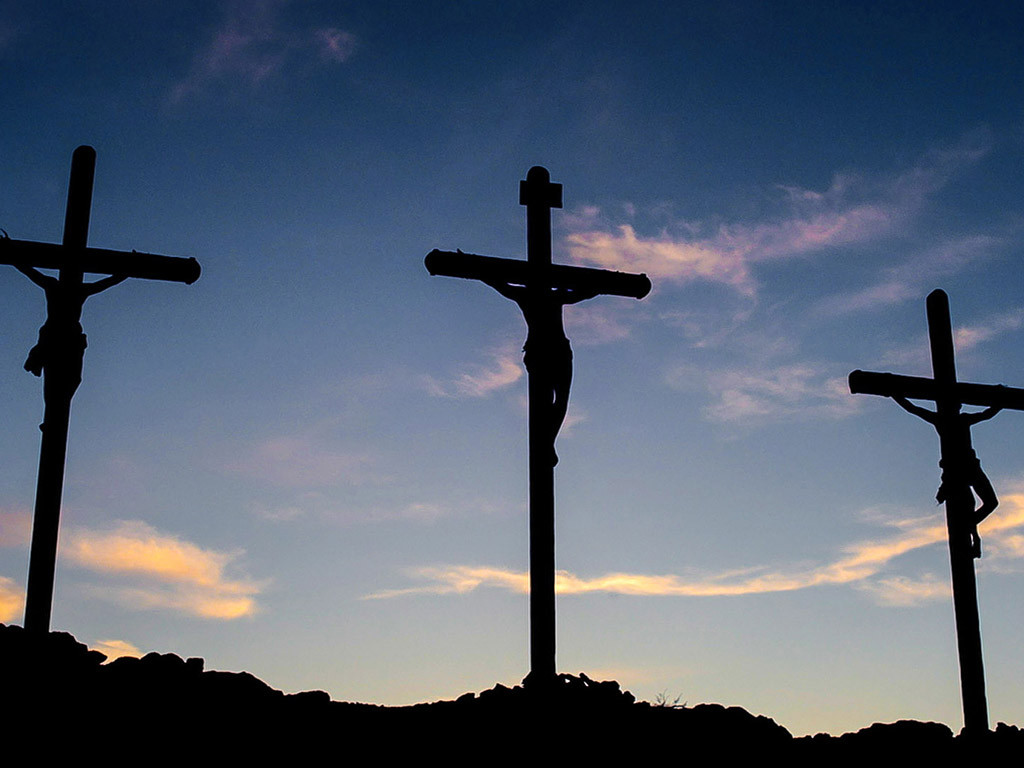
What if Jesus’ story had been different? What if he had gone to the cross, kicking and screaming? He certainly had the right. He was being persecuted relentlessly. He had done nothing but love his Father and humankind during his life, and for that flawless behavior, he was crucified. He could have retaliated with an army of angels, but he didn’t. Instead, he was stripped, spat upon, mocked, and killed. He could have cursed his enemies to Hell. Instead, he prayed for them.
The world repaid Jesus’ love with hatred in the form of a cross. But the nails didn’t hold him there; love held him there. He chose to forgive in his final act of mercy: “Father, forgive them, for they do not know what they do” (Luke 23:34).
Jesus’ final hours speak volumes about my rejection of atonement theology. So many believe that Jesus had to die to atone for our sins. I’m sorry, I don’t buy it. I believe too many of us subscribe to the teaching that God’s anger over our sins required Jesus’ death. Doesn’t that create an image of a God bent on punishment who can’t wait for us to screw up? I keep imagining that Wack-A-Mole game. No thanks.
GOD IS LOVE…PERIOD. And because we were created in His image and loved beyond measure, we must also be that love to others. Jesus’ last command to us was to love. When did he tell us to hate, judge, and flip off that jerky neighbor? The last words out of Jesus’ mouth were to forgive, not to condemn.
My mother-in-law (God rest her beautiful soul) could offer you a perfect example of why God calls us to love. She bore the pain of losing a younger sister to cancer and the death of a beloved son. She struggled through a difficult marriage and other challenging relationships. And then I came along.
Forty-three years ago, I stood before her in a short skirt, a long wig, a seven-year-old daughter by my side, and a heathen attitude in my heart. I was self-centered and demanding. I resented the occasions when my husband would stop to see her after work. I was jealous.
For those and other reasons, she could have done what everyone else in my life had done – she could have rejected me or struck out at me. I would have understood that reaction; I was accustomed to it. But instead, she chose to love me despite my attitude.
Soon I could feel myself being drawn to her. She had something I wanted, and I didn’t even know what it was. But after being in her company and experiencing her selfless love for others – and for me – I was hooked. That was the beginning of my long (still ongoing) journey of change.
If I hadn’t experienced her love first-hand, I would most likely still be self-absorbed and wearing those dreaded short skirts (probably not a good idea for a sixty-eight-year-old grandmother!). I can imagine her reunion with God, “Come on, give us a hug, Catherine! Thank you for so brilliantly dealing with that mess of a daughter-in-law of yours! Well done, my good and faithful servant…well done!” (Matthew 25:23)
The greatest of these is love.
Scripture tells us the value that God places on love: “And now abide faith, hope, love, these three; but the greatest of these is love” (1 Corinthians 13:13). love is a verb. It’s an action word. We can’t just give lip service to God’s commandment to love one another. If the action doesn’t match the words, it’s a lie. Jesus went beyond telling us that he loved us; he showed us and expects us to do the same.
How about 1 John 4:20 for a wake-up call? “If someone says, “I love God,” and hates his brother, he is a liar; for he who does not love his brother whom he has seen, how can he love God whom he has not seen?” Of course, we all know someone like that, but could we be accused of the same shortcoming?
God never promised us that His way would be easy. The Bible depicts a love unlike the worldly version: “Greater love has no one than this than to lay down one’s life for his friend” (John 15:13). How many people would you consider dying for? Hopefully, your children, your spouse, possibly other relatives (except crazy Uncle Bill), and most likely your dearest friends. Those friends would have to be your dearest ones, though! Fair-weather friends wouldn’t make the cut. How about an enemy? How about that crotchety neighbor you’ve had to contend with for years? How about that lying sneak of a co-worker who managed to get himself promoted to a job that was rightfully yours?
Although God’s love is freely given, it longs for a response. If fear holds us back, it masks who we really are. Fear clings to the old self, refuses to relinquish control, and attempts to tie the hands of the Holy Spirit.
And lest we forget, God’s sacrificial love infuses an inherent dignity in everyone! We, as Christians, have no monopoly on God. We don’t own Him, and we don’t have exclusive rights to him. This isn’t a private club. We are to be instruments of His love or our response, and our faith is inadequate at best and sinful at worst.
I would like to end with a quote from a sermon on Job once given by Archibald MacLeish. He said, “Man depends on God for all things; God depends on man for one. Only man can prove that man loves God.”






 PASSION, PURPOSE & POOPYHEADS